The VR Arcade and Attraction Summit Grows Up

Eight years with Amusement Expo helped build the community. The LEXRA Summit in Austin, August 2-5, kicks off the next…
Read more...
extra! the newsletter for operators and immersive venue owners -

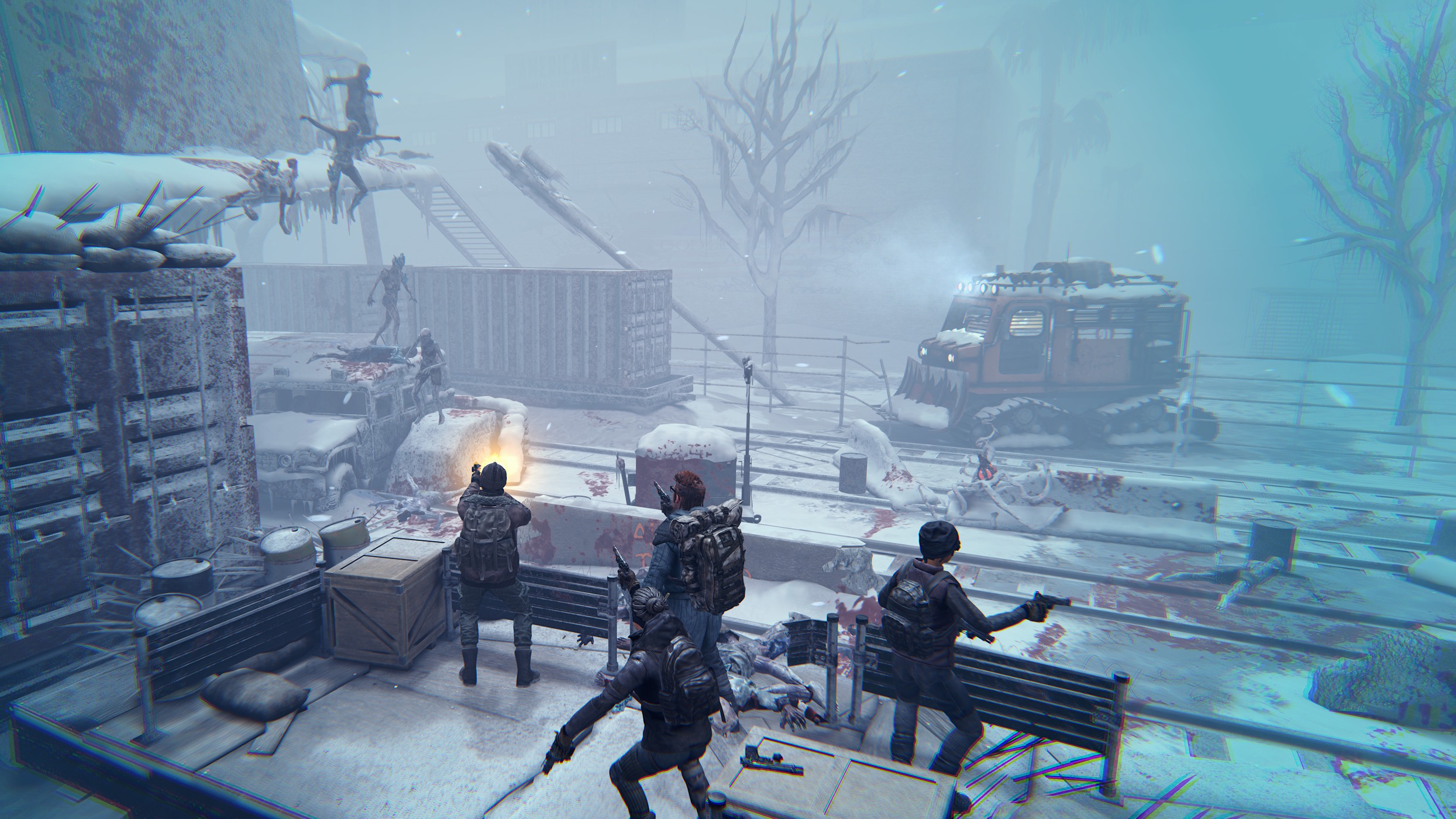
Synthesis VR releases After the Fall: Free Roam, a major new VR title designed specifically for location-based entertainment venues. This release marks a significant milestone, as it introduces native standalone headset support for both Pico and HTC VIVE Focus devices. By supporting these standalone headsets, Synthesis VR expands accessibility and flexibility for operators and players alike, reducing dependency on bulky PC setups while maintaining high-quality immersive experiences.
After the Fall: Free Roam stands out in cooperative VR gaming through its emphasis on true free-roam gameplay. Unlike traditional VR shooters that rely heavily on artificial locomotion methods, this game enables up to eight players to physically move freely within a shared space. The combination of expansive play areas, natural movement, and precise weapon handling creates a deeply immersive cooperative experience that demands teamwork, communication, and real-time coordination.
Key highlights of this release include:
This launch reinforces Synthesis VR’s commitment to pushing the boundaries of location-based multiplayer VR by delivering scalable solutions optimized for standalone hardware without compromising gameplay depth or quality.
After the Fall: Free Roam immerses you in a frozen post-apocalyptic Los Angeles, transforming familiar urban landscapes into chilling battlegrounds. This multiplayer VR game drops you into an environment ravaged by a mysterious ice age, where survival depends on cooperation and strategy against relentless threats.
Core gameplay revolves around co-op action VR mechanics that emphasize team-based combat and survival. You’ll find yourself working closely with up to seven other players, coordinating movements, sharing resources, and covering each other in tense firefights. The challenge lies not only in individual skill but in how well your team communicates and adapts to dynamic scenarios.
Support for up to eight players sharing the same physical space creates a truly social experience that enhances immersion. The shared play area allows your squad to move freely, strategize face-to-face, and engage enemies in fluid, real-world motions rather than artificial locomotion systems.
The post-apocalyptic VR setting combines atmospheric storytelling with intense co-op gameplay, delivering moments of tension as you fend off waves of enemies while navigating snow-covered streets and derelict buildings. This environment encourages teamwork at every turn — whether managing ammo supply or executing coordinated attacks — making After the Fall: Free Roam stand out among multiplayer VR games focused on cooperative survival.
After the Fall: Free Roam stands out by delivering true free-roam gameplay that relies entirely on your real-world physical movement. Unlike many VR titles that use artificial locomotion methods such as teleportation or joystick-based movement, this experience requires you to physically walk, dodge, and maneuver within the designated play area. This approach heightens immersion by grounding every action in your actual bodily movement.
The free roam multiplayer supports up to 8 players simultaneously sharing one expansive physical arena. Each player moves freely without restrictions, enabling dynamic team strategies based on real-time positioning. You can flank enemies, cover teammates, or coordinate attacks with gestures and voice commands while physically moving around the space.
This scale of cooperative play benefits from spacious environments designed to accommodate multiple participants without overcrowding. Whether you’re navigating tight corridors or open plazas within the frozen ruins of Los Angeles, the seamless integration of physical VR movement and natural positioning keeps everyone fully engaged.
The combination of these factors pushes After the Fall: Free Roam beyond traditional VR shooters by making your entire body part of the gameplay. You don’t just aim or move artificially—you embody the survivor fighting alongside friends in a hostile world.
After the Fall: Free Roam is designed with versatility in mind to fit a range of location-based entertainment (LBE) venues. The game supports two primary optimized play area sizes that cater to different space capabilities and group dynamics:
Ideal for arenas and LBE centers equipped with spacious rooms. This setup allows up to 8 players to physically move, coordinate, and engage in combat simultaneously. It maximizes the sense of scale and freedom, enabling expansive tactical gameplay where teams can spread out or converge organically.
Suited for venues with limited floor space or smaller groups. Supports up to 4 players while maintaining core free-roam mechanics and natural movement. This makes After the Fall: Free Roam accessible to a wider variety of VR arcades and entertainment spots without sacrificing immersion.
Compatibility extends beyond standalone headsets. The game runs smoothly on PCVR systems, presenting operators with flexible deployment options depending on their hardware infrastructure. The inclusion of native support for standalone Pico and HTC VIVE Focus headsets addresses a growing demand among LBE providers seeking turnkey VR experiences without the complexity of PC setups.
Benefits for location-based entertainment venues include:
Synthesis VR’s release of After the Fall: Free Roam supporting standalone hardware like Pico and HTC VIVE Focus marks a significant step in broadening access to high-quality free-roam VR content. Venues can confidently expand their offerings, knowing the game adapts efficiently to different spatial constraints while delivering compelling, large-scale multiplayer action.
The integration of StrikerVR Mavrik PRO controllers marks a significant advancement in haptic support in VR shooters, pushing immersion to new heights. These controllers deliver realistic recoil and impact sensations that closely replicate the physical feedback of firing various weapons within the game.
Tactile feedback plays a crucial role in cooperative shooter gameplay intensity by:
This level of integration transforms After the Fall: Free Roam from a standard VR shooter into a fully immersive experience where every shot fired and every impact felt shapes your connection to the frozen urban battlefield around you.
After the Fall: Free Roam offers a range of thrilling cooperative survival challenges that put your abilities and teamwork to the test in a frozen, post-apocalyptic city. The game’s settings are crafted to fully immerse you in harsh conditions while pushing your coordination and strategic thinking to their limits.
The main threat comes from Snowbreed enemies—frostbitten, relentless undead creatures wandering through the desolate cityscape. These foes have different behaviors and attack patterns, forcing you to adjust your tactics on the spot. You’ll find yourself:
Each environment presents new tactical challenges, compelling you to rethink your strategy based on the terrain and enemy density.
Two standout scenarios heighten the tension beyond typical shooter mechanics:
Both challenges break conventional VR shooter molds by integrating environmental hazards that require physical presence awareness alongside combat proficiency.
No cooperative survival experience is complete without formidable boss encounters. After the Fall: Free Roam places you face-to-face with towering Snowbreed bosses that demand flawless teamwork. Success depends on:
These climactic battles highlight how communication and synergy elevate gameplay beyond individual skill, reinforcing the game’s commitment to cooperative immersion within its post-apocalyptic urban wasteland setting.
After the Fall: Free Roam delivers broad hardware compatibility designed to meet the demands of diverse VR venues and player preferences. The game supports traditional PCVR setups, enabling high-fidelity experiences with powerful desktop hardware. Alongside this, it offers native standalone headset support specifically for the Pico standalone headset and the HTC VIVE Focus headset. This dual support reflects a commitment to flexibility, allowing venues and players to choose between tethered and untethered VR options without sacrificing gameplay quality.
Brings untethered freedom, reducing setup complexity while maintaining immersive visuals and precise tracking. Ideal for location-based entertainment where ease of deployment matters.
Adds another fully standalone option favored by many commercial arenas, offering reliable performance and robust inside-out tracking that complements Free Roam’s physical movement gameplay.
An exciting development is the forthcoming Quest standalone version, announced to arrive in the near future. This release will expand the game’s presence on Meta Quest devices, renowned for their widespread adoption in consumer and commercial markets alike. Expected features include:
Expanding hardware support beyond PCVR setups increases accessibility significantly. It opens doors for a broader range of VR venues—from premium arenas equipped with high-end PCs to more compact or budget-conscious locations relying on standalone headsets. This diversity helps accommodate varying space sizes, budgets, and operational needs without compromising the core cooperative free-roam experience.
Synthesis VR releases After the Fall Free Roam supporting standalone headsets such as Pico and HTC VIVE Focus demonstrate a forward-thinking approach to VR multiplayer gaming infrastructure. Catering to multiple device ecosystems ensures that more players can engage in large-scale, physical VR adventures regardless of their hardware constraints.
After the Fall Free Roam future updates promise to expand the cooperative survival VR games evolution in significant ways. The upcoming Quest standalone version will unlock access to a broader audience, increasing the player base beyond current Pico and HTC VIVE Focus users. This expansion reflects Synthesis VR’s commitment to accessibility and innovation within the multiplayer VR space.
Key takeaways about the game’s impact include:
Expect continued enhancements that will further solidify After the Fall: Free Roam’s place as a flagship title in cooperative VR shooter experiences. Its blend of advanced haptics, expansive play areas, and seamless hardware compatibility positions it as a major influence on how VR venues deliver compelling group content. Players and operators alike stand to benefit from this evolving ecosystem as it drives forward both game quality and accessibility.
After the Fall: Free Roam is a major cooperative action VR game set in a frozen, post-apocalyptic Los Angeles. It supports native standalone headsets such as Pico and HTC VIVE Focus, as well as PCVR setups, providing flexible deployment options for various VR venues.
The game features true free-roam gameplay driven by real-world physical movement without artificial locomotion. This includes natural player positioning and precise weapon handling, allowing up to 8 players to coordinate and fight together in expansive play areas, significantly enhancing VR immersion.
After the Fall: Free Roam supports optimized play area sizes including large 10×10 meter setups and smaller 6×6 meter configurations. This flexibility caters to different venue capabilities, making it ideal for location-based entertainment arenas seeking immersive group experiences.
The game fully integrates StrikerVR Mavrik PRO controllers, providing realistic recoil and impact sensations during gameplay. This tactile feedback elevates the intensity and immersion of cooperative shooter gameplay within the VR environment.
Players face Snowbreed enemies across varied environments including cinematic metro rides and high-rise building navigation. The game emphasizes teamwork to overcome powerful bosses within its post-apocalyptic urban wasteland setting, delivering memorable cooperative survival experiences.
Currently, After the Fall: Free Roam supports Pico standalone headsets, HTC VIVE Focus standalone headsets, and PCVR setups. An upcoming Quest standalone version is announced, which will expand accessibility for various VR venues and further grow its player base through continued updates.