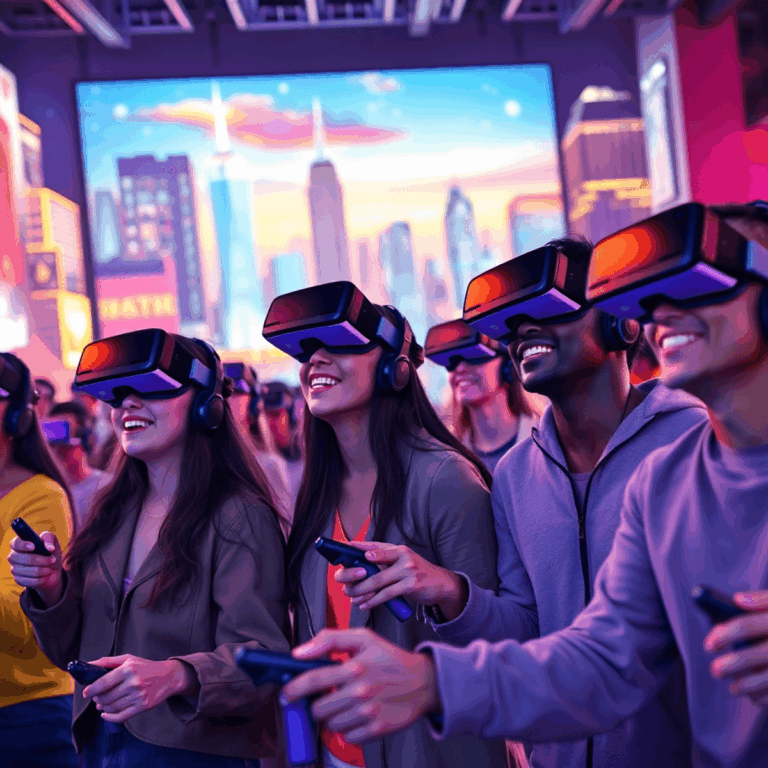
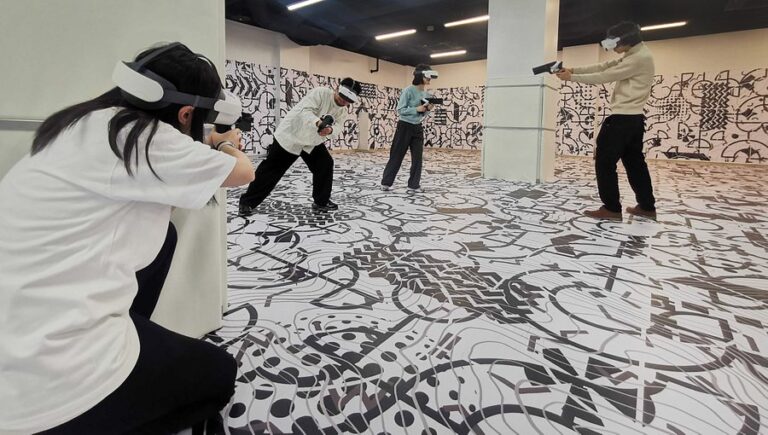
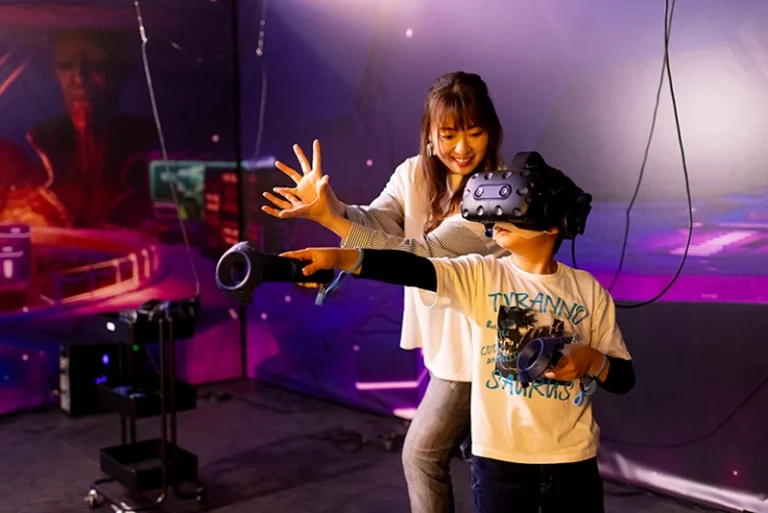
How Thrill of the Fight 2 Became a Live VR Esports Event

The Thrill of the Fight 2 has redefined what VR esports can be by transforming a virtual boxing game into…
Read more...
extra! the newsletter for operators and immersive venue owners -

![Dr Lynn Verschuren of UofG's Museums in the Metaverse team and Derek Shirlaw of the Glasgow Science Centre try out the [un]box VR kiosk at the Glas...](https://thevrcollective.com/wp-content/uploads/2025/12/Dr-Lynn-Verschuren-of-UofGs-Museums-in-the-Metave-0e671076-bf1c-4ae5-885c-7651de887c05.jpg)
The University of Glasgow has launched the [un]box Virtual Reality kiosk, a pioneering step in museum innovation. This initiative is part of the larger £6.2 million Museums in the Metaverse (MiM) project, which aims to redefine how people engage with cultural heritage through immersive technology.
Key features of this launch include:
Virtual Reality (VR) technology is rapidly transforming museums by creating accessible, engaging, and deeply immersive experiences. With VR kiosks like [un]box, museum collections can be explored beyond traditional display cases, allowing you to interact with digitised artefacts in new ways. This innovation not only enhances visitor engagement but also expands public access, breaking down geographical and physical barriers.
The University of Glasgow’s VR kiosk represents a tangible leap forward in how museums can harness technology to bring history and science vividly to life for diverse audiences.
The Museums in the Metaverse (MiM) project aims to change how people access and experience cultural heritage by using advanced virtual reality technology. The main goal is to digitize museum collections and showcase them in immersive virtual environments, allowing users to explore artefacts beyond the limitations of physical spaces.
Funding for MiM comes primarily from Innovate UK and UK Research and Innovation, supported by the UK Government’s Innovation Accelerator programme. This programme plays a crucial role in speeding up technological innovation in cultural sectors by providing financial support and strategic guidance for projects that combine heritage with advanced tech solutions.
Collaboration is essential for the success of MiM. Partner institutions such as the Hunterian Museum at the University of Glasgow and National Museums Scotland contribute expertise and collections, ensuring a rich variety of digitised content. These partnerships promote knowledge exchange between institutions, improving both the quality and diversity of virtual experiences offered through the MiM platform.
The [un]box Virtual Reality kiosk is a standout installation at the Glasgow Science Centre, offering visitors a unique gateway into immersive museum experiences. This physical VR kiosk is designed as an accessible booth where users don a headset to enter carefully crafted virtual environments.
Visitors embark on interactive journeys through digital spaces that break away from traditional museum displays:
This setup transforms passive observation into active discovery. Instead of merely viewing artefacts behind glass, you engage with them in a spatial context. The kiosk bridges tangible cultural heritage and digital innovation, inviting visitors to experience collections in ways that are immersive and memorable.
The [un]box kiosk demonstrates how virtual reality can extend museum storytelling beyond physical limitations, making cultural exploration dynamic and interactive directly within the visitor attraction environment.
The University of Glasgow has launched the [un]box Virtual Reality kiosk as part of the £6.2 million Museums in the Metaverse (MiM) project, offering visitors an unprecedented way to engage with digitised museum objects. The platform features 3D models of historical artefacts that bring centuries-old treasures into vivid, interactive focus.
Creating these 3D models involves an advanced process called photogrammetry. Hundreds of high-resolution photographs are taken from multiple angles around each object. These images are then stitched together using sophisticated software to produce highly accurate digital replicas. Digital artists refine these models further, enhancing textures and correcting any imperfections to ensure lifelike representations.
This meticulous approach results in virtual artefacts that retain every subtle contour and surface nuance, allowing users to zoom, rotate, and inspect items as if holding them in their hands. Such immersive access transforms how historical collections are experienced, making cultural heritage more accessible and engaging through cutting-edge VR technology.
Virtual reality kiosks are changing the way people can access virtual museums. They are removing the usual barriers that come with location and physical space. This means that more people now have the opportunity to visit museums, even if they couldn’t before because of reasons like being far away, having difficulty moving around, or not being able to go during regular opening hours.
This new approach is changing how cultural heritage is shared. It makes museums more lively and open to everyone by using technology that works alongside traditional exhibition methods. As a result, there is a significant improvement in reaching out to more people and getting them interested in digital cultural collections.
The University of Glasgow is the main driving force behind the [un]box Virtual Reality kiosk and the larger Museums in the Metaverse (MiM) initiative. This university’s VR initiatives focus on using advanced technology to digitise and showcase cultural collections in immersive, easily accessible ways.
These partnerships ensure high-quality digital reproductions through advanced photogrammetry techniques, involving hundreds of photographs per object refined by specialist digital artists. The combined expertise from these institutions guarantees authenticity and educational value in every virtual exhibit.
The cooperation between academic research, museum curation, and digital artistry highlights a shared commitment to preserving cultural heritage while making it more accessible to the public. The University of Glasgow’s leadership in this area demonstrates how partnerships across different fields can create innovative museum experiences by combining tradition with technology.
The [un]box Virtual Reality kiosk has been launched by the University of Glasgow as part of the £6.2 million Museums in the Metaverse (MiM) project, marking a significant step towards the future of museum engagement.
One of the most promising developments on the horizon is the expansion of the MiM platform to empower users with virtual exhibitions curation capabilities. This feature will enable visitors not only to explore existing immersive experiences museums offer but also to create and share their own digital exhibitions. By doing so, MiM fosters a personalized connection with cultural heritage, making museum visits more interactive and relevant.
Government backing remains strong, with continued funding from UK innovation programmes dedicated to advancing technology in cultural sectors. This financial support propels further research and development, ensuring museums can integrate cutting-edge virtual reality tools without losing sight of traditional collections. The synergy between technology and preservation means museums evolve into hybrid spaces where physical artefacts coexist with dynamic digital content.
The MiM initiative highlights how VR platforms can become community-driven environments, breaking down barriers to access and participation. As immersive experiences museums develop through this technology, expect more collaborative projects that broaden public interaction with history, science, and art beyond geographical limitations. This trajectory signals a future where museums are not just places to visit but platforms for creative exploration and learning.
Visitors interested in exploring the University of Glasgow’s VR initiatives can experience the [un]box Virtual Reality kiosk firsthand at the Glasgow Science Centre. This physical installation allows you to step into immersive virtual environments and interact with detailed 3D models of historical artefacts.
Key details for visiting the kiosk:
The limited-time presence of the [un]box kiosk in Glasgow provides a unique opportunity to engage directly with cutting-edge museum technology before its broader rollout. If you want to find information on University of Glasgow VR initiatives or know where to experience the VR kiosk publicly in Glasgow, visiting this venue is currently the only way to immerse yourself in this innovative project.
The launch of The [un]box Virtual Reality kiosk by the University of Glasgow marks a significant moment in the future of museums. This innovation shows how virtual reality kiosks can transform public engagement with cultural heritage. By turning traditional displays into immersive, interactive experiences, VR technology offers new ways to explore historical artefacts and environments in incredible detail and accessibility.
This project highlights a commitment to making museum collections more inclusive, engaging, and dynamic. It reinforces the idea that digital and physical museum experiences can work together rather than compete against each other. As the Museums in the Metaverse (MiM) project continues to grow, we can expect broader access to digitised collections from all over the UK, allowing audiences worldwide to curate and discover exhibitions like never before.
You can stay updated on upcoming developments as MiM expands its platform, bringing thousands of digitised cultural treasures into virtual spaces accessible to all.
VR kiosks represent more than just technological progress—they signify a cultural shift in how we preserve, interact with, and appreciate history. Keep an eye on this groundbreaking initiative; it could redefine how museums inspire future generations.