Spring Festival, Reimagined: AR + AI in Chinese Museums
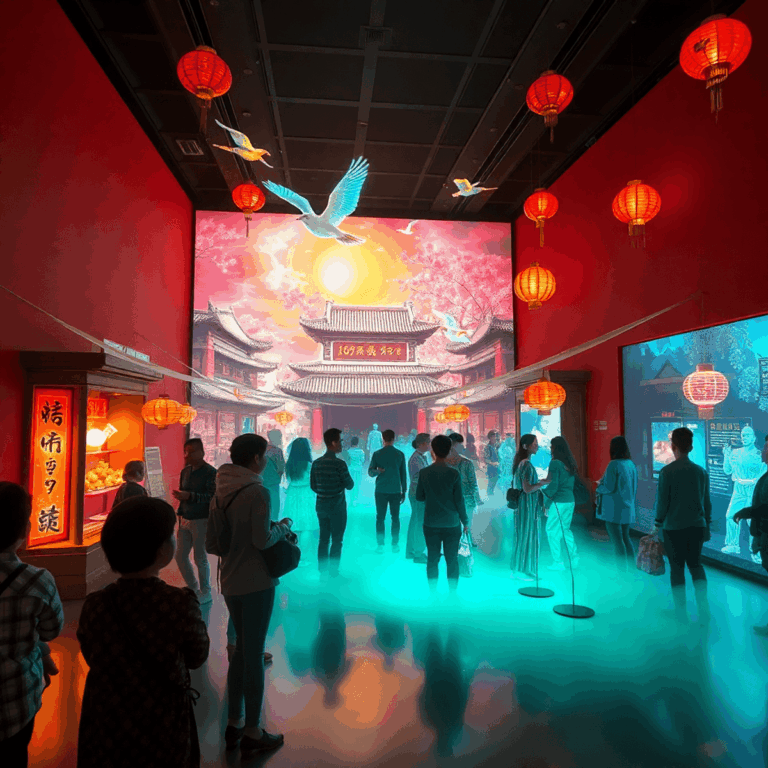
Chinese museums are using technology to create immersive Spring Festival experiences that redefine traditional cultural celebrations. The Spring Festival, which…
Read more...
extra! the newsletter for operators and immersive venue owners -


Fever expands its Machu Picchu VR experience to ten cities, bringing an unprecedented virtual reality immersive experience closer to you. This expansion opens doors for those who dream of visiting Peru’s most iconic site but face challenges such as distance, cost, or health concerns related to high-altitude travel.
Machu Picchu stands as one of the world’s most remarkable UNESCO World Heritage sites—a cultural treasure that embodies the ingenuity and spirituality of the Incan civilization. Its remote location in the Andes makes it a bucket-list destination, yet many find the journey difficult or impossible.
With Fever’s groundbreaking Machu Picchu VR experience, you no longer need to travel across continents to walk among ancient terraces and temples. The immersive technology offers a chance to explore this lost city in vivid detail, making history accessible and alive right in your own city.
Fever’s Machu Picchu: Journey to the Lost City takes you beyond a simple virtual tour. It is a narrative-driven VR journey designed to immerse visitors deeply into the heart of 15th-century Incan civilization. The experience begins in a fictional “time-travel agency,” setting a playful yet cinematic scene that instantly captures your imagination.
One of the most impressive aspects of this VR experience is the ultra-detailed 3D scan of Machu Picchu. This scan reconstructs every stone, terrace, and temple with astonishing accuracy, reflecting the true scale and intricate design of the UNESCO World Heritage site. The level of detail surpasses typical VR recreations, offering an authentic glimpse into the lost city as it might have appeared hundreds of years ago.
The experience relies on untethered VR headsets, which are lightweight and wireless devices. This technology allows you to explore Machu Picchu without being confined by cables or restricted movement zones. With this freedom, you can wander through ancient pathways, ascend terraces, and peek into secret corners at your own pace—making the exploration feel natural and unrestricted.
Despite the complexity of rendering such a massive historical site in real time, the system has been optimized to run smoothly on these headsets. Motion tracking ensures your movements translate seamlessly inside the virtual environment, while intuitive controls avoid technical distractions that often hinder immersion.
Every element of this VR experience encourages active participation rather than passive observation. As you navigate this recreated world, interactive cues and atmospheric effects guide your curiosity, promoting discovery through exploration rather than scripted tours. This approach redefines what it means to “visit” Machu Picchu when physical travel isn’t possible.
The combination of advanced scanning technology and cutting-edge VR hardware creates an experience that feels more like stepping through a portal in time rather than just viewing a digital model. It bridges the gap between education and adventure by letting you live history firsthand within a meticulously crafted virtual space.
Fever’s Machu Picchu VR experience stands out by expertly weaving cultural storytelling in VR with historical accuracy in virtual reality experiences. This fusion creates a narrative that goes beyond visual immersion, inviting you to engage emotionally and intellectually with the site’s rich heritage.
The experience is grounded in meticulous archaeological research. Every stone, terrace, and pathway reflects detailed studies of the 15th-century Incan city. Archaeological facts serve as the backbone, ensuring authenticity in how Machu Picchu is portrayed. Yet this VR journey does not stop at replication—it breathes life into history by integrating Incan mythology and sacred rituals, crafting a multilayered story that immerses you in the cultural context.
The soundtrack plays a pivotal role in reinforcing cultural authenticity. Traditional Incan instruments like the quena (flute), charango (string instrument), and bombo (drum) form the core of the original music score. This sonic layer does more than accompany visuals; it transports you to the Andes through soundscapes that echo ancient practices.
This careful blend of technology with cultural elements ensures that your VR experience is not just a digital reproduction but an emotional journey into Machu Picchu’s living history. The combination of factual accuracy and mythic storytelling invites you to explore multiple dimensions of this UNESCO World Heritage site—its tangible ruins and its intangible spirit.
Such an approach exemplifies how virtual reality can transcend being merely a tool for sightseeing. It becomes an avenue for deep cultural education, fostering respect and understanding for one of humanity’s greatest civilizations through immersive engagement.
Fever’s Machu Picchu VR experience pushes the boundaries of virtual reality through advanced technological innovations designed to deepen immersion and emotional impact. Central to this is the use of spatial audio in virtual reality experiences, which recreates the natural soundscape of the Andean mountains with remarkable precision.
The sound environment is not just background noise but a dynamic, 3D auditory landscape. Visitors hear distant wildlife calls echoing across valleys, gentle winds rustling through ancient terraces, and water flowing in nearby streams. This layering of authentic Andean sounds creates a fully enveloping atmosphere that responds to your movements and gaze direction—heightening realism and presence within the VR environment.
Movement through Machu Picchu is smooth and unrestricted thanks to carefully optimized motion design tailored for untethered headsets. This allows visitors to explore temples, plazas, and hidden paths intuitively without physical barriers or discomfort. The creators implemented subtle motion cues that mimic natural walking rhythms, preventing common VR issues like motion sickness.
Dynamic lighting plays a pivotal role in shaping emotional tones throughout the journey. One standout feature is the simulation of a solar eclipse—a sacred event in Incan culture. Shifting light patterns dim the landscape gradually, casting elongated shadows and bathing stone surfaces in ethereal hues. These lighting effects evoke awe and reverence, connecting you viscerally to Machu Picchu’s spiritual significance.
By integrating these innovations into a portable format, Fever allows more people than ever to access this immersive time-travel experience from their own cities. The seamless interplay of spatial audio, motion fluidity, and lighting artistry ensures that no matter where you try it—whether New York or Tokyo—the emotional power of Machu Picchu remains intact. This expansion opens new pathways for cultural engagement through cutting-edge VR technology.
Terry Crews lends his distinctive voice narration in VR experiences, bringing a unique blend of warmth, energy, and approachability to Machu Picchu: Journey to the Lost City. His narration serves as more than just guidance—it acts as an emotional anchor that invites you into the story, making the ancient site feel alive and relatable. Crews’ vocal delivery balances authority with friendliness, striking a tone that resonates with diverse audiences.
Cinematic storytelling techniques in virtual reality are expertly woven through this narration. The experience uses pacing, tonal shifts, and expressive inflections to build tension during sacred rituals or moments of discovery. This narrative arc mirrors traditional film storytelling but adapts dynamically to your exploration of Machu Picchu’s landscape. You’re not merely hearing facts; you’re immersed in a living story where history unfolds around you.
The narration seamlessly merges with cultural elements, deepening your connection to Machu Picchu’s rich heritage:
Using a well-known actor like Terry Crews also bridges contemporary culture with ancient tradition. His recognizable presence reassures you that this virtual journey respects authenticity while inviting inclusivity. This pairing enhances trust and encourages deeper engagement compared to standard VR tours that rely solely on visual spectacle.
Voice narration combined with cinematic storytelling amplifies the immersive qualities of Fever’s VR experience. It transforms passive observation into active participation where you feel personally invested in Machu Picchu’s story. This method elevates Fever’s project beyond a digital tour into an emotionally charged voyage through time and culture.
Fever’s Machu Picchu VR experience has expanded to ten vibrant cities across the globe, making this cultural journey accessible to a wide audience. You don’t have to book expensive flights or prepare for the physical demands of high-altitude travel. Instead, you can immerse yourself in the Lost City right in your local metropolitan area.
This expansion removes traditional barriers:
This network of locations democratizes access to one of the world’s most stunning archaeological sites by bringing it directly into urban centers worldwide. You get the chance to wander ancient stone pathways, witness sacred rituals, and absorb breathtaking vistas without leaving your city limits or facing travel hassles.
Fever’s VR marketing campaign strategies for expanding its Machu Picchu VR experience to ten cities stand out by combining bold, creative visuals with deep educational value. This approach aims not only to attract attention but also to build curiosity and trust around the authenticity of the experience.
Key elements of Fever’s marketing campaign include:
These VR marketing campaign strategies transform traditional promotion into an immersive invitation—encouraging people to step into history without leaving their city streets. By making heritage sites feel accessible and relevant through creative localization and educational storytelling, Fever expands its Machu Picchu VR experience beyond entertainment into cultural connection.
Traveling to famous heritage sites such as Machu Picchu can be difficult for several reasons:
Virtual travel offers a solution to these challenges by eliminating physical barriers:
Virtual travel offers several advantages over traditional tourism:
Technology continues to evolve, bringing exciting possibilities for virtual travel:
Virtual travel is not just a temporary trend; it signifies a significant change in how we engage with our global heritage. By overcoming barriers such as distance, cost, crowds, and health risks through immersive VR experiences, we ensure that treasures like Machu Picchu remain accessible to future generations—regardless of their circumstances.
Fever expands its Machu Picchu VR experience to ten cities, making this iconic cultural treasure accessible like never before. You can now live history emotionally and authentically through advanced technology that transcends traditional travel barriers.
Seek out Fever’s Machu Picchu VR expansion and transform your curiosity into an unforgettable adventure. Experience history without borders—right where you are.
Fever’s Machu Picchu VR experience is an immersive virtual reality journey that authentically recreates the 15th-century Incan site using ultra-detailed 3D scans and narrative-driven storytelling. It is now expanded to ten major cities worldwide, including New York, London, and Tokyo, allowing visitors to explore Machu Picchu virtually without traveling to Peru.
The VR experience overcomes challenges of physical travel such as distance, high costs, altitude sickness, and crowds by offering an accessible alternative through untethered VR headsets. Visitors can freely explore the site in detail from their hometowns, democratizing access to this cultural treasure.
Fever blends archaeological facts with Incan mythology and sacred rituals to create a rich narrative. The experience features traditional Incan instruments in its original soundtrack for cultural authenticity and uses cinematic storytelling techniques narrated by Terry Crews to deepen visitors’ emotional connection with Machu Picchu’s history.
Key innovations include spatial audio that immerses users with Andean soundscapes and wildlife sounds, advanced motion and dynamic lighting designs that evoke awe during moments like solar eclipse simulations, and untethered VR headsets enabling free exploration without physical barriers.
The experience is narrated by actor Terry Crews, whose warm and engaging voice brings cinematic storytelling to life. His narration merges seamlessly with cultural elements, enhancing authenticity and helping visitors emotionally connect with Machu Picchu’s rich heritage.
Fever employs innovative marketing strategies combining bold creative visuals with educational content. Localization tactics juxtapose ancient Incan relics with modern landmarks like the Washington Monument to connect cultures and resonate with local audiences in each of the ten cities where the experience is available.