Spring Festival, Reimagined: AR + AI in Chinese Museums
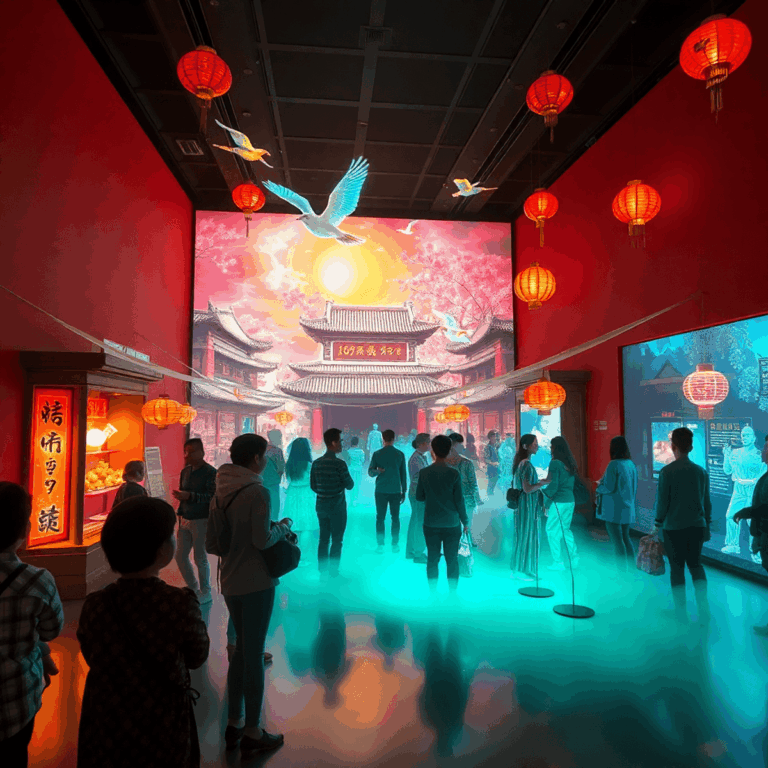
Chinese museums are using technology to create immersive Spring Festival experiences that redefine traditional cultural celebrations. The Spring Festival, which…
Read more...
extra! the newsletter for operators and immersive venue owners -

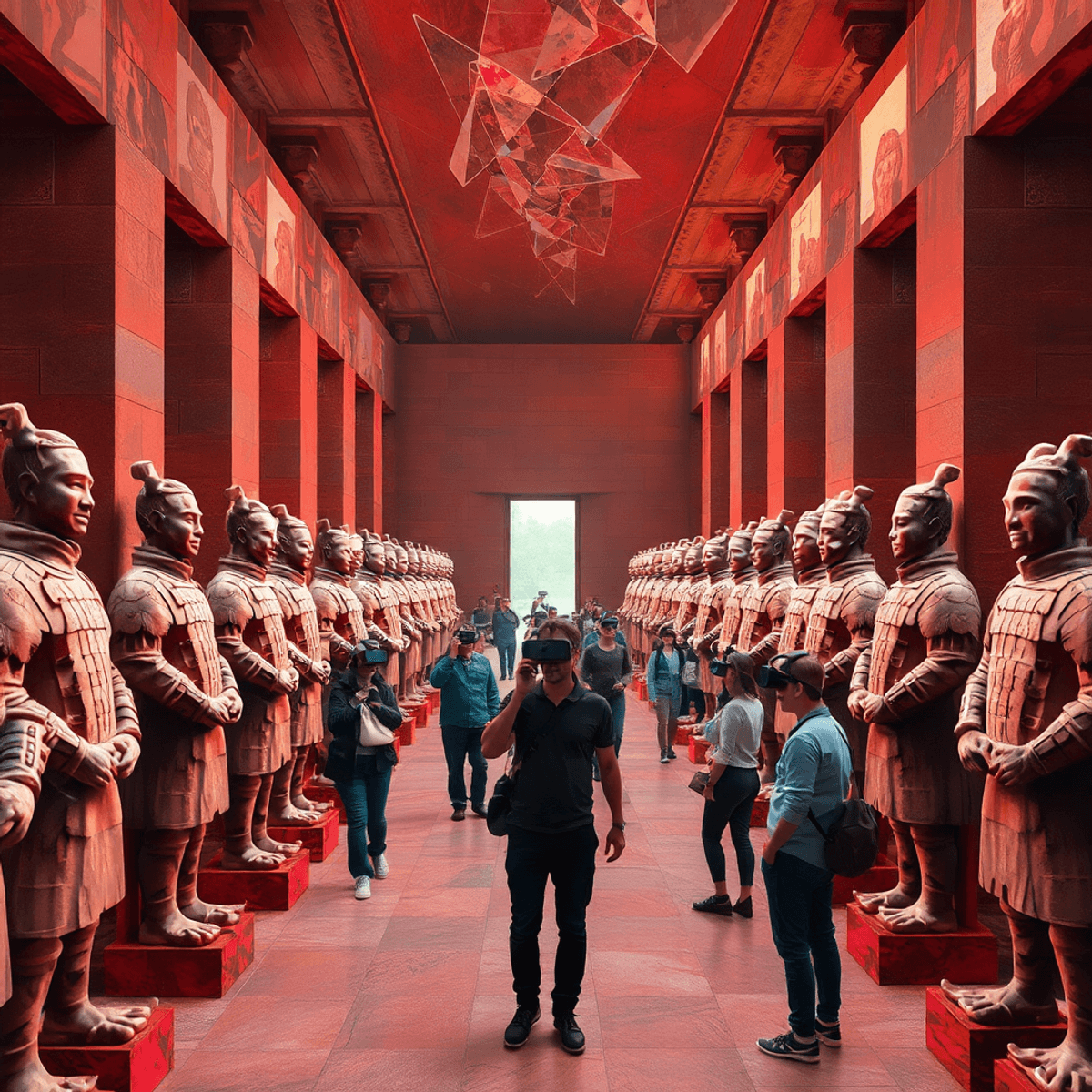
The Terracotta Warriors are one of the most amazing archaeological finds of the 20th century. Made over 2,000 years ago to protect Emperor Qin Shi Huang’s tomb, these life-sized statues offer deep insights into ancient Chinese history, art, and culture. However, access to the underground tomb has been limited due to concerns about preservation and its massive size.
Wevr and VIVE Arts present Terracotta Warriors: Secrets of the First Emperor’s Mausoleum, an innovative location-based entertainment (LBE) VR installation that allows viewers to explore this iconic site that is usually closed off to the public. With this immersive VR experience, users can virtually enter the mausoleum and witness its intricate features up close, thanks to a combination of advanced technology and thorough historical research.
This article delves into the intersection of culture, technology, and immersive storytelling in this initiative. It discusses how digital advancements are reshaping access to heritage locations, improving educational prospects, and revolutionizing audience involvement with history.
Terracotta Warriors: Secrets of the First Emperor’s Mausoleum was created through a collaboration involving several organizations:
This partnership brings together knowledge from various fields such as preserving cultural heritage, using advanced technology, and creating immersive content. The goal is to accurately represent this famous historical location.
The project has received official approval from the Museum of the First Qin Emperor’s Mausoleum. This ensures that all digital recreations are based on historical facts and adds credibility to the experience, making it more than just entertainment—it’s also an educational tool backed by archaeological research.
Museum experts played a crucial role by carefully examining every aspect of the virtual reality (VR) environment. Their tasks included:
This ongoing communication between technologists and historians has resulted in an experience where cultural authenticity combines with innovative technology, providing users with an immersive exploration of one of China’s most extraordinary archaeological wonders.
The Terracotta Warriors VR installation uses HTC’s upgraded LBE large-scale immersion technology, which transforms traditional VR into a shared, physical experience. This system supports full-space immersion with real-time tracking of users’ movements, allowing multiple participants to explore the virtual environment simultaneously without losing spatial awareness.
At the core of this innovation is the VIVE Focus Vision headset, a next-generation mixed-reality device boasting a stunning 5K resolution display. This headset integrates full hand tracking, enabling users to interact naturally within the virtual mausoleum—manipulating objects and navigating the space without relying on controllers. Such intuitive interaction enhances the feeling of presence and deepens user engagement.
Multi-user synchronization plays a crucial role in creating a socially immersive environment. Visitors can walk together through the reconstructed underground palace, observe each other’s movements, and share reactions in real time. This level of synchronized interaction sets apart location-based VR from solo home experiences by emphasizing physical movement and collective exploration.
Key technological features include:
These technologies combine to deliver an immersive journey that feels authentic and tangible, bridging the gap between ancient history and modern digital innovation.
Wevr and VIVE Arts bring Terracotta Warriors: Secrets of the First Emperor’s Mausoleum, a ground-breaking location-based entertainment (LBE) VR installation that invites audiences to step inside one of the most iconic and historically inaccessible sites in human civilization. This archaeological digital reconstruction is the result of decades of meticulous research and excavation at Emperor Qin Shi Huang’s tomb site.
The VR experience features an underground palace recreation at a precise 1:1 scale, allowing visitors to explore the space as if they were truly present. Over 50 years of archaeological discoveries are showcased through:
Every aspect of this virtual mausoleum reflects rigorous attention to detail. Textures, spatial layouts, and artifacts adhere strictly to archaeological evidence, creating an immersive journey that transcends time. The project bridges ancient history with modern technology, enabling users to engage with a pivotal chapter in Chinese civilization from within an interactive digital reconstruction.
The Terracotta Warriors VR experience offers a one-of-a-kind combination of education and entertainment that appeals to a wide range of visitors. It is particularly attractive to:
This installation goes beyond passive observation. It invites you to step inside history, offering an interactive cultural journey VR experience where you can physically navigate the underground mausoleum and engage with its rich environment.
The natural hand-tracking controls eliminate barriers between you and the virtual world, deepening your connection to the artifacts and historical narratives.
Schools benefit significantly from this immersive storytelling approach, using it as a powerful supplement to history and art education. Students grasp complex cultural contexts through firsthand virtual exploration rather than textbook descriptions. This hands-on method encourages curiosity about ancient civilizations and fosters empathy by bridging past and present.
More than just entertainment, this VR project acts as a catalyst for cultural appreciation, making history accessible and emotionally engaging for diverse audiences worldwide.
Creating a historically accurate VR exhibition like the Terracotta Warriors experience involves navigating complex VR exhibition development challenges. One of the primary obstacles is balancing artistic ambition with strict historical authority. The creative team aims to deliver an emotionally engaging and visually stunning experience while respecting the integrity of archaeological facts and cultural heritage.
The intricate balance between historical fidelity and cutting-edge technology defines this project’s success, setting new standards for immersive cultural storytelling in virtual reality.
The Richmond Lansdowne Centre event retrospective marks a milestone where Wevr and VIVE Arts bring Terracotta Warriors: Secrets of the First Emperor’s Mausoleum, a groundbreaking location-based entertainment (LBE) VR installation, to life. Vancouver was selected as the launchpad due to its reputation as a global hub for immersive content creation.
Key reasons include:
This combination makes Vancouver uniquely suited for introducing an experience that invites audiences to step inside one of the most iconic and historically inaccessible sites in human civilization.
The success of the Terracotta Warriors VR installation sets a strong foundation for expanding immersive cultural projects with a focus on Chinese heritage sites and beyond. Two major initiatives currently underway include the Silk Road VR project and the Dunhuang VR project. Both aim to digitally preserve and showcase these iconic historical landmarks with unprecedented detail and interactive storytelling.
Designed to recreate the vast network of trade routes that connected East and West, this experience will immerse users in the cultural exchange, economic activity, and diverse civilizations along the Silk Road corridor. Expect richly detailed environments capturing ancient cities, caravanserais, and marketplaces.
Focused on one of China’s most significant archaeological sites, Dunhuang’s caves and murals will be brought to life with stunning accuracy. This project highlights Buddhist art and history, offering insight into spiritual practices and artistic evolution during the region’s golden age.
Central to these efforts is the vision of establishing a Digital Cultural Content Hub Canada, an innovative platform dedicated to developing immersive experiences that represent global civilizations. This hub aims to:
By integrating advanced immersive technologies with deep cultural knowledge, this hub aspires to become a leader in digital heritage preservation and education. It envisions connecting audiences worldwide through compelling virtual journeys that transcend geography and time.
The Terracotta Warriors VR installation by Wevr and VIVE Arts is a groundbreaking LBE experience that sets a new standard in immersive historical VR installations. This project transforms the way audiences engage with history, offering a rare opportunity to step inside one of the most iconic and historically inaccessible sites in human civilization. By combining meticulous historical accuracy with cutting-edge technology, Terracotta Warriors: Secrets of the First Emperor’s Mausoleum redefines location-based entertainment.
Key achievements include:
This model of cultural innovation inspires further development across the globe. The success of this installation encourages creators to push boundaries in virtual reality, ensuring culturally significant stories continue to find vibrant expression through immersive technologies.