Why Arcades Pick VRilliant (And Players Come Back)

VRilliant is a leading name in the world of VR arcade games. They are recognized as one of the world’s…
Read more...
extra! the newsletter for operators and immersive venue owners -

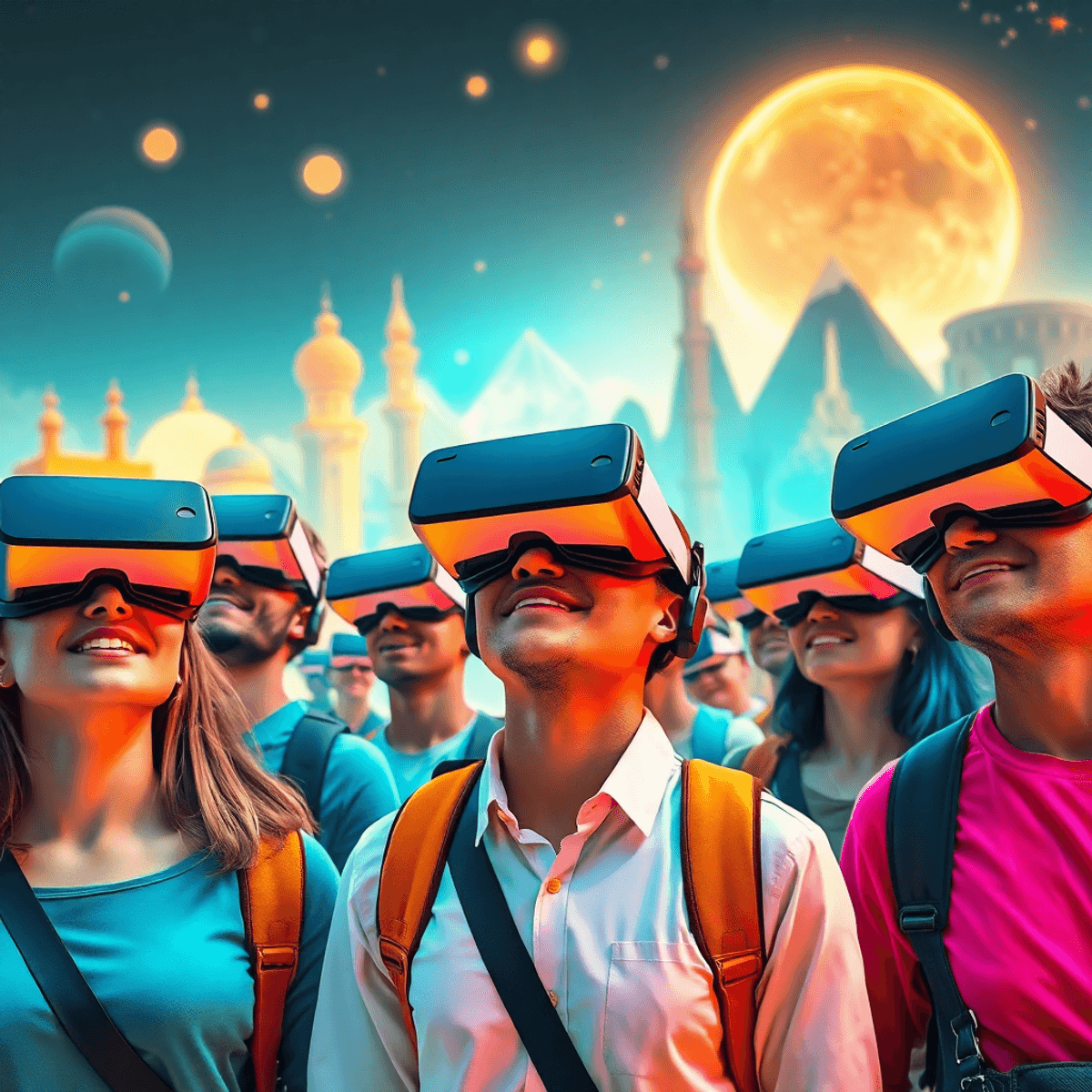
A University of Florida study reveals that even travelers who value traditional tourism activities enjoy immersive, hyperreality virtual reality, or VR. This finding challenges the common assumption that virtual experiences cannot satisfy those who prefer authentic, real-world travel. The research opens new possibilities for integrating advanced technology with conventional tourism preferences.
Virtual reality’s role in tourism marketing is rapidly expanding. Destination marketers are leveraging VR to craft compelling promotional content that allows potential travelers to preview experiences before booking trips. Immersive VR experiences provide a dynamic alternative or complement to traditional marketing channels such as brochures and videos.
The appeal of VR lies in its ability to evoke emotional responses, stimulate curiosity, and reduce uncertainty about travel decisions. Hyperreality VR can replicate iconic landmarks or hidden gems with remarkable detail, helping travelers connect with places on a deeper level without leaving home. This growing trend reshapes how the tourism industry engages audiences and broadens access to culturally rich experiences worldwide.
Key concepts to understand:
Virtual reality (VR) technology plays a crucial role in changing how travelers interact with places before actually going there. The main devices that make VR experiences possible in tourism are head-mounted displays (HMDs) and CAVE systems:
These are wearable devices that have screens right in front of the user’s eyes, creating immersive 3D environments. Examples include Oculus Quest 2 and HTC Vive, which allow users to move around and interact with virtual travel scenarios individually.
These are room-sized setups where images are projected onto walls surrounding the user, allowing multiple people to share an immersive experience at the same time. These systems offer high-resolution visuals and spatial audio for group explorations of virtual destinations.
Understanding the difference between traditional VR and hyperreality VR helps clarify how these technologies vary in their methods of simulating tourism experiences:
This type of VR often focuses on recreating real-world environments with high accuracy using 3D modeling and panoramic video techniques. Its goal is to replicate actual tourist sites as they exist, providing users with a simulated visit that closely resembles physical reality.
On the other hand, hyperreality VR goes beyond simple replication by combining real and virtual elements to create enhanced or even completely fictional environments. This form intensifies sensory stimuli and interaction possibilities to evoke stronger emotional engagement, producing experiences that feel “more real than real.”
Two psychological states play a significant role in determining how immersive and convincing these virtual experiences are: telepresence and self-presence.
Telepresence refers to the feeling of being physically present in the virtual environment instead of one’s actual location. This state heavily relies on the VR system’s ability to deliver convincing sensory input—visual, auditory, and sometimes haptic feedback—that tricks the brain into accepting the virtual world as a temporary reality.
Self-presence describes the awareness of oneself as an embodied agent within the virtual space. When self-presence is high, users feel that their actions have genuine effects inside the environment, increasing engagement and satisfaction with the experience.
The interaction between telepresence and self-presence determines the overall sense of virtual reality presence, which is crucial for tourism applications seeking to simulate authentic destination visits or stimulate desire to explore physical locations later.
Immersive tourism VR uses these concepts by:
This technological foundation supports more engaging promotional content for travel destinations, allowing users—regardless of their previous preferences for traditional tourism—to experience captivating simulations that enrich decision-making and trip planning.
The University of Florida (UF) conducted an extensive study investigating travelers’ preferences in relation to immersive virtual reality (VR) experiences. This research focused on understanding how individuals who typically favor traditional tourism activities respond to VR-based tourism marketing and experiences.
Mental imagery emerged as a critical factor influencing the sense of presence within VR environments. When participants actively visualized themselves interacting within the virtual space, their immersion deepened. This mental rehearsal mechanism operates similarly to how travelers imagine future trips or recall past ones, reinforcing engagement and memory encoding.
“Mental imagery acts as a bridge between cognitive anticipation and sensory immersion,” notes the UF research team.
The study utilized neurophysiological markers such as heart rate variability (HRV) and autonomic nervous system (ANS) activity to quantify emotional engagement during VR sessions.
These objective measures corroborate subjective reports, affirming that immersive VR can stimulate authentic emotional reactions rather than superficial or detached responses.
Cybersickness remains one of the most common barriers to fully enjoying VR tourism experiences. Symptoms include nausea, dizziness, headaches, and eye strain caused by sensory mismatches between visual input and vestibular sensations.
UF researchers emphasize several strategies to minimize cybersickness:
Successful mitigation of cybersickness enhances user experience quality, encouraging repeat use among travelers who might otherwise avoid immersive technologies.
This UF research provides critical insights into why immersive virtual reality appeals even to travelers who traditionally prefer conventional tourism activities. The findings highlight a valuable intersection where technology meets authentic experience needs—an intersection marketers can leverage by tailoring content that fosters strong self-presence, vivid mental imagery, and emotionally engaging narratives while carefully managing user comfort challenges.
The University of Florida study sheds light on gender differences in VR presence among tourists, revealing that immersive, hyperreality virtual reality (VR) appeals broadly—even to those who typically prefer traditional tourism activities. These findings underscore the importance of tailoring VR experiences to diverse user groups.
Research highlights that men and women may experience VR environments differently, particularly when using head-mounted displays (HMDs). Studies like those by Felnhofer et al. (2012) and Grassini & Laumann (2020) report:
Understanding these gender nuances helps marketers and developers optimize VR content and hardware for a wider audience. Adjustments to avatar representation, interaction complexity, and visual fidelity can improve engagement across genders.
The affinity for technology interaction scale (ATI), developed by Franke et al. (2019), measures how comfortable individuals are when dealing with technology like VR. This psychological trait significantly affects:
Travelers with high ATI scores tend to adapt quickly to VR setups, report stronger self-presence, and appreciate nuanced virtual details more deeply. Marketers can leverage ATI assessments to segment audiences and customize experiences according to technological comfort levels.
Travel motivations play a critical role in how tourists engage with both real-world destinations and their virtual counterparts. A notable example involves British tourists visiting Turkey studied by Andreu et al. (2006), who identified clear motivation-driven segments such as:
Applying this segmentation framework to VR tourism allows marketers to tailor content effectively:
Integrating demographic insights, such as gender preferences and ATI scores, alongside travel motivations enables crafting hyperreality VR experiences that resonate on multiple emotional and cognitive levels. This comprehensive approach maximizes user acceptance and satisfaction while guiding strategic marketing investments toward tailored promotions targeting specific traveler profiles.
Virtual reality transforms tourism marketing by enabling destinations to craft immersive storytelling that goes beyond traditional media. This immersive approach engages multiple senses simultaneously, creating a vivid emotional connection with potential travelers. Marketers use VR to simulate authentic experiences—walking through ancient ruins, exploring bustling markets, or diving into coral reefs—allowing users to feel present in the destination before booking.
Virtual avatars play a critical role in these immersive experiences. These computer-generated characters act as guides, companions, or influencers within virtual worlds. Their presence boosts authenticity by:
Studies show that tourism marketing effectiveness using virtual avatars increases when avatars resemble real people or trusted influencers. Virtual influencers can promote destinations within VR platforms by:
Authenticity perception improves when avatars display natural movements and relatable personalities. This sense of realism helps dissolve skepticism about virtual travel experiences and strengthens emotional bonds with the destination brand.
Immersive VR combined with virtual avatars creates a dynamic environment where travelers can experiment with travel choices risk-free. This experiential preview reduces uncertainty and builds excitement, often translating into higher conversion rates for tourism businesses.
Tourism marketers should consider integrating:
Such enhancements deepen user engagement while maintaining a consistent brand narrative across channels. The interplay between immersive storytelling and virtual avatars redefines how destinations communicate value, moving beyond static images or text toward living experiences that resonate emotionally and cognitively with travelers.
Authenticity perception in virtual reality tourism challenges traditional ideas of what makes a travel experience “real.” Tourists engaging with hyperreality VR environments encounter simulations that blend fact and fiction, raising questions about how authenticity is constructed and understood.
In conventional tourism, authenticity often centers on:
This form of authenticity is grounded in tangible reality and historical continuity. Tourists usually seek to connect with an original or unaltered version of a place or culture.
Hyperreality VR creates environments where simulated elements can feel as vivid or even more engaging than real-world experiences. Characteristics include:
This leads to a different type of authenticity—one based on subjective experience rather than objective reality.
Research by Gao et al. (2022) and Mura et al. (2017) highlights several dimensions tourists use to gauge authenticity in VR tourism:
A postmodernist viewpoint suggests that authenticity is no longer fixed but fluid, negotiated between the technology, content creators, and the user’s interpretation.
VR tourism introduces a paradox where:
“Authenticity in VR is less about ‘what is real’ and more about ‘what feels real’ to the individual tourist.”
This posits authenticity as an experiential construct shaped by immersive storytelling and sensory richness rather than geographic location or historical provenance.
Understanding how authenticity perception operates in hyperreality allows marketers to:
Embracing this postmodernist approach positions VR tourism not just as a substitute for travel but as a distinct form of meaningful exploration.
The virtual tourism sector is experiencing rapid expansion. Recent market forecasts estimate the global virtual tourism market size to grow at a compound annual growth rate (CAGR) exceeding 20% over the next five years. The surge is driven by increasing consumer interest in immersive experiences and the integration of VR into mainstream travel marketing strategies.
A University of Florida study reveals that even travelers who value traditional tourism activities enjoy immersive, hyperreality virtual reality (VR). This insight aligns with market data indicating rising adoption across diverse traveler segments, including those previously skeptical of digital tourism alternatives.
The emergence of more affordable, standalone VR headsets such as the Oculus Quest 2 has lowered entry barriers. These devices do not require external computers or complex setups, allowing a broader audience to experience high-quality VR content easily at home or in retail environments.
Advances in display resolution, field of view, and tracking precision contribute to stronger feelings of presence and immersion. Manufacturers focus on reducing latency and improving ergonomics, addressing common issues like cybersickness.
VR platforms expand beyond static tours to include interactive storytelling, gamified elements, and social features. Virtual avatars and influencers help personalize experiences, fostering engagement that resonates with younger and tech-savvy demographics.
Augmented reality (AR) and mixed reality (MR) complement VR applications by bridging physical and digital worlds. This hybrid approach enriches destination previews and on-site visitor engagement.
Presence—the psychological state where users feel physically “there” inside a virtual environment—is critical for successful virtual tourism experiences. Reliable measurement techniques facilitate research, development, and marketing effectiveness.
Technology developers aim to push boundaries further by:
These advancements promise to make immersive VR tourism more realistic, accessible, and emotionally impactful—capturing the interest of traditional tourists while attracting new audiences globally.
The University of Florida study reveals that even travelers who value traditional tourism activities enjoy immersive, hyperreality virtual reality (VR) experiences. This insight opens new avenues for destination marketers to integrate advanced immersive technologies alongside conventional tourism offerings.
Destination marketers should:
Research opportunities remain abundant:
Embracing the implications of UF research encourages a balanced fusion of traditional tourism with cutting-edge virtual realities. This fusion promises richer, more personalized traveler engagement, pushing the boundaries of how destinations connect with visitors authentically and memorably.
The University of Florida study reveals that even travelers who generally prefer traditional tourism activities enjoy immersive, hyperreality virtual reality (VR) experiences, highlighting the growing appeal of VR in enhancing travel engagement.
Traditional tourism involves physical visits and direct interactions at destinations, whereas hyperreality virtual reality (VR) offers immersive digital environments that simulate real-world experiences, enabling travelers to engage with destinations through advanced technologies like head-mounted displays (HMDs) and CAVE systems.
Key technologies include head-mounted displays (HMDs), CAVE systems, and platforms that facilitate telepresence and self-presence psychological states, which are crucial for creating authentic and immersive virtual travel experiences.
Demographic influences such as gender differences affect VR presence and satisfaction levels; additionally, individual comfort with technology measured by scales like the Affinity for Technology Interaction (ATI) impacts acceptance. Market segmentation based on travel motivations also guides tailored marketing strategies.
Immersive VR enhances tourism marketing by enabling compelling destination storytelling through virtual avatars and influencers, which boosts authenticity perception and visitor engagement within virtual worlds, thereby attracting a broader audience.
The global virtual tourism market is projected to grow significantly, driven by advancements in affordable and user-friendly VR headsets like Oculus Quest 2. These trends improve accessibility and encourage integration of immersive technologies into traditional tourism to enrich traveler experiences authentically.