Univrse Brings Black Mirror VR to Montreal—May 2026

Bob Cooney’s Take – I’ve been waiting to talk about this for over a year. This is the first…
Read more...
extra! the newsletter for operators and immersive venue owners -

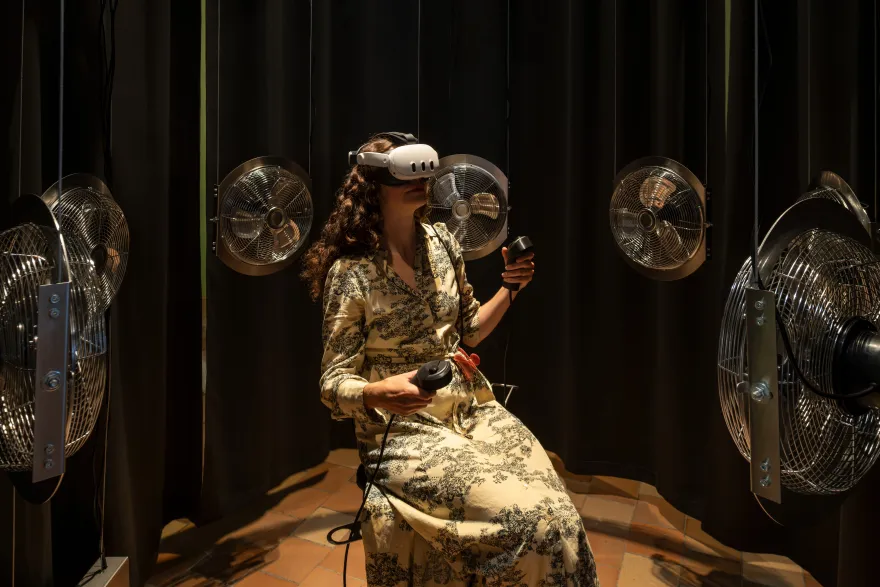
Zurich Design Museum is leading the way in creating the future of museums with the use of advanced technology and immersive storytelling. Their newest exhibition goes beyond traditional displays, offering visitors the chance to explore interactive worlds created with virtual reality and artificial intelligence.
Visitors can experience:
This collection of experiences—spanning spiders, puppets, and avatars—positions Zurich’s Design Museum as a model for how museums can evolve. The exhibition embodies an experimental approach to museology, where digital innovation enhances visitor engagement while preserving the authenticity of cultural heritage. Expect to be challenged, fascinated, and transported into new realms where history, nature, and identity intersect in virtual space.
When you visit Zurich’s Design Museum, you can embark on an incredible adventure through time and space by exploring a virtual replica of the iconic Pavillon Le Corbusier. This architectural masterpiece, renowned for its groundbreaking design by the Swiss-French architect Le Corbusier, has been painstakingly recreated using point cloud scanning technology. This cutting-edge method captures millions of data points to generate a highly detailed three-dimensional representation of the pavilion, enabling visitors to examine every angle and intricate feature as if they were actually there.
At the heart of this immersive experience lies the use of VR headsets. With these devices, visitors become active participants in navigating the virtual space rather than mere spectators. Unlike traditional images or videos, which offer limited perspectives, the headsets provide a fully immersive viewpoint that enhances depth perception and spatial awareness.
Wearing the VR headsets, you have the freedom to move around and explore the pavilion at your own pace. Here are some highlights of what you can do:
Several key aspects make this virtual reality experience truly exceptional:
This innovative use of technology in museum experiences aligns with a larger trend where historical sites and cultural artifacts are digitally brought back to life. By combining precise point cloud scanning with immersive VR hardware, Zurich’s Design Museum offers visitors a groundbreaking way to appreciate heritage using state-of-the-art tools.
Such immersive experiences also serve as preparation for other virtual adventures within the museum. These may include interactive representations of significant events like medieval battles or natural habitats inhabited by creatures such as spiders. The Pavilion VR sets a new benchmark in digital museology, enhancing visitor engagement beyond conventional exhibits.
The Zurich Design Museum showcases a remarkable virtual reproduction of The Battle of Murten, a pivotal medieval conflict fought in 1476. This immersive VR experience is uniquely housed within the Swiss Army depot, a setting that adds an authentic military atmosphere to the historical narrative.
This virtual project redefines how museums present complex historical events. It transcends conventional displays by enveloping visitors in a sensory-rich environment where history unfolds dynamically before their eyes. The choice of location—the Swiss Army depot—further grounds the exhibit in military heritage, enhancing your connection to Switzerland’s past.
Exploring The Battle of Murten through this large-scale digital panorama reveals how advancements in imaging technology and VR can transform historical education into a compelling journey through time.
At Zurich’s Design Museum, visitors can enjoy a unique experience: a multisensory virtual reality spider simulation. This immersive simulation allows them to step into the world of a native buzzing spider and witness its nighttime hunt firsthand. Unlike traditional museum exhibits, this spider VR experience offers an intimate exploration of nature from an entirely new perspective.
The simulation recreates the spider’s habitat with astonishing accuracy:
This immersive approach allows participants to gain insights into the spider’s hunting techniques and survival instincts—an experience that is rarely offered in museum settings. It also demonstrates how digital technologies can bridge the gap between natural history and human empathy for often overlooked creatures.
The spider VR experience is part of a larger exhibition called Spiders, Puppets and Avatars, which showcases Zurich’s vision for its digital ‘Museum of the Future’. In this exhibition, visitors have the opportunity to not only observe artifacts or artworks but also actively engage with living worlds.
Some other attractions at the museum include:
By immersing oneself in the world of a spider, this VR simulation challenges conventional boundaries of exhibit interaction. It encourages visitors to transition from passive observers to active participants in intricate ecological narratives.
This deep sensory engagement promotes not only understanding but also curiosity about biodiversity and ecosystem dynamics. The multisensory design ensures that each visit leaves a lasting impression—stimulating multiple senses makes the experience memorable and educational.
It serves as an example of how museums can leverage state-of-the-art VR technology to amplify stories that nature quietly tells us every night.
Sophie Taeuber-Arp, a key figure of the Dada movement, is celebrated for her surreal and abstract puppet designs. At Zurich Design Museum, these puppets are brought to life through an innovative interactive display that combines art with cutting-edge technology.
Visitors encounter robotic puppets that respond dynamically, mimicking their movements on screen. This technology uses motion sensors to track visitor gestures, creating a real-time connection between human actions and mechanical responses.
The puppets do not simply replicate movements; they transform them into surreal expressions consistent with Taeuber-Arp’s artistic style. This interaction deepens the visitor’s understanding of Dada principles—embracing chance, abstraction, and the unexpected.
Alongside the robotic puppetry exhibit, original Sophie Taeuber-Arp puppets are displayed, allowing visitors to appreciate both the historical artifacts and their modern reinterpretations. This dual presentation highlights the museum’s commitment to blending traditional art with contemporary digital experiences.
Visitors find themselves part of a living artwork where technology amplifies creativity rather than replacing it. The robotic puppets invite active participation, encouraging exploration of movement, form, and identity in a playful yet thought-provoking manner.
The TRUST AI artwork at Zurich Design Museum presents a striking use of artificial intelligence within an interactive media context. This installation leverages AI to generate avatars that mirror visitors’ appearances, creating a personalized digital double for each participant. The avatars are not simply static representations; they engage visitors by telling narratives—but these stories are deliberately composed of untruths. This dissonance between visual familiarity and deceptive content produces an uncanny effect that challenges perceptions of identity and trust.
Visitors step into the exhibit and encounter an AI system that scans their features, translating them into lifelike digital avatars. These avatars reflect subtle facial expressions and gestures, enhancing the immersive experience. The technology behind this involves sophisticated machine learning algorithms trained to capture nuances in human appearance and behavior.
Unlike typical avatar experiences that focus on authenticity or self-expression, TRUST AI flips expectations by embedding falsehoods into the avatar’s communication. This intentional distortion provokes questions about the reliability of digital identities and the potential for misinformation in digitally mediated spaces.
The combination of realistic visuals with contradictory or misleading stories taps into what psychologists call the uncanny valley—a sense of discomfort when something appears almost human but not quite right. Visitors often find themselves unsettled yet fascinated, reflecting on how technology shapes our understanding of truth and self.
TRUST AI exemplifies how museums can incorporate provocative AI art to deepen visitor engagement beyond passive observation. By interacting with these uncanny avatars, visitors confront themes relevant to today’s digital culture: identity replication, truth manipulation, and the ethical dimensions of AI.
The installation pushes boundaries by blending cutting-edge technology with philosophical inquiry. It invites visitors not only to see themselves reflected in digital form but also to critically examine what it means to “trust” an artificial representation in a world increasingly mediated by algorithms.
The Digital Benin project is a groundbreaking initiative in cultural heritage preservation. This ambitious effort brings together over 5,000 digitized objects from the former Kingdom of Benin, sourced from 139 institutions worldwide. These artifacts, many of which were looted during British military expeditions in 1897, carry deep historical significance and complex provenance.
While original artifacts remain tied up in restitution negotiations with Nigeria, the museum utilizes highly accurate 3D printed reproductions to bridge the gap between accessibility and authenticity. These reproductions:
Museums traditionally emphasize direct interaction with authentic objects. This project challenges that notion by merging digital technology with cultural preservation:
“Spiders, puppets, and avatars explore Zurich’s digital ‘Museum of the Future’. In a VR experience, visitors can walk through a digital reconstruction of the Pavillon Le Corbusier, which was captured using a point cloud scan. Visitors to Zurich’s Design Museum can plunge into a medieval battle, step into the world of a spider, and even engage with an uncanny avatar that mirrors their own identity – all in an exhibition that foresees the digital future of museums.”
In this context, the Digital Benin project exemplifies how digital tools expand possibilities for museums to curate heritage responsibly while navigating ethical complexities. It highlights a future where physical originals and digital surrogates coexist—supporting preservation efforts and broadening access simultaneously.
The Zurich Design Museum celebrates its 150th anniversary with a bold vision of what museums can become. Central to this celebration is a curated collection of seventeen “experiments” that push the boundaries of traditional museology by integrating cutting-edge AI, VR, and AR technologies. These experiments are not just displays; they are active explorations into how digital tools can reshape the museum experience.
Key collaborators include the EPFL Laboratory for Experimental Museology, part of the Swiss Federal Institute of Technology Lausanne (EPFL). This partnership brings together expertise from multiple disciplines, combining technological innovation with cultural heritage scholarship.
Two leading figures, Christian Brändle and Sarah Kenderdine, guide many of these initiatives. Their work exemplifies how experimental museology moves beyond static exhibitions toward immersive, interactive environments that engage visitors in novel ways:
This experimentation highlights a shift from museums as repositories of objects to museums as platforms for experience and dialogue. Zurich’s anniversary exhibition offers a glimpse into future museum concepts where technology amplifies accessibility, personalization, and emotional connection without replacing the authenticity of original artifacts.
By blending academic research with practical implementation, the EPFL Laboratory for Experimental Museology fosters an environment where innovation directly informs visitor engagement strategies. The resulting projects demonstrate how museums can evolve in response to changing audience expectations and technological possibilities.
Visitors encounter scenarios where:
These experiments serve both as prototypes for future exhibitions worldwide and as reflections on the museum’s role in society amid rapid digital transformation. The anniversary exhibition stands as a testament to Zurich Design Museum’s commitment not only to preserving design history but also to actively shaping its digital future through experimental museology.
Zurich’s Design Museum offers a compelling glimpse into the digital future of museums through its innovative use of VR, AI, and interactive technologies. You can explore digital and VR experiences at Zurich Design Museum that redefine how history, nature, and art are presented—each exhibition pushing boundaries beyond traditional museum visits.
Key takeaways from the museum’s forward-thinking approach:
These diverse experiences illustrate how museums can evolve into dynamic spaces—blending authentic artifacts with cutting-edge technology to engage visitors on multiple sensory and intellectual levels.
You are encouraged to seek out your own local museums’ initiatives embracing technology. Watch for exhibitions that incorporate VR, AR, or AI to enhance visitor engagement. These innovations not only preserve cultural memory but also offer new ways to connect personally with art, history, and nature.
Engaging with digital experiences at institutions like Zurich Design Museum shows what lies ahead for museums globally—a future where technology amplifies storytelling and makes every visit uniquely immersive.