Why Arcades Pick VRilliant (And Players Come Back)
VRilliant is a leading name in the world of VR arcade games. They are recognized as one of the world’s…
Read more...
extra! the newsletter for operators and immersive venue owners -

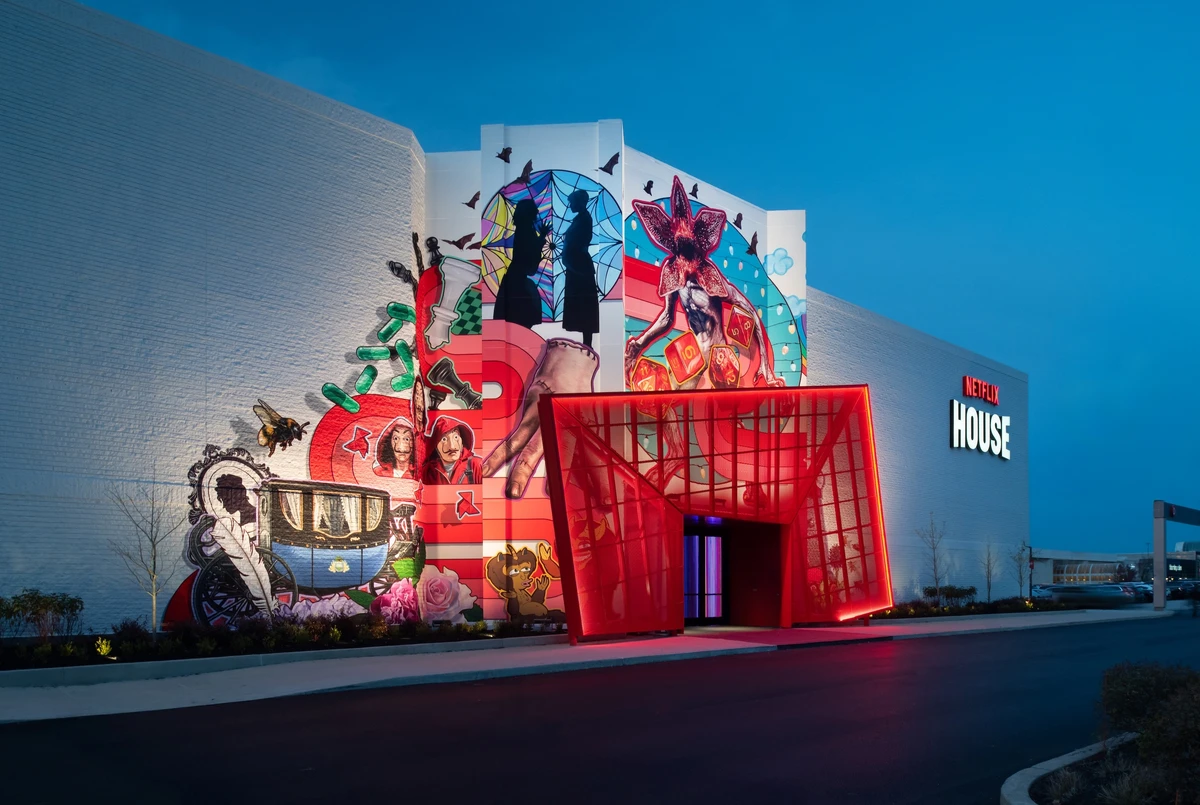
Netflix is the world’s largest paid streaming television service. They started as a DVD-by-mail service in 1998, and launched their online streaming service a decade later. For their first 15 years in business, they were a distribution platform for content from other studios. But as companies like Warner Bros., NBCUniversal, and Sony began building their own streaming services in the late 2000s, Netflix knew it could lose access to its content. This led them to launch their first “Netflix Original” in 2013, House of Cards.
In 2025, Netflix is expected to spend $18 billion developing its own content, which now accounts for 55% of its library of over 13,000 titles. And some of those are smash hits with passionate fandoms. Stranger Things, Squid Games, and Bridgerton are among the most popular television shows. And they’re the foundation of Netflix’s location-based entertainment strategy.
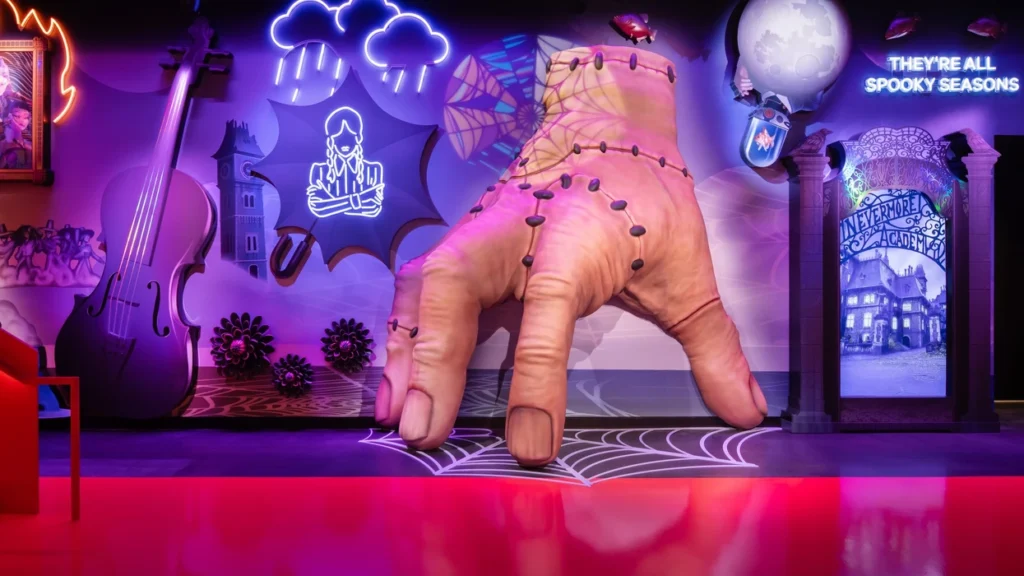
Between 2020 and 2024, Netflix launched over 40 distinct live experiences in 25 cities globally, like The Queen’s Ball: A Bridgerton Experience, Stranger Things: The Experience, and a touring Squid Game challenge. They focused on “Instagrammable” set recreations, themed retail, and interactive theater, providing fans with IRL experiences for premium prices so they could connect more deeply with the stories and characters they loved.
In 2021, Netflix partnered with Hollywood animation studio Pure Imagination to create Army of the Dead: Viva Las Vengeance, a touring virtual reality experience based on Zach Snyder’s zombie movie. Players “rode” in an armored truck, shooting zombies as they drove through a post-apocalyptic Las Vegas cityscape. The truck was on a motion base, and the players had haptic rifles to increase realism. It was supposed to tour more than 20 cities, but they pulled the plug after just a few, as the touring operation and marketing costs lost money.
But that didn’t disuade them from VR experiences. In 2023, Netflix partnered with Sandbox VR to bring Squid Games: Virtuals to its 46 global locations. Two years later, Zach Snyder’s Rebel Moon: The Descent launched to coincide with the release of the second installment of the Netflix sci-fi series. And in 2025, they launched an update to Squid Games to promote and leverage the second streaming season, as well as Stranger Things: Catalyst, which launched just before the final season on Netflix.
In June 2025, KPop Demon Hunter unexpectedly became Netflix’s most-watched original animated film ever, with over 325 million views. So in August, they released the movie on IMAX, along with a special Singalong Edition in 1700 cinemas, further energizing the rabid fan base. It’s just the latest version of Netflix using all available location-based entertainment channels to promote their content and brand.
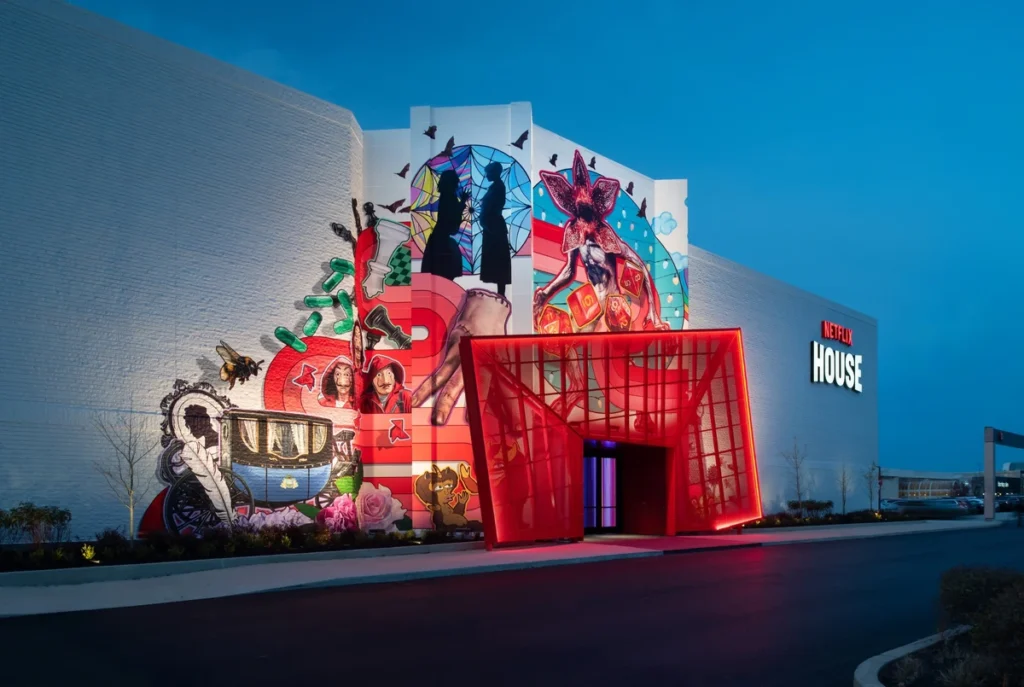
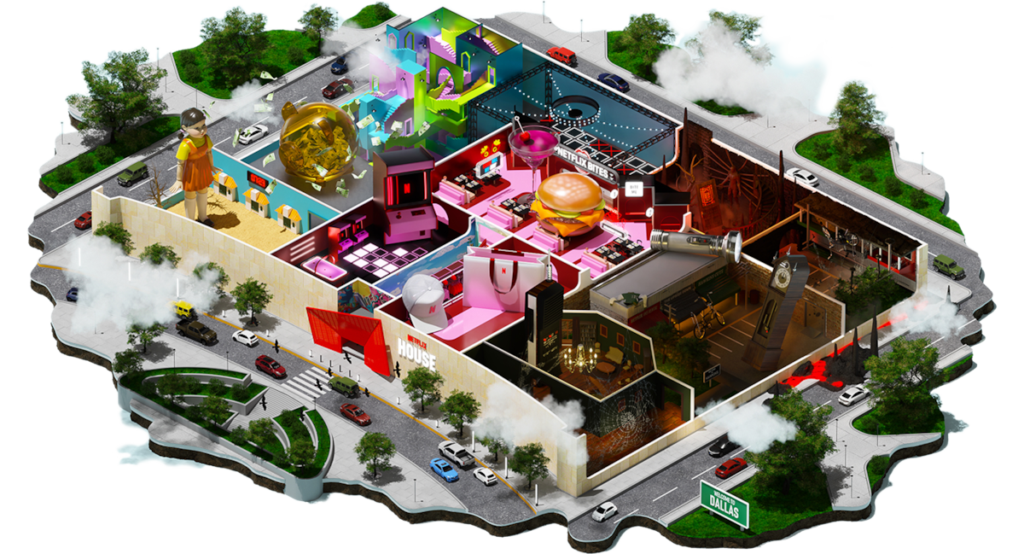
After half a decade of testing what works and what doesn’t, Netflix announced its most ambitious LBE strategy yet: Netflix House. A 100,000 square foot entertainment palace dedicated to experiences designed to immerse guests in the most popular Netflix stories. The first two locations, outside of Philadelphia, Pennsylvania, and Dallas, Texas, took over defunct department stores in malls.
For decades, malls in America were anchored by department stores like Macy’s, Lord and Taylor, JCPenney, and Kohl’s. Department stores brought massive traffic into malls, which fed into smaller specialty retailers and entertainment businesses. Department stores were the first retail platforms, long before Amazon.com
Department stores offered a massive range of products, from clothes and shoes to toys and furniture, and from homeware to hardware. Typically distributed over several floors, these “departments” let retailers appeal to mass markets and respond to consumer trends by moving products in, out, and around the store.
But with big-box discount retailers like Wal-Mart and Target taking over the discount retail landscape, and Amazon and online commerce gobbling up another 20%, department stores became increasingly irrelevant. While they accounted for 14.5% of all US retails sales in 1990, their share fell to 1.8% in 2024.
Today, there are fewer than half as many department store anchors in malls in America. There are reportedly more than 1000 vacant department store boxes for lease. Macy’s alone closed close to 150 stores in 2024-25. And location-based entertainment businesses like Netflix House are absorbing much of it, nearly 22 million square feet in 2025 alone.
There’s a synergy to Netflix House’s takeover of a department store. Because Netflix House isn’t a typical location-based entertainment center, it’s a platform, or a department store, for immersive experiences.
The typical location-based entertainment facility requires a massive capital expenditure in fixed attractions. Go karts, bowling lanes, mini-golf, laser tag, and even arcades are investments in fixed attractions designed to remain in place for a decade or more. This model has not changed since the late 1980s when FunPlex opened in Denver. But over the last 40 years, two whole generations, consumer preferences have evolved dramatically. Our attention spans began to shorten with the advent of MTV and the 3-minute music video. Now the TikTok and YouTube algorithms measure our attention in seconds.
Approximately 50 new titles show up on Netflix every week. And new attractions open in every major city continuously, too. Fever, the global ticketing platform for experiences, features over 150,000 experiences across 200 major cities, with new openings launching every week. For a fixed LBE business, it becomes almost impossible to compete with the constant onslaught of new competition. We live in an age where people expect and value novelty.
So it only makes sense that when Netflix designed and built a permanent location-based entertainment location, it would treat it as a platform. So they worked with the global architecture firm Gensler to create a modular design that would let them move new attractions in and out, rotating them between Netflix Houses. Where most LBE chains design the same attractions into every location, Netflix’s first two, and likely their third, include very different experiences at each one.
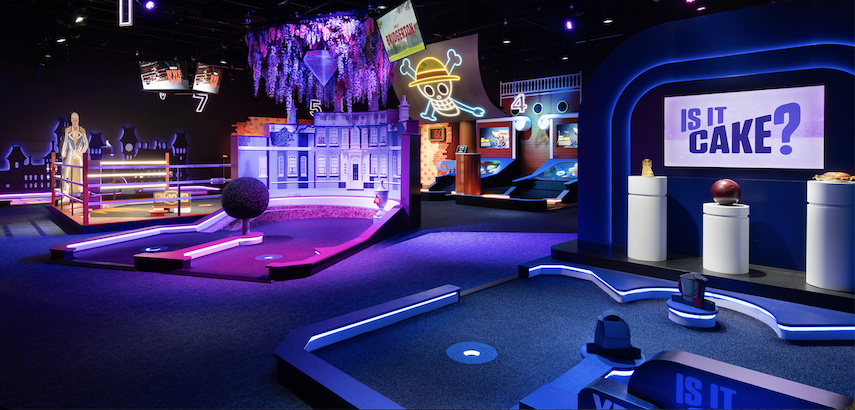
The Philly location features immersive experiences based on the Addams Family spinoff, Wednesday, and One Piece, a record-breaking adaptation of Eiichiro Oda’s manga, which reached No. 1 in 84 countries. It also has a 9-hole mini-golf course, with each hole themed to a different show. The Philly location also features a Netflix Theater, where they can premiere films and host special events.
The Dallas location has a Stranger Things escape room, and RePLAY, a Netflix-themed arcade with 21 different games aligned with the themes of shows like Love is Blind and The Floor is Lava.
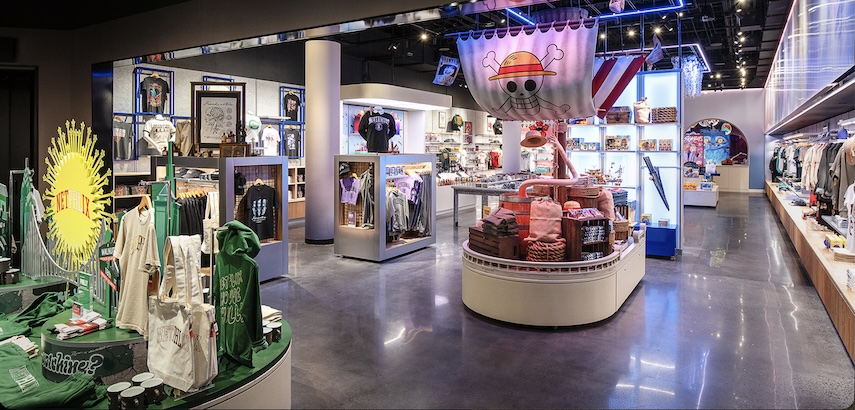
Both locations offer the Sandbox VR Netflix experiences, as well as Netflix Bites and Now Pouring bar and restaurant (the prototype of which opened at MGM Grand in Las Vegas in early 2025. They also feature a retail shop and lots of photo opportunities with bigger-than-life props. Netflix has decades of analytics on consumer content consumption. It knows that trends can emerge suddenly, like the explosion of KPop Demon Hunter. If they were to build a typical LBE facility, they could not keep up with the trends and risk fading into irrelevance.35
I spoke with a member of the Dallas team last week about hosting our next VR Attraction Summit at the Dallas Galleria, where they’re located. They mentioned to me that they’re currently planning to replace at least one of the existing attractions in Sept of 2026, less than a year after they opened. Most FECs might buy a few new games a year; Netflix is looking to move in a new anchor attraction after just 9 months.
This speaks to another strategy that Netflix uses online, which I’ve been encouraging VR arcade owners to employ: driving urgency. If you log into Netflix, you’ll find a category of shows called “Last Chance to Watch” and with a “Leaving Soon” banner on each. They rotate content on and off the platform to create a sense of continuous discovery. When something is going to be gone, it triggers our loss aversion or FOMO. In early 2025, Mission Impossible: Dead Reckoning hit the top 10 list with nearly 4 million views in its last week after being on the platform for a year.
Touring exhibitions use this strategy successfully. You’ll see billboards for shows promoting “last shows – get your tickets now” as a standard marketing tactic. If you have multiple locations, this tactic is feasible. But even a single location can employ this strategy with downloadable attractions. VR arcade platforms offer dozens, and some even hundreds of titles, which can be overwhelming for customers to choose from. Whittling down the offering, rotating out some titles monthly or quarterly, adding new ones, and even bringing back popular old ones gives customers a reason to put on pants, get in the car, and visit your establishment.
The 40-year-old LBE strategy of investing in attractions designed to last for decades has come and gone. It’s time to look at your LBE as an experience platform. And the easiest and cheapest way to do this is with XR experiences.