Why Arcades Pick VRilliant (And Players Come Back)

VRilliant is a leading name in the world of VR arcade games. They are recognized as one of the world’s…
Read more...
extra! the newsletter for operators and immersive venue owners -


IVR as a consumer technology died this week. It’s been a long, slow, and painful death.
From 2015 to 2019, I was an outspoken voice in the VR industry, saying it would never be a consumer product. When the Quest was released and the pandemic set in, I changed my tune. I was caught in Facebook’s delusion that VR would become the next computing platform.
And when Apple launched the Vision Pro and adopted the term Spatial Computing, I was 100% convinced. I wrote this about why Facebook would win the consumer VR market. I held a launch party in Malibu to celebrate. 50 of the biggest VR innovators and influencers sat around drinking wine and watching Tim Apple promise the future we long prognosticated.
Meta proved it this week.
Over the last 5 years, whenever Meta announced how much it had burned building Reality Labs, the skeptics called it the end of the metaverse. I was quick to point out that the $70 billion they’ve invested in Reality Labs paled in comparison to the R&D spending by companies like Apple and Google on new technology. And not all of that was on VR. They’re inventing new optical systems for AR and mixed reality, and subsidizing headset pricing to drive recurring revenue through the app store.
But this week, they made it painfully obvious that their bet on virtual reality was a losing proposition. But before we get to that, let’s start at the beginning to set the context.
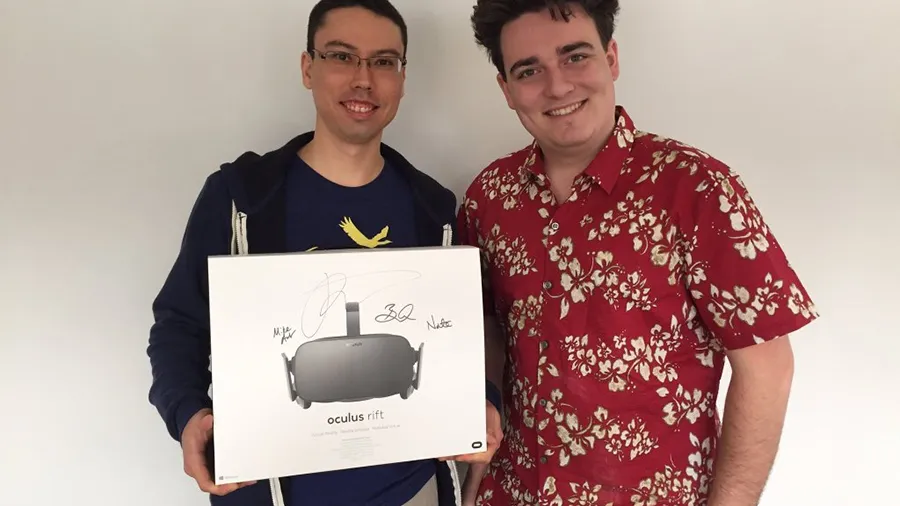
When Meta paid $3 billion to acquire Oculus in 2014, it was placing a bet that VR would be the next computing platform. Meta was late to the mobile game, and Mark Zuckerberg, its founder and CEO, realized that as its users migrated from the web to mobile apps, they faced the potential for disintermediation by Apple and Google, which controlled the OS.
Their acquisition of Oculus positioned them as the leader in this new computing paradigm. He believed that controlling the OS was existential for Meta (which was called Facebook back then.)
If you look at the history of computing, Microsoft was the dominant player with DOS and Windows. But they stumbled as computing moved to mobile, with Google Android and Apple iOS becoming the dominant operating systems. Microsoft tried with WindowsOS, partnerships with Sony, and even their own attempt of making a phone with Zune. All failed miserably.

The HTC One – AKA Facebook Phone
Meta tried to get in the mobile market as well, but they were late and their Facebook phone flopped. Zuck was not going to make the same mistake again. So in May 2019, Meta released the first Quest standalone headset. It was their shot at making the iPhone.
At the iPhone launch, Steve Jobs teased the audience saying they were going to release three groundbreaking products:
The reason the iPhone was such a success is that it made the things we were already doing easier and better. We didn’t have to carry an iPod AND a phone. And we were no longer tethered to our PC to browse the web. iPhone gave us the entire internet in our pocket.
Sure there were smartphones before (if you can call them that) with mobile browsers. I had a Samsung Blackjack 2, which was the best of its age, and it absolutely sucked. iPhone made browsing the web on a phone almost magical.
Meta, understanding they needed to position the Quest as something people would understand, went after the console gaming market. They made the bet that gamers would trade immersion for ease of use. They lost that bet.
The majority of the gaming market is casual. Most people play games for the same reason they watch TV or read a book – to distract themselves from reality. Consoles provide more than enough distraction, and you can have it in seconds. Sit down, pick up the controller, and start playing. No need to clear the furniture, or recalibrate your headset, or reset the guardian. Every time I went to use my Quest, it seemed to take from 15 minutes to half an hour, or more, before I was playing. IYKYK.
So this week, Meta announced a 10% staff reduction at Reality Labs, resulting in about 1,500 people losing their jobs. It wasn’t the size of the layoff that signified the strategic shift. A 10% layoff for a division with 15K employees, as painful as it is for those directly impacted, isn’t that big. Companies often trim at the start of a new year.
But if you look at who was targeted, you can see the writing on the wall. They gutted their gaming ecosystem and shut down three leading game studios.
They’re also no longer going to update the Supernatural fitness app, which they called “Peloton of VR” when they acquired it from Chris Milk for $400 million in 2021.
Not surprisingly, they’ve left alone (for now) Beat Games, maker of the blockbuster Beat Saber, and Big Box, which makes Population One. Both of those are live service games which tend to generate recurring revenue through regular updates, downloadable content and in-game purchases.
There’s also news that Camaflouj, the maker of the 2024 Game of the Year winner Batman: Arkham Shadow, has suffered significant layoffs and won’t be making games. Meta bundled Arkham with Quest 3 units to help it get to 1 million users, but the market for $50-60 high-end games is extremely limited.
These moves are an admission that VR is not becoming a mainstream gaming platform. It’s a niche gaming technology. There’s a hardcore PCVR gaming community that will be served by the new Valve Steam Frame. And free-to-play sandbox games for Gen Alpha, like Gorilla Tag and Animal Company seem to be doing well for now.
The narrative around these layoffs seems to center on Meta’s failure. And I have no love loss for them as a company. But blaming Meta for the failure of virtual reality is like blaming farmers for the lack of popularity of Brussels sprouts. Sure, Meta could have made the tech better and more user-friendly, just like I can cook brussels sprouts in bacon and smother them with balsamic vinegar. But it would not have changed the fundamental appeal to most gamers who prefer casual, impulsive, and instant entertainment.
Virtual reality is not the next computing platform. The next computing platform is AI. XR technology will be the display technology for AI computing, when and where it needs a display.
Traditional operating systems are going to become obsolete in a world when compute happens in the cloud, and the primary interface is voice. Agentic AI will replace the applications we use, making computing more efficient. Right now, applications are siloes. My spreadsheet doesn’t know what’s in my PowerPoint, which is clueless as to what’s in my database. As AI becomes more advanced, working across apps will feel like writing longhand letters or using a ten-key and a ledger.
Will the metaverse happen? Maybe, but it’s being redefined as I write this. In 2019, Meta announced Live Maps, their attempt to create a digital twin of the entire planet. Meta Ray-Bans and other AI glasses with cameras provide the input mechanisms to collect all that data. In another decade, will people navigate a virtual version of the world in VR headsets? Maybe. Will they be wearing glasses that layer information on top of the physical world? Probably. Will all that be called the metaverse? Who knows.
In the meantime, the demise of consumer VR is great news for location-based virtual reality. One of the objections I still get from potential operators is “everybody is going to have VR at home.” That ain’t happening. And for location-based experiences, VR delivers the best experiential return on investment of anything out there. If you want to know more, you know how to reach me. Or join LEXRA, the Location-based Entertainment XR Association, where the leading companies are building the next generation of immersive entertainment.