Miners Landing Built a $25 Mixed Reality Dark Ride Into Unused Space on Pier 57
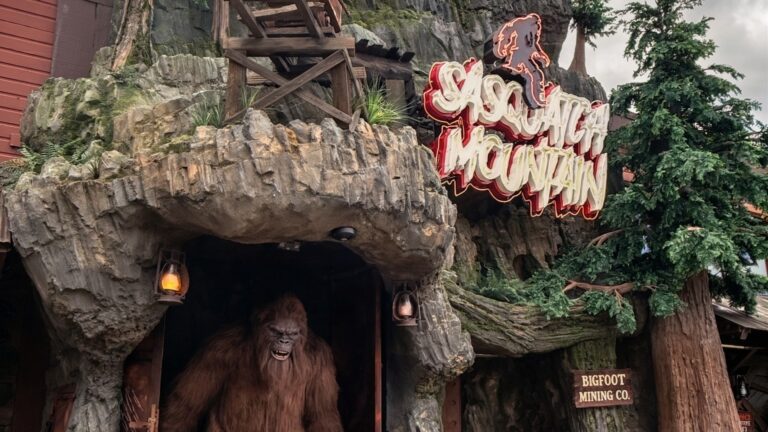
Miners Landing has run Sasquatch Mountain on Seattle's Pier 57 since 3 April 2026. The Bigfoot hunt uses VR headsets…
Read more...
Hero Zone: Where Social VR Meets Real-World Revenue -

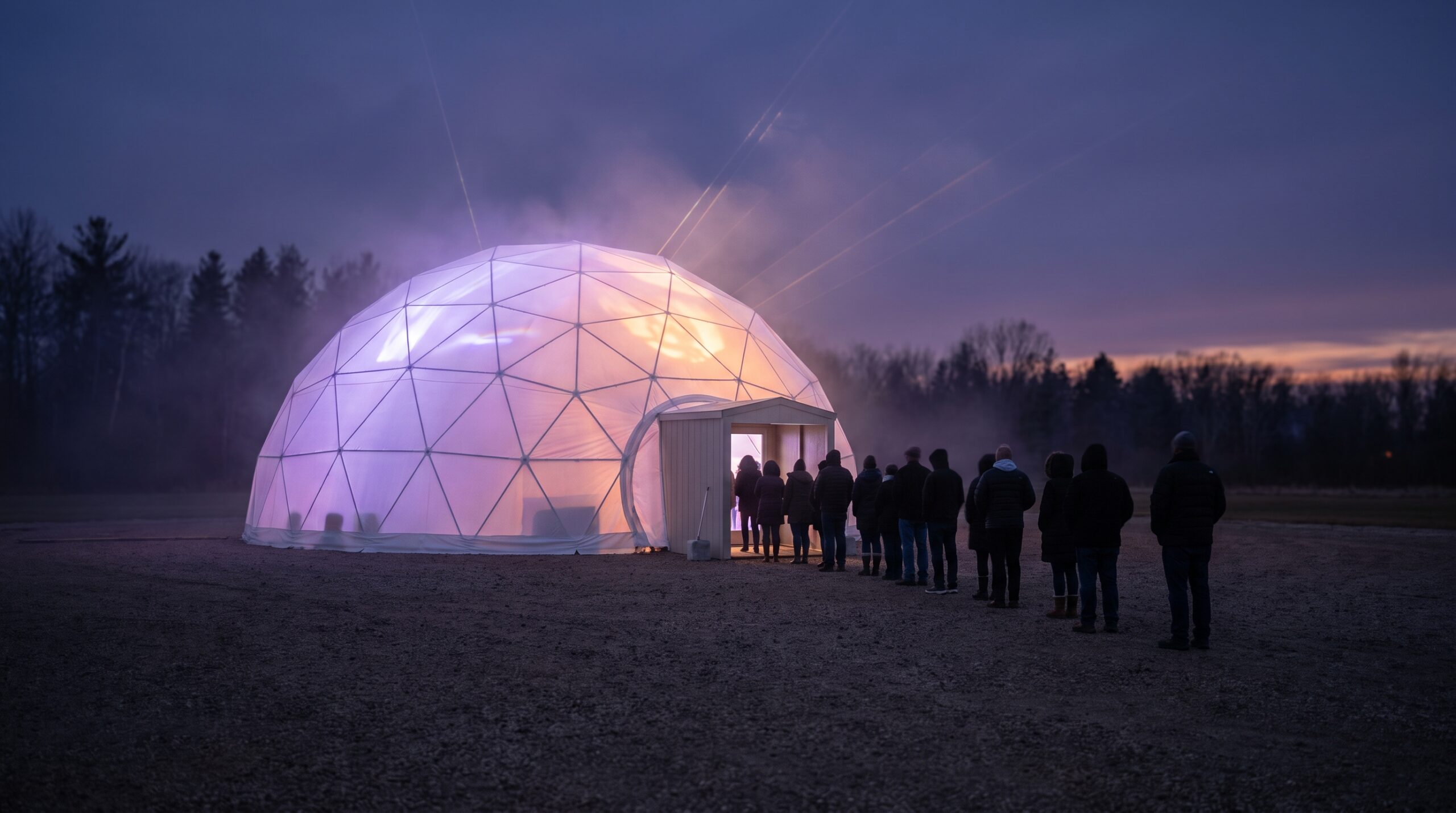
A 15-metre geodesic dome has spent this summer parked at 1106 Mondovi Road in Eau Claire, Wisconsin. It runs six nights of live music wrapped in 360-degree projection mapping, 16-channel spatial audio and a seven-laser rig. It is called LumiaDome. Lunarhive LLC built it and operates it. The site’s directory lists it under immersive rooms, alongside projection rooms and touch-sensitive floors.
The structure is engineered to be put up and taken down rather than built. Lunarhive says: “What takes months to build elsewhere takes days here.” Inside, the whole dome surface takes projection. Sound runs on a 16-channel spatial system. Scent and climate are controlled as part of the show rather than as building services.
Capacity is eighty, with the company’s specification listing a range of eighty to a hundred depending on configuration. Doors open at 7:00 pm and performances start at 7:30.
Volume One, the Eau Claire regional publication, first reported the arrival. It says Eric Warner founded the dome. Warner worked in electronic arts and film, and he built festival installations before assembling this. Volume One also says a second, smaller dome of about 20 feet came to the Chippewa Valley alongside the main one. The publication reports that the Pablo Center at the Confluence has supported the run with in-kind production and marketing help.
The Eau Claire residency opened on 24 July with the world premiere of Fantasia Quartet. That show paired members of the Chippewa Valley Symphony Orchestra with the Eau Claire audio-visual artist Dathan Boardman. Boardman generated visuals responding to the music as it was played. A free jazz night followed on 31 July on a pay-what-you-wish basis. August brought a two-part 36-year retrospective by Andrew Baschyn, staged as full-surround projection, with tickets from $16.79. The run closes with a machine-driven sound and light programme on 22 August and the Minneapolis electronic quartet Black Rain Ensemble on 28 August.

Most dome content in this industry is pre-rendered and plays on a fixed schedule. A pre-rendered show is what fills a permanent building at high frequency. LumiaDome is running live musicians inside the projection, one night at a time.
Lunarhive publishes three ways to bring the dome to a site: a share of ticket sales, a flat rental fee, or a base fee with revenue participation on top. Installations run four to six weeks with the company’s own production crew. The host supplies flat ground, power and loading access. Lunarhive supplies what it calls all core production systems and crew.
A host commits no capital, no integration project and no permanent square footage. That holds whether it is a venue, a festival, a fairground or a university. This site examined the equivalent decision on a fixed installation with Cosm, the Sphere and 5,000 empty movie theatres. That decision starts in the millions and ends in a twenty-year lease.
The arithmetic on eighty seats at $16.79 gives a gate of about $1,343 on a sold-out night before any bar, merchandise or premium tier. Lunarhive does not publish its fees, so the split is negotiated site by site.
The company says its medium-term plan is multiple domes running simulcast, and its long-term plan is a network of them playing synchronised programmes across locations. Lunarhive operates one dome, with one Wisconsin residency and a published calendar.
Some venues, festivals and campuses have outdoor space and a summer gap in programming. For them, the three rental terms make a touring dome a way to test immersive demand without buying a system. Ask Lunarhive for the utilisation figures from the Eau Claire run before you discuss terms. For an operator with a permanent immersive venue, the same terms carry a different message. A competitor can bring an immersive night into town for four weeks with no lease and no capital at risk. LEXRA members work through programming and partnership decisions like this together at lexra.org.
What is LumiaDome? A portable immersive performance venue built around a 15-metre geodesic dome, operated by Lunarhive LLC. It combines 360-degree projection mapping across the dome surface, a 16-channel spatial audio system, a seven-laser show system, and controlled scent and climate.
Where is LumiaDome and how long is it there? It is at 1106 Mondovi Road in Eau Claire, Wisconsin, for a summer 2026 residency that runs from 24 July to 28 August. Lunarhive says typical installations run four to six weeks before the dome moves on.
How many people fit inside a portable immersive dome of this size? Eighty, according to the ticketing listings, with the company’s specification giving a range of eighty to a hundred. Doors are at 7:00 pm and shows start at 7:30.
How much are LumiaDome tickets? Published show listings start at $16.79. One night in the Eau Claire run was offered pay-what-you-wish.
How can a venue host LumiaDome? Lunarhive offers three arrangements: a revenue share on ticket sales, a flat rental fee, or a hybrid of a base fee plus revenue participation. Hosts provide flat space, power and loading access; Lunarhive provides the production systems and the crew. It does not publish rates.
Is a projection dome part of location-based XR? Yes, on this site’s definition. The test is whether it is a location-based immersive experience, not whether the guest wears a headset. Dome projection, projection mapping and touch-sensitive rooms all sit inside the beat, and the product directory carries a Headset Free XR category for them.