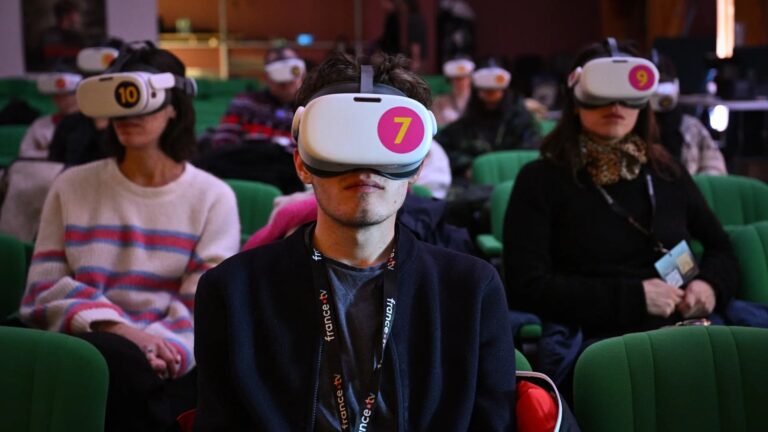
Miners Landing Built a $25 Mixed Reality Dark Ride Into Unused Space on Pier 57
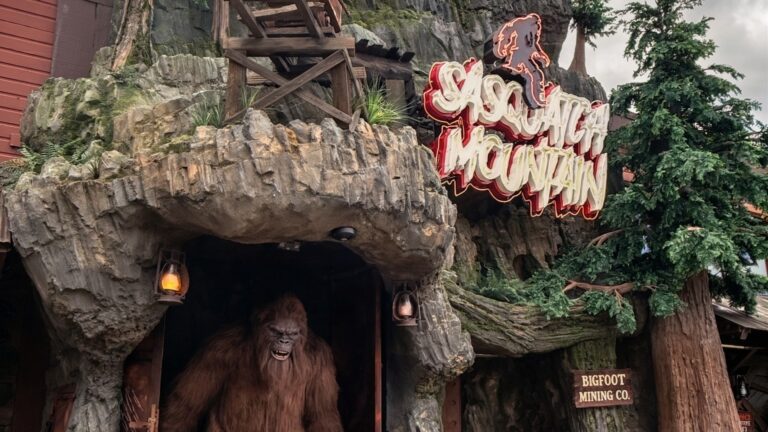
Miners Landing has run Sasquatch Mountain on Seattle's Pier 57 since 3 April 2026. The Bigfoot hunt uses VR headsets…
Read more...
Hero Zone: Where Social VR Meets Real-World Revenue -


PICO and STYLY are expanding their partnership to move immersive content across international markets, with STYLY handling distribution for location-based VR experiences running on PICO enterprise headsets. STYLY is also the newest company to join LEXRA, which places both sides of the deal inside the same industry body working on standards, distribution and operator support.
Cross-border content distribution is one of the least solved problems in location-based entertainment, and it decides what an operator can put in front of guests. A hardware manufacturer and a content platform coordinating on it between themselves is worth more to operators than either announcing a catalogue expansion alone.
STYLY is a Japan-based company whose product is an enterprise VR content platform: a creation and distribution system for XR experiences, with a catalogue spanning cultural, environmental, artistic and commercial content. It has been operating for years with production credits behind it, in a segment that has quietly become one of the more consequential parts of the LBE map: non-gaming immersive content for operators who do not want to program a shooter catalogue.
That places STYLY alongside Excurio, Univrse, Wevr and Small Creative in the group building platforms for cultural, narrative and location-anchored VR. PICO’s enterprise line, the Pico 4 Enterprise and Pico 4 Ultra Enterprise, runs in a growing share of LBE venues on the strength of standalone hardware, fleet management and pricing that makes multi-headset deployments viable without PCVR infrastructure. Hardware still needs content an operator can load and run, and that is the gap this partnership addresses.

Every content producer builds for a home market first. Japanese producers build for Japan, European producers for Europe, American producers for North America. Moving that content into venues in another region requires localisation, licensing, payment infrastructure, technical compatibility with the operator’s fleet and usually a distribution partner who knows the local operator landscape.
Most of the industry handles this as a series of one-off deals. A structured distribution arrangement with a hardware partner attached is a step toward something repeatable. If it works, operators in North America and Europe reach Japanese and Asian content they would not otherwise see, and Japanese producers get distribution outside their home market without standing up a regional operation. Given how strongly Asian television and film have travelled to Western audiences, whether the same appetite carries into location-based content is a genuinely open question.
More platforms bringing more content into the market helps operators on the catalogue side. Excurio, Univrse, Wevr, Small Creative and STYLY each bring their own libraries and creator networks. The operational question that follows is whether operators end up running five platforms to host content from five companies.
That degree of fragmentation slows the category down, because every added platform is added infrastructure, added staff training and another system to keep patched. Getting to some level of compatibility across platforms, so an operator can add content without adding infrastructure, is the conversation this partnership should prompt — and with hardware and platform members now inside the same body, it is a conversation with a venue for it.
If you program cultural or environmental content, ask your platform vendors what their cross-border licensing looks like, because the answer decides whether a catalogue you have been shown is one you can run in your territory. If you are running PICO enterprise fleets, the addressable catalogue widens without a hardware change, which is the cheapest form of new programming available to you. And if you are weighing platform commitments, ask what happens when you want a second library alongside the first, since the interoperability answer will matter more over the next two years than any single catalogue does today. Operators and suppliers work these questions through together at lexra.org.
What is the PICO and STYLY partnership?
An existing partnership around running STYLY’s immersive content on PICO enterprise headsets. This expansion focuses on international distribution, moving STYLY’s catalogue into operator markets outside Japan and Asia.
What kind of content does STYLY distribute?
Cultural, environmental, artistic and narrative immersive experiences. The material announcing this expansion referenced an environmental conservation-themed VR experience as one example.
Is STYLY a LEXRA member?
Yes, and the newest one. PICO is also a member, so both sides of the partnership sit inside the same industry body.
How does this affect location-based VR operators?
Operators running PICO enterprise headsets gain access to a wider international catalogue through STYLY’s distribution, which is useful for programming cultural, environmental and narrative content alongside the action and horror titles that dominate most LBE catalogues.
Why does cross-border content distribution matter?
Most immersive content is built for a home market and struggles to reach other regions because of localisation, licensing and distribution overhead. Structured international arrangements lower those barriers and let producers reach operators globally without building a regional operation in every market.