Miners Landing Built a $25 Mixed Reality Dark Ride Into Unused Space on Pier 57
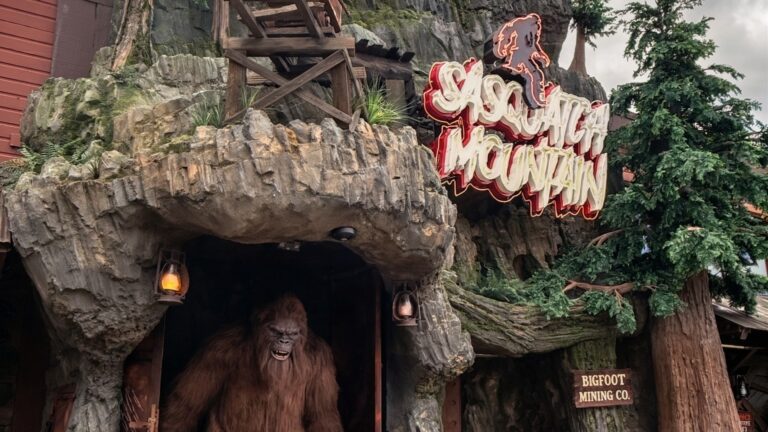
Miners Landing has run Sasquatch Mountain on Seattle's Pier 57 since 3 April 2026. The Bigfoot hunt uses VR headsets…
Read more...
Hero Zone: Where Social VR Meets Real-World Revenue -

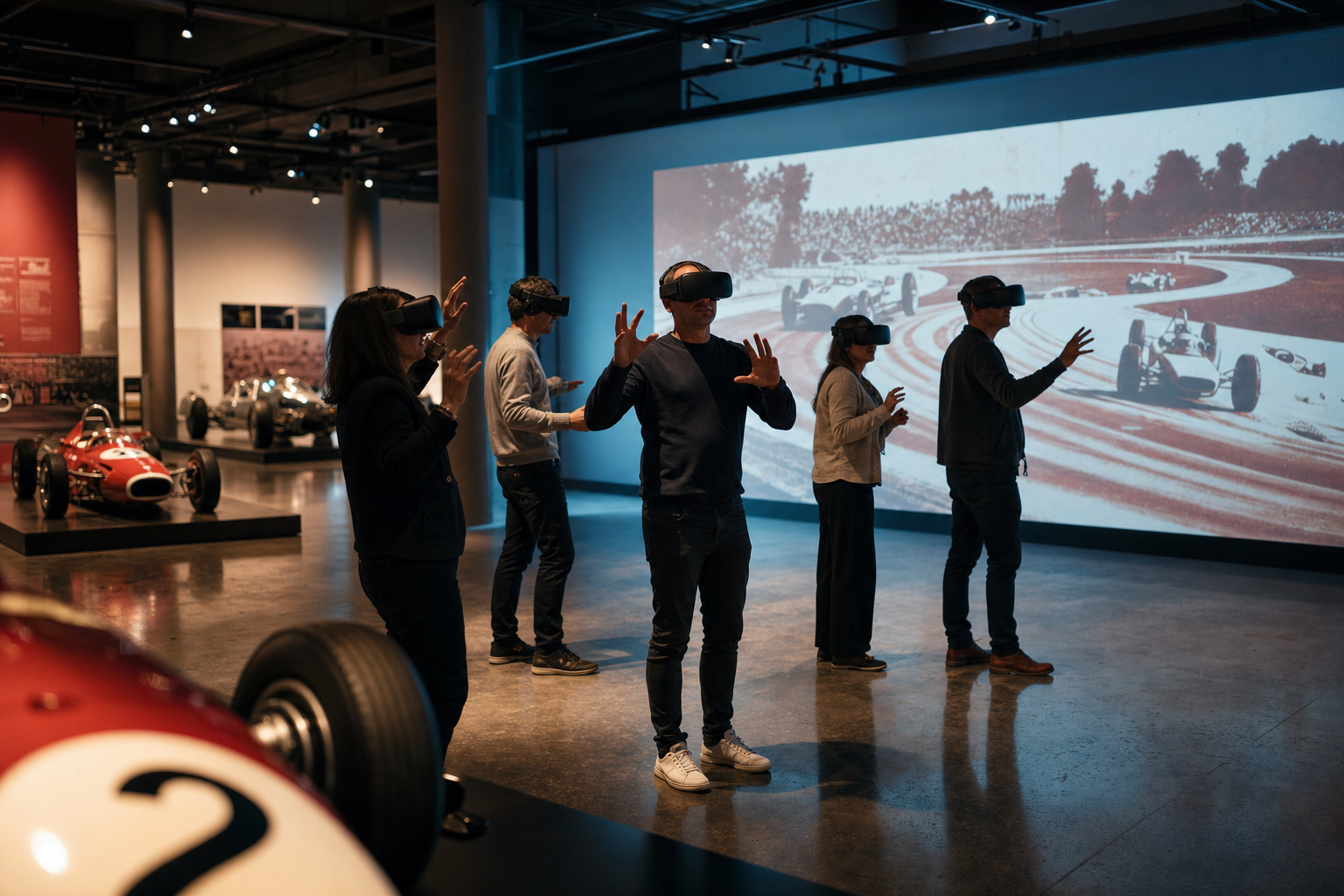
Silverstone Museum has installed Black Cats & Chequered Flags, a virtual and mixed reality experience about two-time Formula 1 world champion Alberto Ascari, as a year-long exhibit. It is the UK premiere of a piece that competed in the Venice Immersive section of the 82nd Venice International Film Festival in 2025 and that we covered at its previous venue in Ferrari Museum in Maranello Unveils Groundbreaking MR and VR Experience. The same production has now moved from one flagship motorsport institution to another.
The number to focus on is twelve months. Silverstone is not running a two-week pop-up or a summer trial. The museum is programming the exhibit alongside its existing shows, including the Driven by Design exhibition on F1 car designers, and treating it as a primary reason to visit through what chief executive Phil Lawrie described as an anticipated record summer season.
The motorsport VR experience follows Ascari’s life and career through virtual and mixed reality, archival material and multiplayer gameplay. The narrative hook is his superstitions, the cursed number 26 and the black cats associated with his career. Guests take part in a simulated 1950s pitstop and then race alongside Ascari at Monza, with period audio and visual recreations reconstructing the era.
The multiplayer construction matters more than the subject. A group experience carries scheduling and staffing demands that a solo headset booth in the corner of a gallery does not, and it gives a visitor a reason to book ahead and bring people.

Ascari’s history with the circuit is documented rather than marketed. Museum director of curation and learning Rob Jaina laid out the record: Ascari finished second at Silverstone in October 1948 in a Maserati, at the first grand prix ever held at the track. He returned the following year with Ferrari and won the inaugural BRDC International Trophy, then won world championship grands prix there in 1952 and 1953 on his way to consecutive F1 titles. He remains the only Italian driver to win multiple F1 world championships with Ferrari.
That alignment is what cultural VR has consistently needed. Silverstone’s audience already travels to Silverstone for motorsport history: tourists, F1 fans, school groups and the enthusiast base that books tickets to see the track. The exhibit slots into a visit those guests had already committed to, which is an easier operational position than asking a headset experience to justify the trip alone.
Museums program pop-ups in months. A twelve-month exhibit is a flagship-level commitment, implying the museum ran its numbers on visitor demand, ticket economics and operational fit before signing, and expects the piece to hold interest across autumn, winter and spring when baseline traffic drops.
For the producer, the Multiverse Institute for Arts and Technology, twelve months buy something cultural VR rarely gets: runway. A year is long enough to build attendance data, gather reviews, refine operations and produce a case study another institution can evaluate. A festival slot does none of that.
The shoulder-season numbers are the ones to track. Summer attendance during a record season tells other museums very little. Whether the exhibit holds through January tells them whether a year-long VR booking is an investment or a summer play.
If you produce cultural immersive work, the Ascari route is a distribution model worth studying: one production, a festival credential, then consecutive long-run institutional bookings, each of which pays while the piece stays intact. If you run or advise a sports institution, the template travels. Every major motorsport venue has a resident legend or a defining era, and football, cricket, rugby and baseball halls of fame face the same problem — a static collection, an audience that wants to feel closer to the legends, and a need for new programming to drive repeat visits. Watch which motorsport museum moves next, because the Ferrari Museum and Silverstone running the same piece is a pattern of two, and a third makes it a category. LEXRA members work through content and programming decisions together at lexra.org.
What is Black Cats & Chequered Flags?
A virtual and mixed reality experience about Formula 1 world champion Alberto Ascari, produced by the Multiverse Institute for Arts and Technology. It combines VR, mixed reality, archival material and multiplayer gameplay, including a simulated 1950s pitstop and a race alongside Ascari at Monza.
Where is the Ascari VR experience showing in the UK?
Silverstone Museum is hosting it as a year-long UK exhibit, running alongside the museum’s existing programming and its Driven by Design exhibition on F1 car designers.
Who produced it, and where has it run before?
The Multiverse Institute for Arts and Technology produced the experience. It was selected for the Venice Immersive section of the 82nd Venice International Film Festival in 2025 and previously ran at the Ferrari Museum in Maranello.
How is a year-long VR museum exhibit different from a typical installation?
Most museum VR runs as a short-term exhibit or a pop-up. A twelve-month booking lets the museum program the piece across peak and shoulder seasons, build attendance data, and market it as a primary draw in its own right.
What connects Ascari to Silverstone?
He finished second at the first grand prix held at the circuit in October 1948, won the inaugural BRDC International Trophy there in 1949, and won world championship grands prix at Silverstone in 1952 and 1953 during his two title seasons.