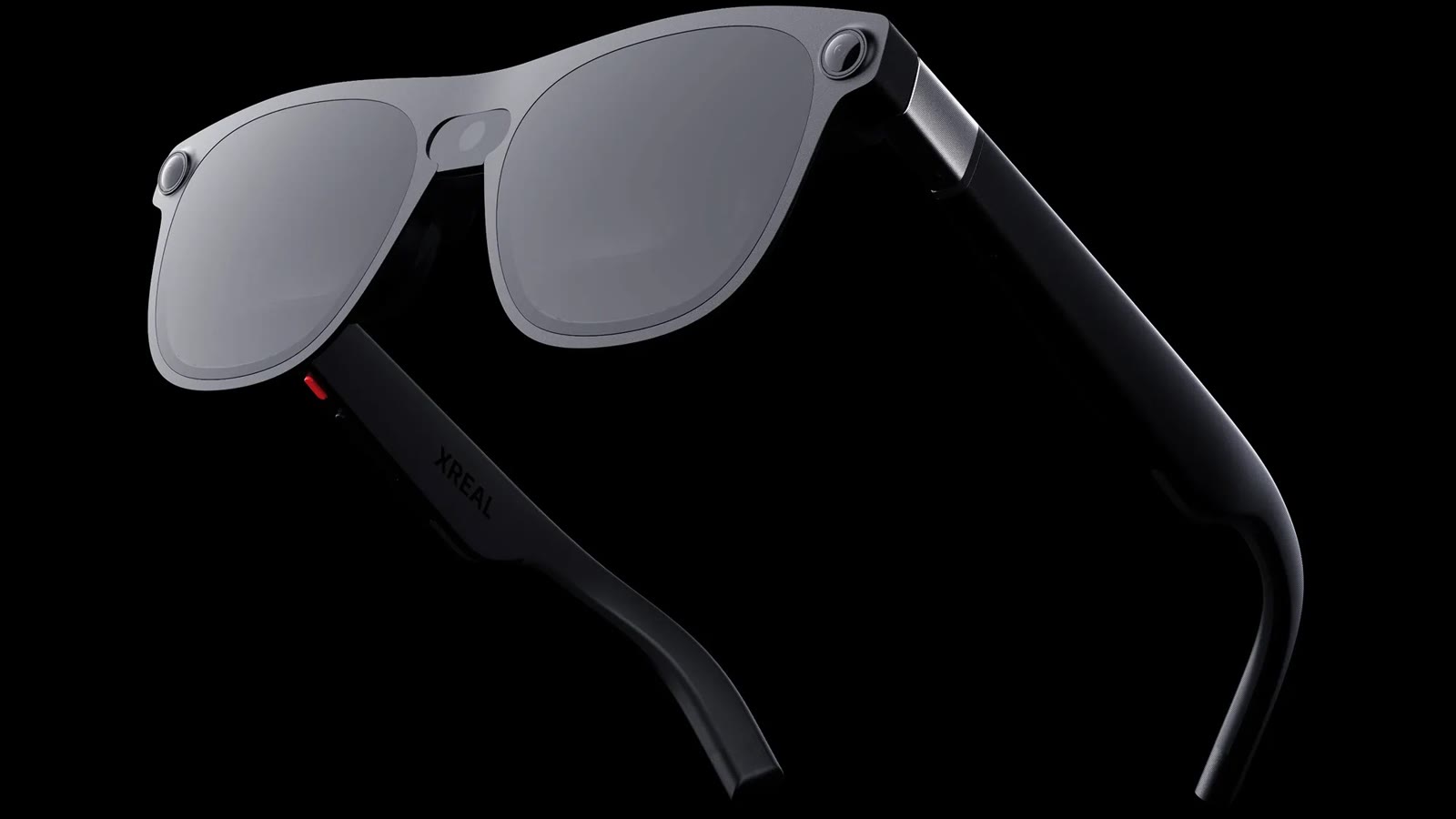
On the Good VR Podcast on 19 November, CNET’s Scott Stein scored XREAL’s Aura glasses 7 out of 10. Norman Chan, who reviewed the glasses for Tested, could not recommend them.
Both had worn Aura for a week. Asked by host Ian Hamilton whether they would pack the glasses for a trip, both said yes.
Why Android XR glasses matter to LBE venues
Location-based AR has run on headsets until now. Enklu’s attractions ran on Microsoft HoloLens 2 and Snap Spectacles in third-party venues until the company filed for Chapter 7 in June. Enklu was a LEXRA member.
XREAL’s glasses already carry location-based work: Andy Serkis’s 31-minute installation Nevatars ran on Aura at Venice Immersive in September.
“We’re waiting for new hardware that can replace the HoloLens and Magic Leap and is more suited for LBE,” said Bob Cooney, a VR consultant and executive director of LEXRA, the trade association for location-based XR, who began his career operating immersive location-based entertainment in 1989. “Some consumers have resistance to putting on full headsets, so a glasses format is going to be more accessible and lead to market expansion for LBE venues.”
Cooney publishes The VR Collective. He set out the trade-offs AR glasses face, field of view, brightness, battery life and weight, when XREAL announced Project Aura, in I Can See Augmented Reality From Here.
What the Android XR glasses are
Aura looks like a pair of sunglasses fitted with cameras for spatial sensing and finger tracking. The wearer sees the space around them through transparent lenses and can darken the display to shut it out.
The computing sits off the face, Engadget reported. A cable runs to a Compute Puck with a Snapdragon Reality Elite chip and up to 16 GB of memory. Plugged into a laptop or phone instead, the frames work as plain display glasses.
Android XR glasses display numbers against VR headsets
Engadget puts Aura’s 70-degree view behind Apple Vision Pro at about 100 and Meta Quest 3 at up to 110. Its micro-OLED screens reach 1,920 by 1,200 pixels and 1,058 nits, though Android XR itself refreshes at 72Hz.
Aura lists at $1,279 and sells for $1,099 through December. Engadget also scored it 7 out of 10. “If you can get past the $1,000+ price of entry, the Xreal Aura really ups the ante for low-impact spatial computing,” Tom’s Hardware’s Brandon Hill wrote.
Android XR glasses and the apps gap
Samsung’s $1,800 Galaxy XR headset brought Android XR to market a year before Aura. Engadget still found the platform unstable and short of XR apps, and judged Aura “still mainly targeted at VR developers.”
What this means for venue operators and content studios
For venue operators, Cooney expects a glasses format to reach guests who will not wear a full headset; Aura’s 70-degree view against Quest 3’s 110 is the trade-off reviewers measured. Content studios have Nevatars as one location-based precedent on Aura, though Engadget found few Android XR apps beside it.
FAQ
What are the XREAL Aura Android XR glasses?
Sunglasses-style frames with transparent lenses, cameras for spatial sensing and finger tracking, and a wired Compute Puck that runs Android XR on a Qualcomm Snapdragon Reality Elite chip.
Why do Android XR glasses matter for LBE venues?
Location-based AR has run on headsets such as Microsoft HoloLens 2. Bob Cooney of LEXRA said a glasses format would be more accessible to guests who resist full headsets and would expand the market for LBE venues.
How much do the XREAL Aura glasses cost?
$1,279 at list price, on sale for $1,099 through December 2026.
How wide is the field of view on Android XR glasses like Aura?
Aura’s field of view is 70 degrees, against about 100 for Apple Vision Pro and up to 110 for Meta Quest 3.
What did reviewers say about XREAL Aura?
CNET’s Scott Stein and Engadget each rated it 7 out of 10. Tested’s Norman Chan said he could not recommend it, though he and Stein both said they would travel with it.