Miners Landing Built a $25 Mixed Reality Dark Ride Into Unused Space on Pier 57
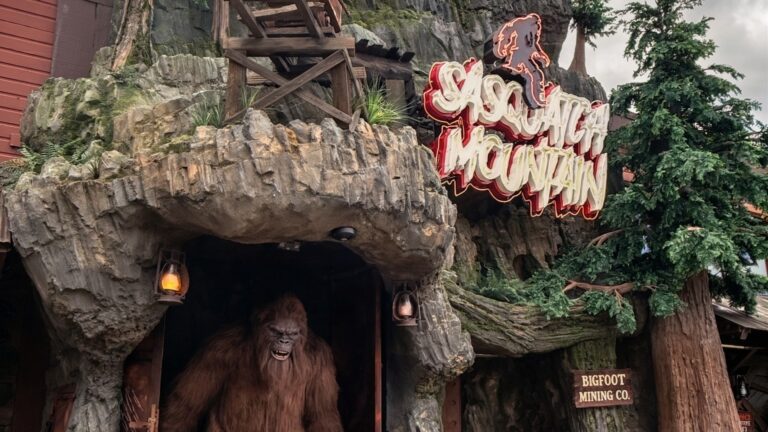
Miners Landing has run Sasquatch Mountain on Seattle's Pier 57 since 3 April 2026. The Bigfoot hunt uses VR headsets…
Read more...
Hero Zone: Where Social VR Meets Real-World Revenue -

Bob Cooney’s Take – This is a hard one to write about because Enklu and Zoocade are both LEXRA members, and a Chapter 7 means Enklu is done. The venues that hosted Verse Immersive attractions are now standing in line as unsecured creditors with “unknown” amounts owed to them, while management earned over a million dollars in salary and commissions in the year before the filing. There’s a lawsuit between Enklu and one of its investors that predates the bankruptcy, and the Directors and Officers Liability Insurance policy just got extended three years. The full story is going to take a while to flesh out.
Enklu, Inc., the Chicago company behind the location-based augmented-reality brand Verse Immersive, filed for Chapter 7 bankruptcy on June 1, 2026 in the U.S. Bankruptcy Court for the Northern District of Illinois (Case No. 26-09345). Chapter 7 is liquidation, not reorganization. A court-appointed trustee will sell off whatever assets exist and distribute proceeds to creditors. The business does not continue operating.
For the roughly 18 entertainment venues that hosted Verse Immersive attractions and shared in ticket revenue, the AR content they were running just lost its operating company. They are now unsecured creditors waiting in line behind a process that gives no indication of how much, if anything, they will recover.
Disclosure up front: Enklu and Zoocade, one of the venues listed in the filing, are both LEXRA members.
Enklu was founded in 2016 as Emergent AR Platforms Corp., renamed to CreateAR Corp., and eventually became Enklu. It built AR attractions including Everworld, Starwalk, and The Unreal Garden that ran on Microsoft HoloLens 2 and Snap Spectacles headsets. The attractions were licensed into third-party venues under the Verse Immersive brand.

The model was content-as-a-service for location-based AR. Operators provided the floor space and the customer flow. Enklu provided the headsets, the software, the content, and a ticketing application called VerseTag that compiled guest statistics and calculated venue royalties. Revenue was shared.
That model is not inherently broken. Banijay is doing a version of it with the Black Mirror Experience. Excurio runs it with Horizon of Khufu. Cosm is doing a variant with catalog film IP. The content-into-venues distribution path is one of the more interesting structural plays in LBE right now. Enklu was operating in that lane on the AR side before most of the VR-side examples got going.
What broke is the company, not the model.
Enklu reported gross revenue of about $5.45 million in 2025, up from $3.34 million in 2024. The first five months of 2026 added roughly $2.15 million, which is flat from 2025.
On the asset side, Enklu listed $5.68 million in total assets, which includes its own valuation of $1.5 million they claim for their trademarks; the rest is internally developed software and patents. A trustee will try to find a buyer. The hard-asset recovery for creditors will be small.
Here’s the part of the filing that sits awkwardly. The schedules name roughly 18 venue operators as unsecured creditors. Main Event Entertainment. Ripley’s Believe It or Not!. Laserdome. Rebounderz. Micon Cinemas. Zoocade. Others.
For most of them, the amount Enklu owed is listed as “unknown.”
In the 90 days before the filing, Enklu paid many of those same venues substantial sums. More than $200,000 combined, with individual payments running as high as roughly $53,000. And Enklu sold tickets through its own VerseTag application, which the filing itself describes as a ticket-purchasing tool that compiled guest statistics. That is the same ticket data from which venue royalties were calculated.
A company that runs the ticketing software, calculates the royalties, and made payments to the venues within the last 90 days knows what it owes the venues. The filing does not explain how the closing balances became unknown.
A trustee will sort that out eventually. The venues will need to file proofs of claim and substantiate what they are owed, ideally with their own records of the ticket sales their venues hosted. Operators who licensed Enklu content should pull their VerseTag reports now if they have not already, before access to whatever cloud infrastructure ran VerseTag becomes a question for the trustee.
Cooney’s Take – This is a risk operators should think about in the future. Letting your suppliers collect your ticket revenue and pay you out in arrears puts your cash at risk. Remember the Golden Rule.
Enklu’s bankruptcy filing reports more than $1 million in total compensation to its management in the year before the filing.
There is also an unresolved legal fight between Enklu and one of its investors. The Wanger Income and Growth Fund, controlled by Eric Wanger, sued Enklu in Cook County last year seeking repayment of loans the fund says total more than $800,000. Enklu countersued in Delaware on May 15, 2026, two weeks before authorizing the bankruptcy, alleging breach of fiduciary duty and related claims. The Delaware case is pending. The allegations on each side are unproven.
The bankruptcy could also reach onto the venue floor. One of Wanger’s loans financed Enklu’s purchase of 100 Microsoft HoloLens headsets — the kind used to run its attractions — and his fund holds a security interest in those specific, serial-numbered units under a public filing it made last year. With Enklu now liquidating, headsets installed at venues could be subject to competing claims from the lender or from the bankruptcy estate, depending on whether an operator bought a given unit outright and whether Enklu ever passed that payment on to the lender. Enklu disputes how much remains owed on the loan, and bankruptcy’s automatic stay generally bars any creditor from seizing equipment without a court’s approval — but the upshot is that some operators may not freely own the headsets sitting in their own buildings.
The Enklu board did two specific things when it authorized the Chapter 7 filing. It retained litigation counsel for the Delaware matter. And it extended directors-and-officers liability coverage for three years.
Both moves anticipate continued litigation exposure. In a Chapter 7, the company’s claims against Wanger become assets of the bankruptcy estate. The trustee decides whether to pursue them, settle them, or drop them. The trustee will also evaluate whether any of the management compensation, the payments to venues in the 90-day preference period, or the timing of the bankruptcy itself create claims the estate should pursue.
That’s a lot of legal action sitting on top of a $93,000 cash balance. You can always be assured there will be one winner in any litigation: the lawyers.
Step back from the specifics of Enklu and look at the category.
Location-based AR has been the harder cousin to location-based VR for years. The hardware path was never as clean. HoloLens 2 was Microsoft’s enterprise headset and Microsoft’s commitment to AR hardware has been inconsistent. Snap Spectacles are a developer kit more than a venue-grade product. Magic Leap pivoted to enterprise. The AR side of LBE has been operating without the headset clarity that PICO and HTC VIVE have given the VR side.
Enklu built a content business on top of hardware platforms that did not have the operator-grade commitment from their manufacturers that VR has now. That’s a real structural challenge, and it’s not Enklu’s failure alone. Any AR-content company operating in the LBE category has been making bets on hardware roadmaps it does not control.
The Verse Immersive model, content distributed into third-party venues with revenue share, is a sound model. Other companies are running variants of it successfully in VR. Univrse, Excurio, Wevr, Small Creative, and others are building platform layers that distribute cultural and IP content into venues. The model works.
The Enklu specifics, the cash management, the management compensation, the investor litigation, the “unknown” creditor balances, are Enklu specifics. They do not invalidate the AR-content-into-venues thesis. They do tell the next AR content company building toward that thesis what not to do.
Bob’s Take – I want to be careful here. Enklu was a LEXRA member. Zoocade is a LEXRA member. The people involved in this are people. Chapter 7 is a brutal outcome, and employees, founders, and operators will be hurt by what happened. I’ve had two bankruptcies in my past, a Chapter 11 that we survived, and a Chapter 7. I’m not piling on. I’m saying that when a company in our industry winds up like this, the rest of us owe it to each other to look at what happened and learn from it. The structure of the deal between the content company and the venue matters. The ticket data ownership matters. The cash management matters. None of this is theoretical anymore.
For the roughly 18 venues listed in the filing, and for any other operator running content from a single-source content supplier:
A few things that will determine how this plays out:
Location-based entertainment is small enough that when a company in it winds down, the people running other companies in it feel it. Enklu’s filing is not an abstract data point. It’s a real loss of a content business that operators were depending on, and it’s going to take months for the full picture of what happened to come out.
The lessons are concrete. Concentration risk in content supply matters. Operational data ownership matters. The structure of revenue-share deals between content companies and venues matters. Cash management matters more than revenue growth.
For venue operators evaluating their next content partnership, this filing is a checklist of questions to ask the next supplier. For content companies thinking about distribution into venues, it’s a checklist of things to get right so your venues do not end up where Verse Immersive’s venues are now.
It’s good to see LEXRA exist as a place where the operators caught up in this can talk to each other. That kind of peer connection is what gets the industry through moments like this one.
What is Chapter 7 bankruptcy and how does it differ from Chapter 11? Chapter 7 is liquidation. A court-appointed trustee takes control of the company’s assets, sells them off, and distributes the proceeds to creditors in legal priority order. The business stops operating. Chapter 11, by contrast, is reorganization, where the company continues operating while it restructures its debts. Enklu filed Chapter 7, which means the company is winding down permanently.
What happens to venue operators owed money by Enklu? The venues are listed as unsecured creditors in the Enklu filing. They will need to file proofs of claim with the bankruptcy trustee documenting what they are owed. Unsecured creditors are typically last in line for any recovery after secured creditors and administrative expenses, and the filing gives no indication of how much, if anything, venues will receive.
Will Verse Immersive attractions still operate at the listed venues? Chapter 7 means Enklu, the company that operated and supported the Verse Immersive content, is liquidating. Whether the attractions continue to operate depends on whether the trustee sells the intellectual property to a buyer willing to take over operator relationships, and on what individual venues decide to do with the hardware they have on site.
What is VerseTag and why does it matter in the bankruptcy? VerseTag was Enklu’s own ticket-purchasing application. The filing describes it as the system that compiled guest statistics from which venue royalties were calculated. That makes it the data of record for what Enklu owed each venue. Operators that ran Verse Immersive content should pull their VerseTag reports immediately while access is still available.
What does the Enklu bankruptcy say about the AR location-based entertainment category? The structural challenge for AR in LBE has been hardware platform commitment. HoloLens 2 and Snap Spectacles never had the operator-grade product commitment that PICO and HTC VIVE have given VR. Building a content business on top of hardware roadmaps the content company does not control is a real risk. The Enklu specifics, including cash management, management compensation, and investor litigation, are separate issues from the category-level structural challenges.
“`