Miners Landing Built a $25 Mixed Reality Dark Ride Into Unused Space on Pier 57
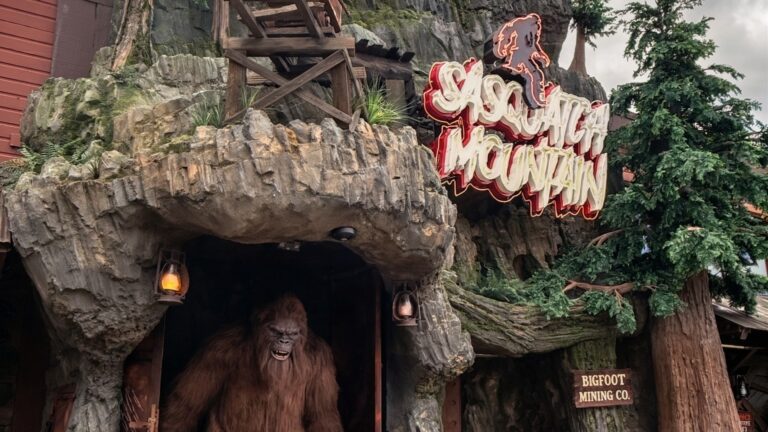
Miners Landing has run Sasquatch Mountain on Seattle's Pier 57 since 3 April 2026. The Bigfoot hunt uses VR headsets…
Read more...
Hero Zone: Where Social VR Meets Real-World Revenue -

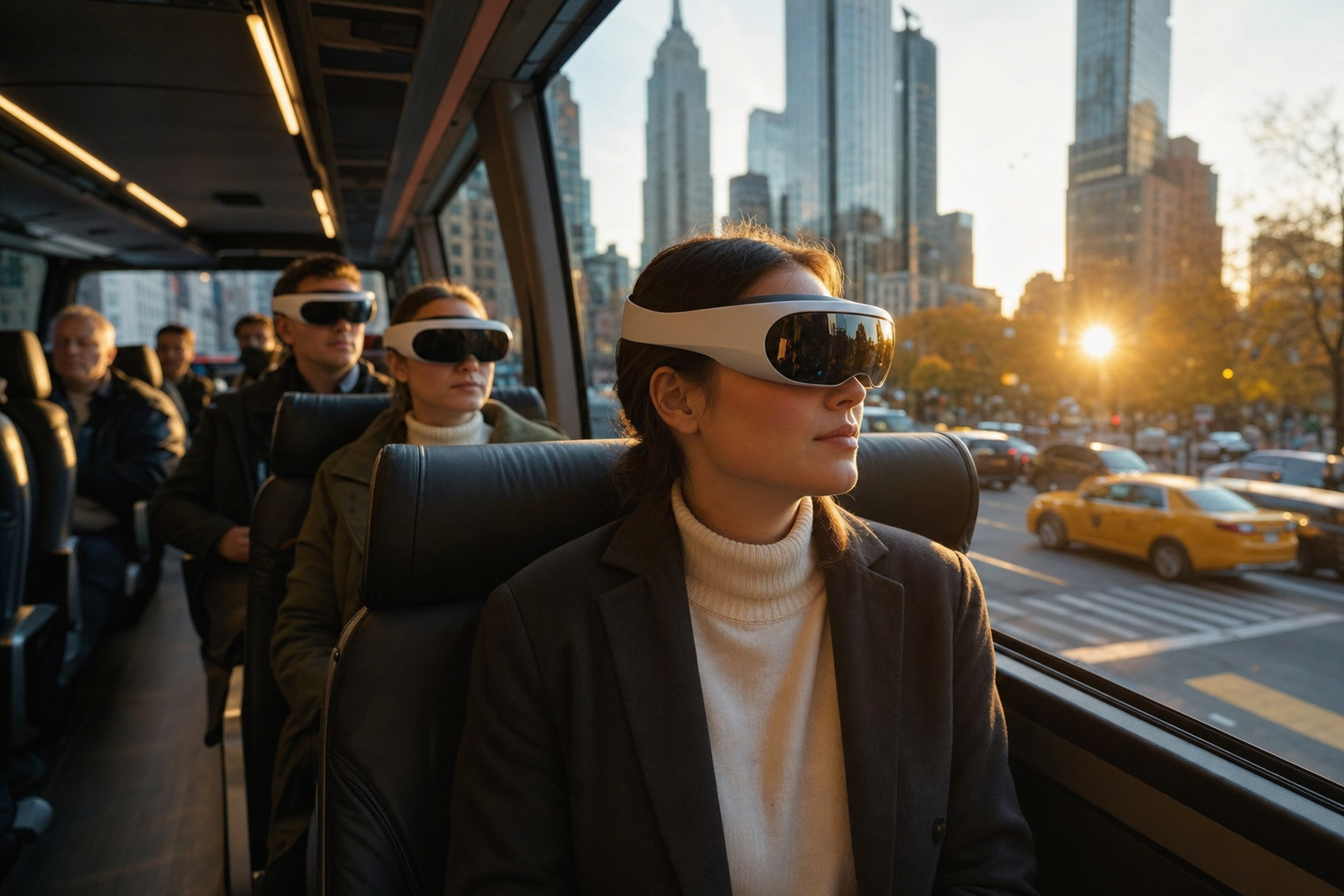
Xplore Ride is running a mixed reality bus tour of New York City. Guests board a bus, put on a headset, and the city they’re driving through gets overlaid with content synced to the route. Times Square, Central Park, the Financial District, the Brooklyn Bridge, the usual NYC tourist beats, but with an XR layer riding on top of the physical geography.
The product is a guided bus tour of Manhattan with mixed reality content synced to the vehicle’s location. As the bus moves through the city, the headset overlays historical scenes, characters, animations, and narrative content onto the real streetscape outside the window. The bus is the ride. The headset is the content layer. GPS and route timing keep the two in sync.
Tickets are $30 per person. The tour hits Times Square, the historic grandeur of the New York Public Library on 42nd Street, the majestic architecture of Grand Central Terminal, and the towering skyscrapers of Manhattan.
This is not the first attempt at mixed reality on a moving vehicle, and it won’t be the last. The category has a history worth naming.
The VR Coaster era put headsets on roller coasters. Cedar Fair, Six Flags, and various European parks ran VR overlays on existing coasters for a stretch in the late 2010s. The tech worked. The operational overhead didn’t. Cleaning headsets between every ride, dealing with lost focus and motion sickness, and losing throughput to headset fitting time killed the ROI on most of those installations. Most of them are gone now.

The Holoride experiment tried it in passenger cars. Audi backed it. The pitch was rear-seat entertainment synced to the car’s motion. It shut down in 2024 as VR hype died.
Bus-based XR sits in a different spot than either of those. Buses move slower than coasters, so motion sickness is easier to manage. The ride is 60 to 90 minutes rather than 90 seconds, which spreads the headset fitting overhead across a longer session and makes the unit economics work differently.
And a tourist bus already has a business model that operators understand. Adding an XR content layer on top of a proven revenue product is a lower-risk pitch than inventing a new venue category from scratch. And it can be a differentiation strategy in a crowded market dominated by Big Bus Tours Hop-on Hop-off model.
New York City is the highest-volume tourism market in the United States. Around 60 million visitors a year in a normal year. A dense concentration of them in Midtown Manhattan on any given day. A bus tour product doesn’t have to convert a small audience to a niche interest. It has to convert a small percentage of an enormous, already-present, already-buying-tour-tickets audience.
That’s the right size market for a new format. Know your audience, go narrow, be specific. The audience for Xplore Ride is the visitor who’s already going to do a bus tour of Manhattan and is willing to pay more for a version that’s genuinely different from what they can get from Gray Line or Big Bus. That’s a targetable customer with a known willingness to spend on tour products.
The narrative content can lean hard into New York history in ways a static bus tour can’t. What did Times Square look like in 1904 when it was still Longacre Square. What did the Financial District look like in Dutch New Amsterdam. What did the Brooklyn Bridge look like the day it opened in 1883. That’s the kind of content that fits mixed reality naturally, because the guest is looking at the real location while the historical layer plays on top of it.
Every vehicle-based XR product lives or dies on operational execution. A few things determine whether Xplore Ride scales.
Headset fitting and hygiene time. If loading the bus takes 15 minutes because every guest needs a headset fitted and adjusted, throughput drops and staff overhead climbs. The operators who make this work have a fast fitting workflow and a cleaning protocol that runs between departures without adding a bus-cycle to the turnaround.
Sync reliability. When the content is synced to GPS and route timing, traffic, detours, and delays are the enemy. If the bus is stuck at a light while the headset is showing the Brooklyn Bridge sequence, the illusion breaks. The operators who make this work have a content system that adapts to real-world timing variance rather than assuming a fixed route on a fixed clock.
Motion comfort. Even a slow-moving bus can trigger motion sickness in mixed reality if the content is doing anything that fights the vehicle’s actual movement. Guests who get sick don’t come back, don’t recommend it to friends, and post reviews that kill new bookings. The comfort tuning has to be conservative.
Cross-audience content design. A bus tour of NYC gets first-time tourists, repeat tourists, school groups, corporate outings, and locals bringing visitors around. The content has to work for a nine-year-old on a school trip and a 50-year-old couple from Germany on the same bus. That’s a wide target.
Mixed reality on a bus is a different category than free-roam VR venues, dome-based immersive theaters, or destination attractions like Sandbox VR or Zero Latency. It’s XR content wrapped around an existing transportation and tourism business.
That’s a distribution model worth watching. If Xplore Ride works in New York, the template is portable. Every major tourism city has a bus tour business. London. Paris. Rome. Barcelona. Tokyo. Every one of them has centuries of history that would make good mixed reality content. Every one of them has an existing bus tour operator who could license or partner on an XR overlay rather than building a venue from scratch.
That’s a different scaling model than what most of the LBE XR industry is built around. Free-roam venues need real estate, buildout, and standing infrastructure. Bus-based XR needs a headset kit and a content system that plugs into an existing operational business. Lower capex per unit, faster to deploy, and it rides on top of a tourism business model that’s been proven for a hundred years.
Whether Xplore Ride’s unit economics work. If the operator can consistently sell the XR version at a premium to standard bus tours and keep headset maintenance and content refresh costs manageable, they’ve got a template that other cities can copy.
Whether the content ages well. A mixed reality tour of NYC needs content that holds up on a second visit or gets refreshed often enough that repeat guests get something new. Static content ages fast in this format.
Whether other bus tour operators partner in. The interesting question isn’t whether Xplore Ride succeeds as a single-city operator. It’s whether Gray Line, Big Bus, and the other established tour operators start looking at licensed XR overlays as an upsell tier for their existing fleets. That’s when the category scales.
Whether the headset hardware holds up. Vehicle vibration, temperature swings on a hot New York summer afternoon, and hundreds of fitting cycles per day are hard on consumer-grade hardware. Enterprise-grade headsets from PICO, HTC VIVE, and others are built for this kind of duty cycle. The commodity consumer headsets are not.
The LBE XR conversation has been dominated by venue-based experiences for a decade. Free-roam arenas. Escape rooms with VR. Dome theaters. Destination attractions. All of them require real estate and buildout as the first cost.
Vehicle-based XR is a different shape of business. It rides on top of an existing transportation product, uses XR as a premium content layer, and scales by licensing into operators who already have the vehicles, the routes, and the tourism customer base. That’s a fundamentally different capex profile and a fundamentally different distribution model.
If Xplore Ride proves the model works in New York, the pattern is portable to every major tourism city on the planet. That’s a category worth watching.
Congratulations to the Xplore Ride team on the launch. This is the kind of format experiment the industry needs more of.
What is Xplore Ride? Xplore Ride is a mixed reality bus tour of New York City. Guests board a tour bus and wear a headset that overlays XR content synced to the vehicle’s location as it moves through Manhattan landmarks.
How does the mixed reality content sync to the bus? The content system uses GPS and route timing to trigger content scenes as the bus reaches specific locations along the tour route. Guests see the real city outside the window with the XR layer composited on top.
What NYC landmarks does the Xplore Ride tour cover? The tour covers the standard Manhattan landmark route, including Times Square, Central Park, the Financial District, and the Brooklyn Bridge, with mixed reality content synced to each location.
How is Xplore Ride different from a regular NYC bus tour? A conventional bus tour gives you a guide narrating what you’re looking at. Xplore Ride adds a mixed reality content layer through a headset, so guests see historical scenes, characters, and animations overlaid on the real streetscape as the bus moves through the city.
What does vehicle-based mixed reality mean for the LBE XR industry? It’s a different scaling model than venue-based LBE. Instead of building standing infrastructure, vehicle-based XR rides on top of existing transportation and tourism businesses. If the model works in New York, the template is portable to major tourism cities globally, which is a lower-capex path to scaling XR content into new markets.