Miners Landing Built a $25 Mixed Reality Dark Ride Into Unused Space on Pier 57
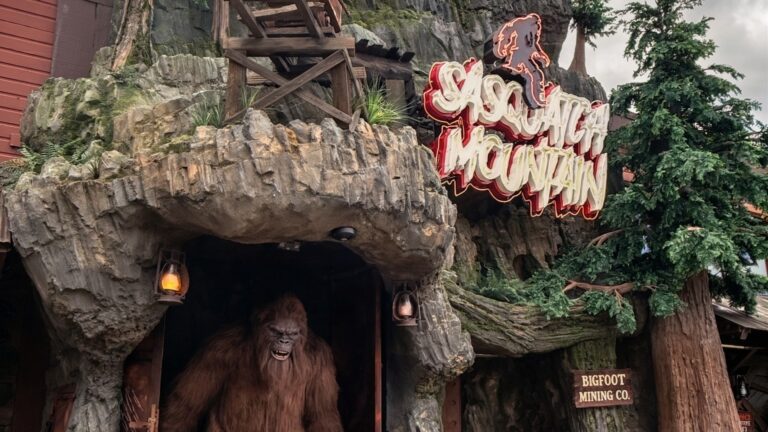
Miners Landing has run Sasquatch Mountain on Seattle's Pier 57 since 3 April 2026. The Bigfoot hunt uses VR headsets…
Read more...
Hero Zone: Where Social VR Meets Real-World Revenue -

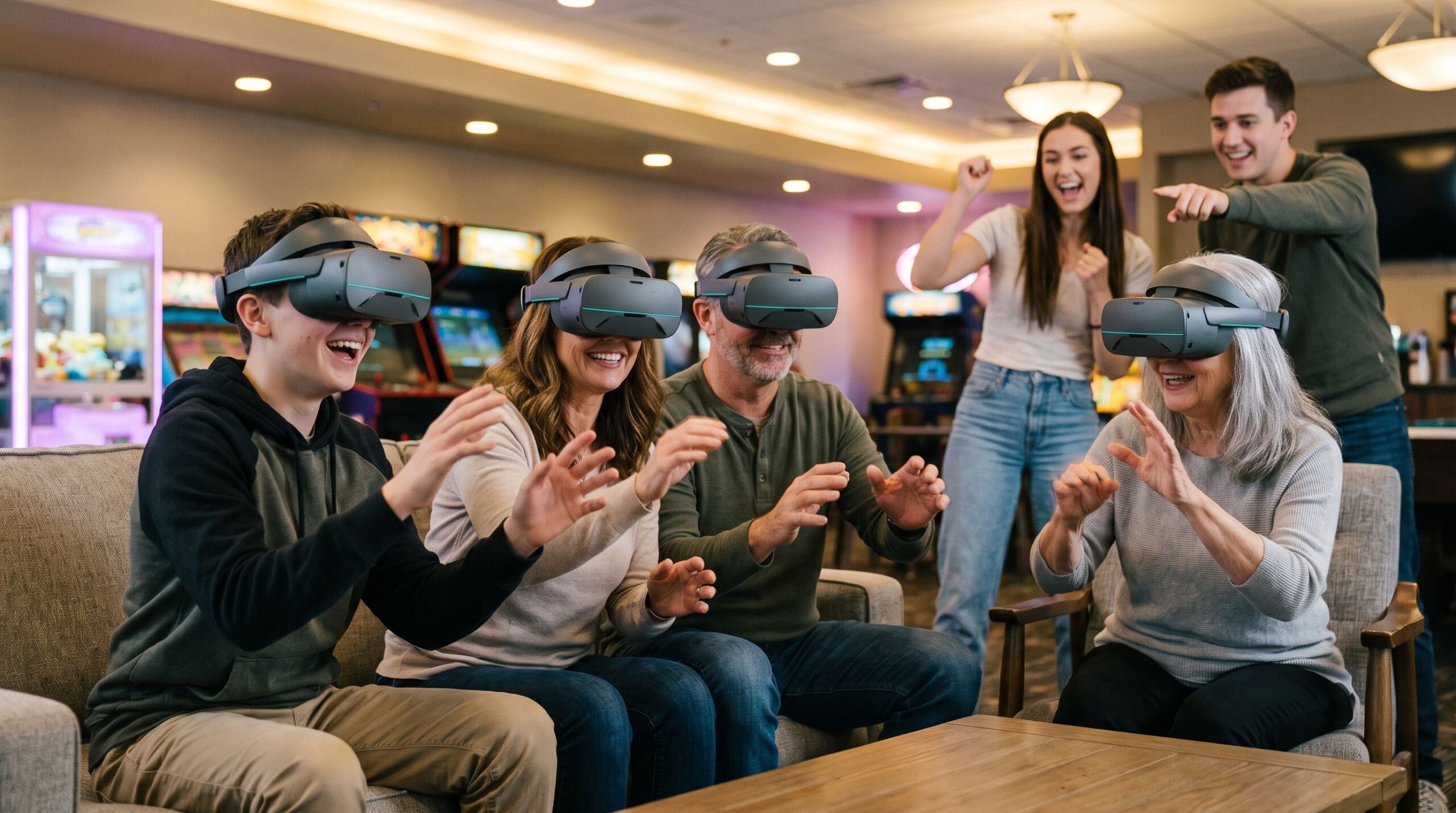
Fantail Games has released Game Night for LBE, a mixed reality party attraction that VR arcades and family entertainment centers can run in spaces as small as 2 meters by 3 meters, including furniture-filled lobbies and other corners that free-roam VR cannot use. The Christchurch, New Zealand studio, founded by LEXRA member Steve Linton, announced commercial availability worldwide on July 14. The launch targets floor space most venues rent but earn nothing from.
Game Night began as a consumer mixed reality title on Meta Quest. The LBE version runs on off-the-shelf Meta Quest and PICO 4 Ultra Enterprise headsets, using passthrough video, hand tracking, and spatially aware gameplay instead of controllers and blacked-out arenas. Guests see each other and the venue while they play, and furniture becomes part of the game: the release describes players who “run, body block, dodge and jostle together safely” around whatever is in the room.
The current lineup covers seven minigames, from a fish-scooping race to a boxing and sumo mashup, with sessions the operator can tune from 10-minute event mode to 30-minute venue slots. Fantail Games says the collection will keep expanding, and offers custom-themed minigames for venue chains.
Up to four active players compete per play area, and that number needs context, because the format is stream-through rather than batch. The operator app runs multiple simultaneous play areas from a single PC and Wi-Fi network, spectator headsets are unlimited and never billed, and headsets drop in and out without interrupting a session.

Fantail Games stress-tests the product at Armageddon Expo, New Zealand’s largest pop-culture event, where it hosts the event’s key sponsor Kiwibank. The studio reports one laptop and one network running 21 headsets and serving 600 guests per day on 10-minute group turnarounds, with more than 10,000 guests played across two years of the event. The minimum footprint those numbers run against is 6 square meters.
“Most VR attractions ask venues to dedicate a large, empty space to the experience,” Linton said in the launch release. “With Game Night, we wanted to build something more flexible: a MR attraction that can work in unconventional spaces and that brings families and groups together.”
Game Night is the second compact mixed reality attraction released this summer: Valo Motion shipped Groundfall in June as a smaller-footprint follow-up to ValoArena, and LEXRA member Synthesis VR published an operator guide in July arguing for layered formats that fill floor space around a free-roam anchor. Game Night enters from the party end: hand tracking with no controllers to sanitize, no motion sickness by design, and field testing with players aged 4 to 89 (the studio recommends ages 6 and up), including wheelchair users.
Pricing follows the usage-based model that is standard in LBE content, metered per headset on active gameplay time only. Lobby time, set-down headsets, and spectators are unmetered.
For FEC and VR arcade operators, the pitch is birthday parties and mixed-age groups that the typical shooter or escape room catalog serves poorly, staged in floor space the venue already rents. The release positions the game as a gateway: VR arcade early adopters told Fantail Games it fits groups seeking something more approachable than shooters, escape rooms, or simulators, feeding guests toward a venue’s more intense titles. Operators can test the claim cheaply, since Fantail Games is offering 600 free gameplay minutes to venues that sign up at portal.fantailgames.com with the code LAUNCH before September 1, 2026.
What is Game Night for LBE?
A mixed reality party attraction from Fantail Games with a collection of physical minigames for up to four active players per play area, sold to venues on a usage-metered model.
What space does a mixed reality party attraction need?
Game Night runs in a minimum of 2m x 3m. Walls do not need to be square, and furniture is incorporated into gameplay.
Which headsets run Game Night?
Off-the-shelf Meta Quest and PICO 4 Ultra Enterprise headsets, hosted by a Windows operator app over standard Wi-Fi.
How many guests per hour can a mixed reality party game handle?
At Armageddon Expo, Fantail Games served 600 guests per day on 10-minute turnarounds using 21 headsets on one laptop. Venue throughput scales with play areas and session length.
Is Game Night suitable for young children and older guests?
The studio has field-tested with players aged 4 to 89 and recommends it for ages 6 and up. Passthrough mixed reality avoids the motion sickness common in full VR.