Miners Landing Built a $25 Mixed Reality Dark Ride Into Unused Space on Pier 57
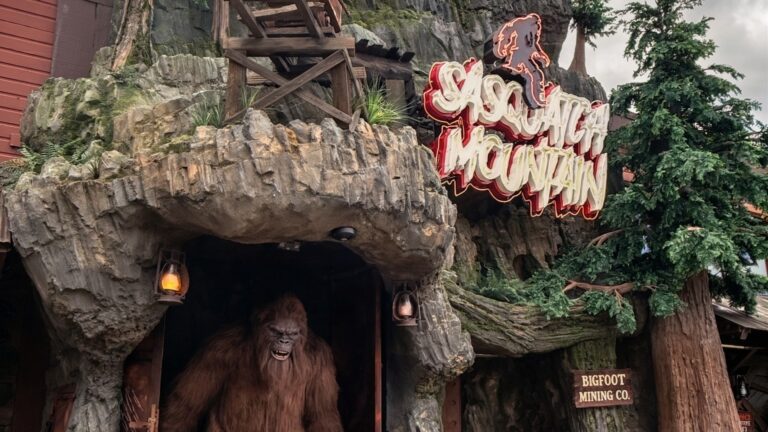
Miners Landing has run Sasquatch Mountain on Seattle's Pier 57 since 3 April 2026. The Bigfoot hunt uses VR headsets…
Read more...
Hero Zone: Where Social VR Meets Real-World Revenue -


KDDI and STYLY launched the Location-Based Experiences Consortium, known as LBEC, on 28 July 2026, bringing 25 organisations from telecommunications, real estate, rail, retail, media, finance and XR into a single body aimed at LBE content distribution. The two companies run it as a joint secretariat. LBEC describes itself as “an organization dedicated to forming and mobilizing the market for LBE (Location-Based Entertainment)”, the experiences that can only happen in a particular place. LBEC intends to publish common guidelines telling operators and content producers what a venue must provide before a piece of location-based content can be installed there, and then use those guidelines to move content between venues without respecifying it each time. The consortium is Japanese, and its subject is the same ground Western operators have been arguing over since LBE became a primary tenant category in retail real estate.
KDDI Corporation and STYLY Inc. operate LBEC jointly. STYLY’s launch release names 23 other participating companies, listed in Japanese alphabetical order: asoview!, L-COMPLEX, JR West Innovations, J. Front Retailing, Dynamo Amusement, Daimaru Matsuzakaya Department Stores, Chukyo TV Broadcasting, TV Asahi, Tokyu, Tokyu Fudosan Holdings, TOM’S, Toyota Coniq, Nippon Steel Kowa Real Estate, Hakuhodo DY Holdings, Hashilus, palan, Parco, Hiroshima Mobility World, Mizuho Bank, MUFG Bank, Mori Building, Rhino Studios and Lumine. Twenty-three participants plus the two secretariat companies gives the 25 that both official releases state, and STYLY executive officer and CMO Ryohei Watanabe refers to “the other 24 companies” taking part. KDDI’s release prints a slightly different roster; the list above follows STYLY’s release and LBEC’s member page, which agree.

The membership spans finance, rail, retail property, broadcasting and advertising alongside the XR studios, so the parties that own venues, the parties that finance them and the parties that make the content are inside the same organisation.
Both releases describe the same obstacle. A venue’s floor area, ceiling height, visitor circulation, network environment and safety standards differ from those of the venue next door, so every installation needs its own feasibility check and its own adjustments, and the coordination cost falls on the venue operator and the content holder together. LBEC’s stated first step is a set of guidelines that writes those conditions down, covering floor area, ceiling height, power supply and network, so a venue can judge quickly whether a given piece of content fits it. The second step is matching venues with content. The third is a distribution infrastructure, so that content produced once can, in the consortium’s own English wording, “be deployed across multiple similar venues without major changes to specification”.
The precedent LBEC cites is exhibition standards in other industries. “DCI standardized film, JAMMA standardized games, and ISO standardized the shipping container,” its site says, arguing that in each case “the standard created distribution, distribution created exhibition, and exhibition created an enormous market.”
LBEC’s target is ¥15 billion of total value distributed through the consortium by 2030, alongside a stated goal of making Japan one of the world’s leading hubs for LBE content distribution, with content moving into Japan from abroad and out to overseas venues. For market context, both releases cite MarketsandMarkets, which puts the global LBE market at $5.47 billion in 2024 rising to $15.33 billion in 2029, a compound annual growth rate of 22.9%, and both point to Sandbox VR passing $200 million in cumulative revenue and Netflix’s Netflix House venues as signs that film and intellectual property companies are accelerating their LBE investment.
“Excellent LBE content that captivates people already exists all over the world,” said Ryohei Watanabe, executive officer and CMO of STYLY. “What is needed now is a common yardstick for connecting content smoothly with a wide variety of locations.” Daiko Kawamoto, an expert in KDDI’s business creation division and a special lecturer at Keio University, cited his earlier work launching Virtual Shibuya and drafting the Virtual City Guidelines: “Through rule design and standardisation, we intend to increase the circulation of LBE content and build up the LBE market from Japan.” Both quotes are translated from the Japanese release.
The next phase, per the releases, is testing the guidelines at locations the members already own and operate: commercial facilities, cinemas, stations and museums. LBEC also states an interest in a way of using space that avoids physical interior construction, so a venue could stage short runs timed to a season or an event without paying for a fit-out and a restoration each time. Membership is open, and LBEC says it will keep adding location operators, content producers and technology suppliers.
A comparable effort is under way in the Western market. An operator-led standards committee is forming, spearheaded by Phi in Montreal, to address the platform and content fragmentation operators contend with.
If you run a venue, LBEC previews the questions a content vendor may soon arrive already knowing the answers to: your floor area, your ceiling height, your power supply, your network and your safety compliance, expressed as a specification you can check against. If you produce content, a written specification set is the difference between a bespoke install at every site and a title that tours. And if Japan is on your expansion map, there is now a single address for that conversation, with 25 companies behind it, several landlords among them and a ¥15 billion number attached. LEXRA members compare notes on standards and cross-border distribution through the community at lexra.org.
What is LBEC?
LBEC is the Location-Based Experiences Consortium, launched on 28 July 2026 and jointly operated by KDDI and STYLY. It describes itself as an organisation dedicated to forming and mobilising the market for LBE, meaning entertainment experiences that can only happen in a particular place.
How many companies are in LBEC?
25, including KDDI and STYLY as the joint secretariat. STYLY’s release names 23 other participating companies, and STYLY’s CMO refers to “the other 24 companies” taking part, both of which give the same total that KDDI’s and STYLY’s release subheadings state.
What will LBEC do?
Three things, in its own stated order: publish guidelines describing venue conditions and content requirements, match venues with content that suits them, and build a distribution infrastructure so a title can tour venues without being respecified for each one.
What is LBEC’s target?
¥15 billion of total value distributed through the consortium by 2030, and a position for Japan as one of the world’s leading hubs for LBE content distribution.
Does LBEC affect operators outside Japan?
Indirectly for now. The guidelines are being drawn up for Japanese venues, but LBEC states a two-way goal, bringing overseas content into Japan and taking Japanese content abroad, so producers and operators elsewhere may end up specifying against them.
Is STYLY a LEXRA member?
Yes. STYLY is a LEXRA member. This coverage is drawn from the public launch releases issued by KDDI and STYLY and from LBEC’s own site.