Miners Landing Built a $25 Mixed Reality Dark Ride Into Unused Space on Pier 57
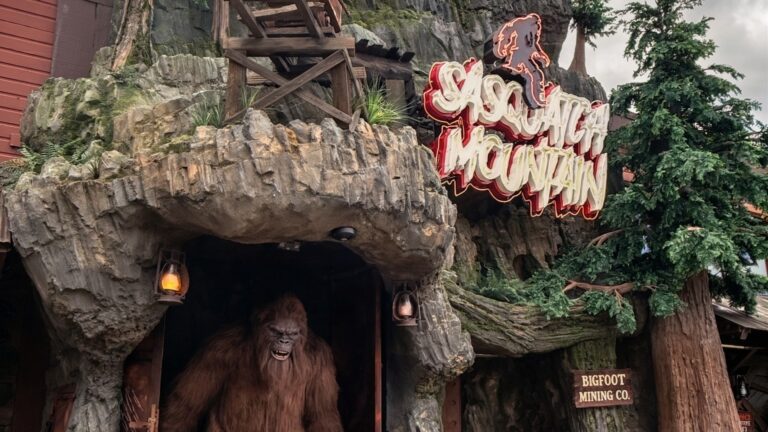
Miners Landing has run Sasquatch Mountain on Seattle's Pier 57 since 3 April 2026. The Bigfoot hunt uses VR headsets…
Read more...
Hero Zone: Where Social VR Meets Real-World Revenue -

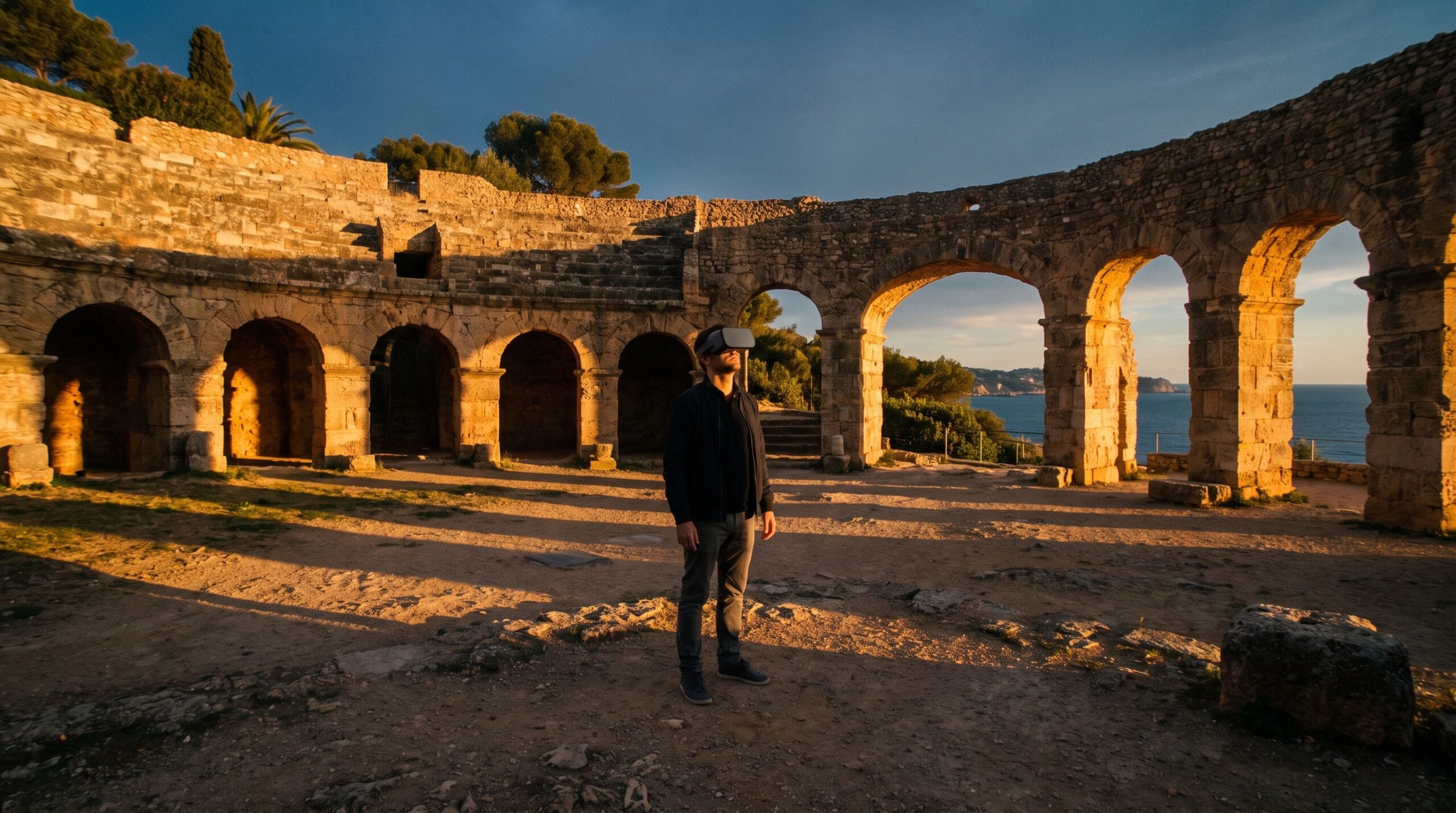
The Roar of Tarraco, billed as the world’s first mixed reality experience staged inside a Roman amphitheater, has opened at the UNESCO-listed Tarragona Amphitheatre in Spain, presented by WeRiseUp and the Tarragona City Council. It is the first shipping product from WeRiseUp, the company spun out of PortAventura World’s digital innovation unit in a joint venture with Vekoma Rides, and it makes Vekoma the second major European ride manufacturer, after Mack Rides, with a free-roam mixed reality studio in its group.
Visitors to the amphitheater put on free-roam mixed reality headsets and take the role of a novicus, an apprentice gladiator, guided by Marcus Valerius Mesala, editor muneris of Tarraco, through a reconstruction of the arena on a day of games 2,000 years ago. Because the digital content is overlaid on the monument rather than replacing it, visitors keep sight of the actual site throughout, an approach WeRiseUp developed with Spatial Voyagers, the Madrid studio behind PortAventura’s earlier mixed reality attractions.
The heritage constraints shaped the operation: no permanent physical intervention was made to the amphitheater, all equipment is temporary and reversible, and historians of Tarragona’s heritage worked on the reconstruction. “The Tarragona Amphitheatre becomes the starting point for a new category of immersive cultural experiences that bridge past and future,” said Andreu Tobella, CEO of WeRiseUp, in the launch announcement. Tarragona Mayor Rubén Viñuales called the city’s Roman heritage “a key driver for the future” and said mixed reality lets the monument reach new audiences.

WeRiseUp’s lineage runs through PortAventura World’s in-house unit Adventure Labs, which built the park’s mixed reality track record with Spatial Voyagers: Hysteria in Boothill, which PortAventura claimed as the world’s first MR experience at a theme park, and El Diablo Neo, the first mixed reality roller coaster. In May, PortAventura World and Vekoma spun the unit out as WeRiseUp, an independent company with Tobella as CEO and two stated business lines, theme parks and cultural heritage. PortAventura World remains a partner, a client, and the testing ground.
Vekoma is the second European ride-manufacturer family to put its name on a mixed reality studio. The Mack family, owners of ride manufacturer Mack Rides and Europa-Park, runs MackNeXT, the innovation division behind YULLBE, its full-body-tracking free-roam VR attraction launched in 2020, and VR Coaster, the company that put virtual reality on roller coasters starting in 2014 and has since moved toward free-roam formats. Cultural heritage is contested territory beyond the two families: Excurio sells cultural titles such as Horizon of Khufu into museums and dedicated venues across multiple countries. The VR Collective covered the Hysteria in Boothill launch when Adventure Labs was still an in-house experiment; that experiment now sells to third parties with a UNESCO site as its reference installation.
For museums, monuments, and archaeological sites, the Tarraco template documents what a protected-site deployment requires: reversible installation, historian-verified content, and an overlay approach that keeps the original visible. For suppliers, the new entrants arrive with capabilities pure software studios lack, since companies that manufacture rides already carry installation, safety certification, and long-standing park relationships. LEXRA members deploying at cultural sites compare notes through the community at lexra.org.
What is The Roar of Tarraco?
A free-roam mixed reality experience inside the Roman amphitheater of Tarragona, Spain, produced by WeRiseUp with the Tarragona City Council. Visitors play an apprentice gladiator and watch reconstructed games from the arena.
Who is WeRiseUp?
A mixed reality studio spun out of PortAventura World’s Adventure Labs unit in a joint venture with Vekoma Rides, led by CEO Andreu Tobella, serving theme parks and cultural heritage sites.
Does a mixed reality heritage installation damage the site?
At Tarragona, no permanent intervention was made: equipment is temporary and reversible under minimal-intrusion criteria for the UNESCO World Heritage Site.
How is mixed reality different from VR at a heritage site?
Mixed reality overlays digital content on the visitor’s view of the actual monument, so the original stays visible. VR replaces the view entirely.
Which companies build mixed reality experiences for heritage sites?
WeRiseUp with Spatial Voyagers (Tarragona), MackNeXT with YULLBE and VR Coaster (Germany), and Excurio (Horizon of Khufu and other cultural titles) are active in the category.