Miners Landing Built a $25 Mixed Reality Dark Ride Into Unused Space on Pier 57
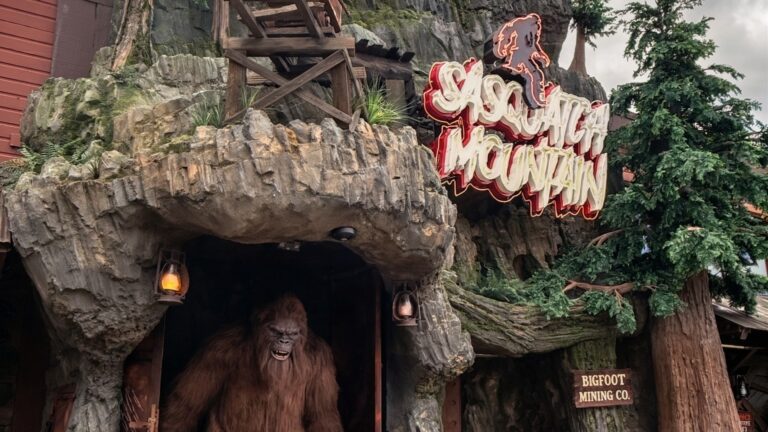
Miners Landing has run Sasquatch Mountain on Seattle's Pier 57 since 3 April 2026. The Bigfoot hunt uses VR headsets…
Read more...
Hero Zone: Where Social VR Meets Real-World Revenue -

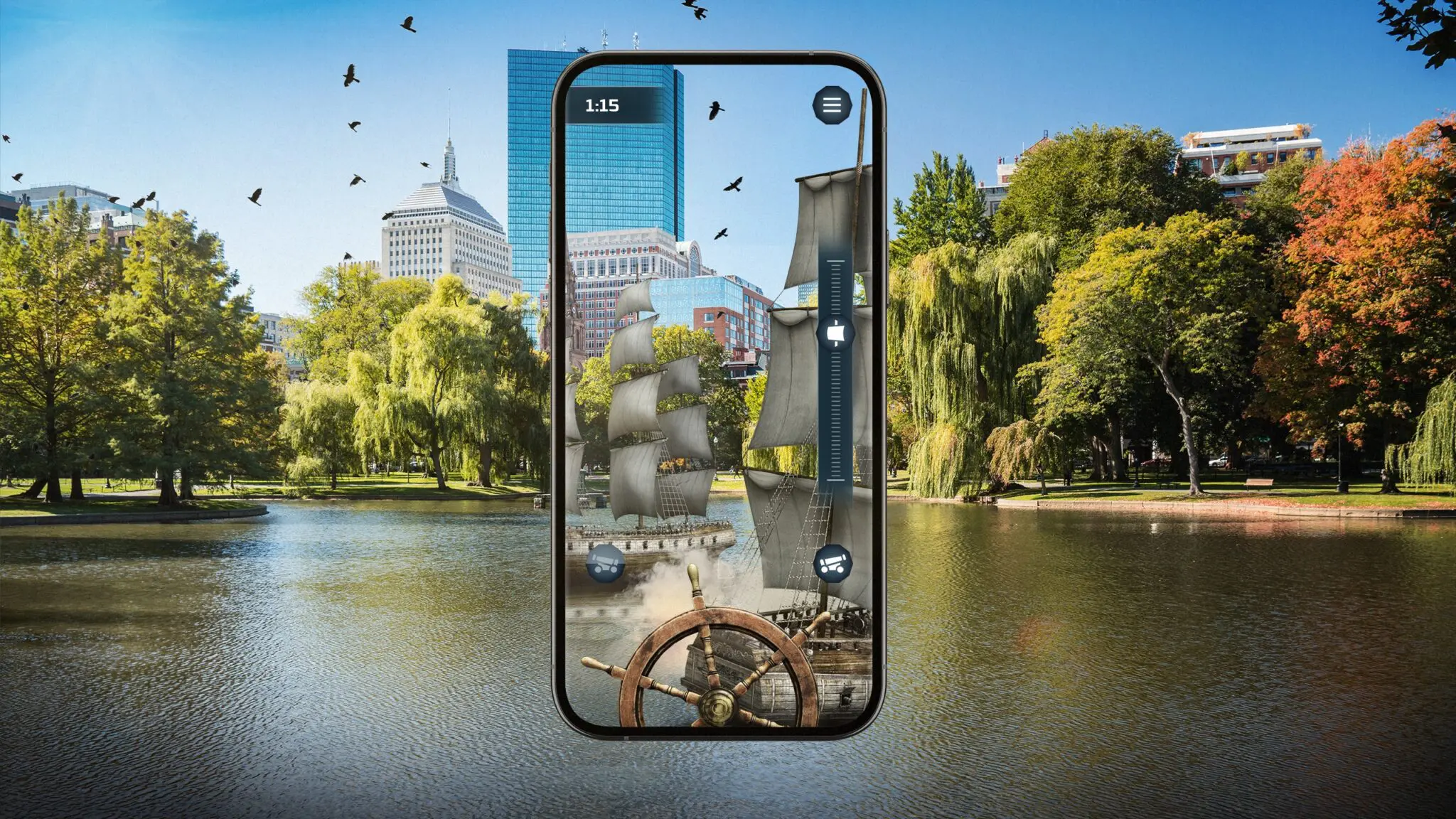
Ubisoft, Revolutionary Spaces, and a set of partners across Boston and New York just launched Echoes of Revolution, an immersive outdoor walking tour that overlays Assassin’s Creed III onto real historical sites from the American Revolution. In Boston, the route runs through the Old State House and Old South Meeting House. A New York edition covers Lower Manhattan sites tied to the occupation of the city during the war.
This is a gaming publisher walking one of its flagship IPs out of the console and onto the actual streets where the story is set. That’s a different kind of LBE deployment.
It’s a self-guided immersive walking tour delivered on a mobile device. Guests move through real historical sites in the physical city, and the app layers in content from Assassin’s Creed III: characters, environments, narrative beats from the game’s Revolutionary War arc, and historical context tied to what actually happened at each stop.
In Boston, the tour is produced with Revolutionary Spaces, the nonprofit that runs the Old State House and Old South Meeting House. That’s the site where the Boston Massacre happened and the site where the Boston Tea Party was planned. Two of the most consequential buildings in American Revolutionary history, and now Assassin’s Creed content is officially layered onto them.
The New York edition, Echoes of Revolution NYC: The Occupied City, runs through Lower Manhattan and covers the period when British forces held the city during the war. It’s produced in partnership with the tourism side of New York’s cultural infrastructure.

Both tours are free to use.
This is what makes the story interesting for operators and content producers watching the category.
Ubisoft has been building the LBE side of its business for years. Rabbids went to LAI for arcade coasters back in 2017. Far Cry went to Zero Latency in 2022 for a PVE game. Rabbids was licensed to EVA in this year for PvP. Now Assassin’s Creed is going into a walking-tour format co-produced with actual historical institutions.
Each one is a different LBE format, a different partner type, and a different audience. Assassin’s Creed III is set in the American Revolution. The Boston Massacre, Bunker Hill, the Sons of Liberty. Ubisoft did the historical research a decade and a half ago to build the game. Now that research is being reactivated as the connective tissue between the IP and the real-world sites the game is set at. That’s a smart reuse of production investment.
Revolutionary Spaces, on the other side of the deal, gets access to a global gaming audience that has spent hundreds of hours in a virtual version of colonial Boston. Those are guests who show up already knowing who Samuel Adams and Paul Revere are, because they’ve played through the story. Turning that audience into physical visitors to the actual buildings is the game for a historical nonprofit.
That alignment between commercial IP and public-history institution is what other cities and other studios should pay attention to.
Echoes of Revolution isn’t free-roam VR. It isn’t a headset experience, though it could have been as well. It’s a mobile-delivered augmented walking tour, closer in operating model to the guided-audio tours that museums and heritage sites have been running for decades. The upgrade is the AAA game IP layered on top and the fact that Ubisoft’s production values are behind the media.
There’s no throughput math the way there is for a free-roam VR arena. The whole city is the venue. Guests move at their own pace through the historical sites, and the app does the work of turning a walking route into an experience. A walking tour of central Boston or Lower Manhattan is a two-to-three-hour occasion. That’s well past the sixty-minute floor for something worth building a trip around.
The other thing this format solves is capex. A free-roam VR venue takes real capital. A dedicated cultural VR museum in Amsterdam takes more. A city-scale augmented walking tour takes a production budget and a partnership with the sites, and then it runs on the guest’s own phone. That’s a very different economic model, and it’s one that opens up the LBE conversation to a much wider set of cities, institutions, and IP owners.
But without a monetization model, this probably goes nowhere.
Assassin’s Creed III is one of the few pieces of major entertainment IP that is set in a real, walkable American city during a specific historical period that people still visit for that history. Colonial Boston is a tourism product. The Freedom Trail draws millions of people a year. Lower Manhattan draws its own tourism traffic, most of it not currently thinking about the Revolutionary War era.
Slotting an Assassin’s Creed layer onto the Freedom Trail is one of the most natural IP-to-site pairings anyone in LBE has landed on. The game’s audience overlaps directly with the tourism audience that already shows up. The game’s setting is the actual physical location. The historical accuracy Ubisoft built into the game is aligned with the mission of the sites hosting the tour.
New York is a different bet. The Revolutionary War history of Lower Manhattan is genuinely underexposed compared to Boston. Most tourists in that part of the city are there for Wall Street, 9/11 Memorial, and the ferry to Liberty Island. Programming Revolutionary War content in that district is a way to activate a period of the city’s history that the tourism product currently doesn’t lean on. That’s smart for the tourism partners. It’s also a harder sell than Boston, and the read on New York will be more interesting to watch.
Zoom out and this is another data point in the pattern of major IP owners entering LBE at the pace of two or three announcements per quarter.
Zero Latency is building Cyberpunk 2077 with CD PROJEKT RED. Sandbox VR is running Stranger Things with Netflix. Banijay opened Black Mirror at Phi Studio in Montreal with Univrse. EVA is running Rabbids with Ubisoft. Wevr and HTC VIVERSE launched The Blu: Expedition Taiwan with the Taiwan Ministry of Culture behind it. Now Ubisoft has Assassin’s Creed walking through the actual streets of colonial Boston with Revolutionary Spaces.
Every one of those is a different format, a different partner type, and a different audience. Free-roam VR arenas. Purpose-built VR museums. Dome venues. Mobile augmented walking tours. Small-group narrative VR. The IP layer is filling in across all of them at the same time.
For operators, that means the conversation is no longer whether major IP will show up in LBE. It’s which format each piece of IP lands in, and how the operator’s own venue programs against a catalog that keeps getting deeper.
For content producers, it means the addressable partners now include tourism boards, historical nonprofits, and culture ministries alongside the venue operators. Revolutionary Spaces is a nonprofit that runs two historic buildings. They are now an Ubisoft partner. Twelve months ago that sentence would have read as a stretch.
Whether the walking-tour format travels. Boston and New York are the launch cities. Assassin’s Creed as a franchise has entries set in Paris, London, Rome, Athens, Cairo, and Constantinople. If Boston and New York work, the template lifts straight onto any of those cities with the local historical institutions as partners. Ubisoft has more historically anchored IP than any other publisher in gaming. This could become a real product line.
Whether other AAA publishers move. Assassin’s Creed is uniquely suited to this format because the games have always been built on top of real historical settings with real historical research. Not every game IP works this way. But Red Dead Redemption walking tours of the American West, Ghost of Tsushima tours of Japan, or any of the historical strategy franchises could plausibly follow this pattern. The question is whether other publishers see this as a channel or as a one-off.
How the historical institutions read the results. Revolutionary Spaces is the pilot partner. If foot traffic to the Old State House and Old South Meeting House goes up during the tour’s run, other historical nonprofits will notice. The Freedom Trail Foundation, the National Park Service sites, and every state and city historical society in the country will start asking whether their own sites can support similar deals.
Whether free is the right price. The tour is free to guests. That’s a marketing decision, and it makes sense for a launch. The interesting question is what version of the product Ubisoft and its partners eventually charge for, and how they charge for it. Premium content within the app. Extended tours. Guided small-group versions. Merch tied to the tour route. There are a lot of monetization paths from a free entry point to a real revenue product.
How this shows up in tourism marketing. New York’s tourism office is a co-presenter on the NYC edition. If tourism boards start actively marketing gaming-IP-branded experiences alongside their traditional attractions, that’s a meaningful signal that LBE and cultural tourism are converging as a category rather than sitting in adjacent lanes.
The story most people will tell about Echoes of Revolution is that a game company made a cool walking tour. That undersells it.
The actual story is that a major publisher took a decade-old game, reactivated the historical research behind it, partnered with the nonprofit institutions that own the real physical sites the game is set at, and shipped an LBE product on a format that opens up a much wider addressable market than free-roam VR arenas or dedicated venues. Boston and New York today. Any historically anchored city in the world tomorrow, if the model works.
For operators, this is a reminder that LBE is not one format. It’s a category of formats, and the IP that shows up in each one is going to be different. For content producers, it’s a reminder that the addressable partners are bigger than the operator list. And for historical institutions, tourism boards, and culture ministries, it’s a reminder that the game industry has been quietly doing the research work for two decades, and some of it is now available as a distribution partner.
Congratulations to Revolutionary Spaces, Ubisoft, and the New York partners on the launch. This is the kind of format that expands the definition of what LBE is.
What is Echoes of Revolution? Echoes of Revolution is a self-guided immersive walking tour that overlays Assassin’s Creed III content onto real historical sites from the American Revolution. It launched in Boston with Revolutionary Spaces and in Lower Manhattan under the title Echoes of Revolution NYC: The Occupied City.
Who produced Echoes of Revolution? Ubisoft produced the experience in partnership with Revolutionary Spaces in Boston and with local tourism and cultural partners in New York. Revolutionary Spaces is the nonprofit that operates the Old State House and Old South Meeting House.
How much does Echoes of Revolution cost? The tours are free to use. Guests need a mobile device and time to walk the route.
How is Echoes of Revolution different from a free-roam VR experience? Free-roam VR runs in a dedicated physical venue with headsets, a fixed footprint, and a stream-through operating model. Echoes of Revolution is a city-scale mobile augmented walking tour that uses the actual streets and historical buildings as the venue and delivers the experience through the guest’s own device.
What does Echoes of Revolution mean for the LBE industry? It’s a proof point that major gaming IP can move into LBE through formats other than headset-based VR venues. Historical nonprofits and tourism boards are becoming real content partners alongside venue operators, which expands the set of ways that IP owners can enter the location-based entertainment market.