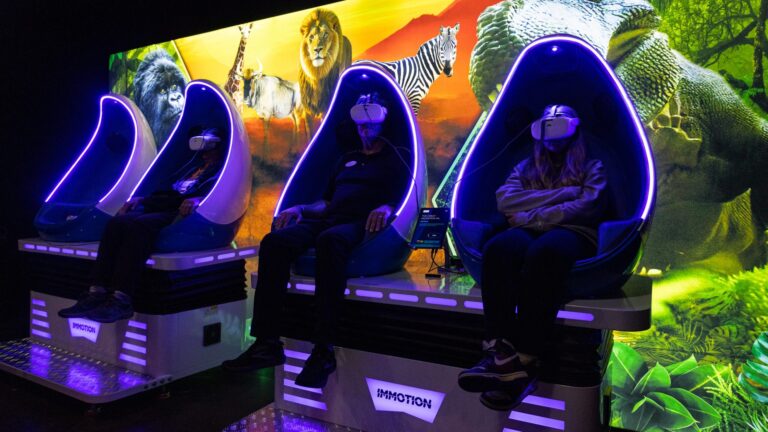
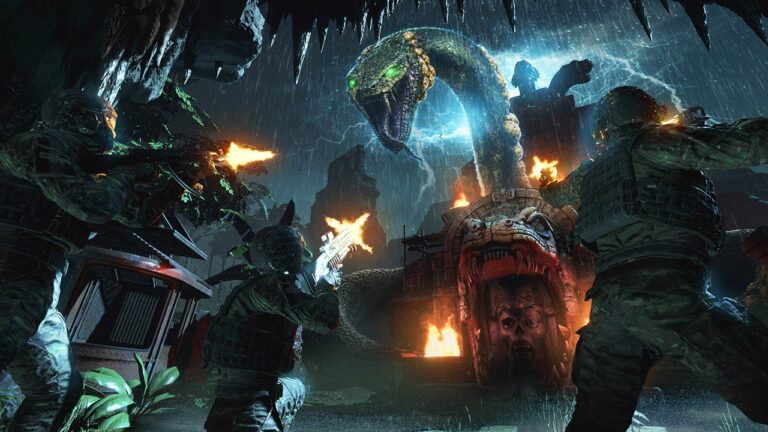
Miners Landing Built a $25 Mixed Reality Dark Ride Into Unused Space on Pier 57

Miners Landing has run Sasquatch Mountain on Seattle's Pier 57 since 3 April 2026. The Bigfoot hunt uses VR headsets…
Read more...
Hero Zone: Where Social VR Meets Real-World Revenue -

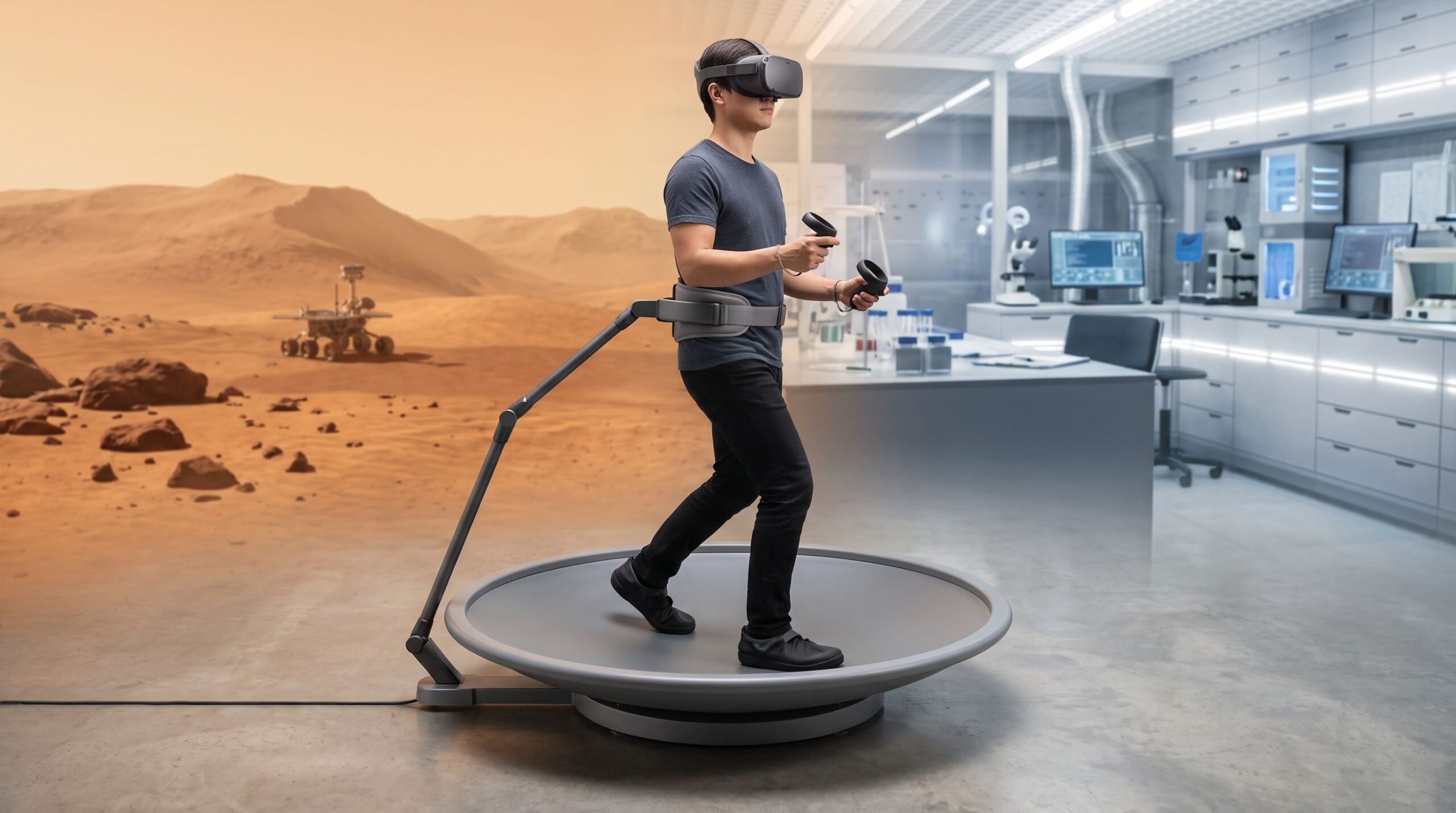
Virtuix has been selected to supply its Omni One omnidirectional treadmill to NASA’s Moon and Mars Exploration Analog (MMEA) mission, a year-long study of how astronauts perform on deep-space missions. For location-based entertainment operators, the name is a familiar one: Virtuix builds Omni Arena, the multiplayer treadmill attraction that runs in arcades and family entertainment centers around the world. The same walking-in-place technology that moves a paying guest through a shooter will now move four NASA crew members across simulated Martian terrain, and the pick says something about where one of the category’s best-known makers is steering its business.
The Moon and Mars Exploration Analog mission places four volunteers inside a 650-square-foot habitat at NASA’s Johnson Space Center in Houston for one full year, with the run expected to begin no earlier than August 2027. The crew will rehearse the full arc of a deep-space trip, and the Omni One handles one specific part of it: physical movement during simulated extravehicular activity. Instead of standing in place, participants walk, run, crouch, kneel, and turn on the treadmill to cross virtual Martian ground while they practice equipment inspection and repair, rock sampling, emergency response, and mission replanning.
“By enabling participants to naturally walk and interact with virtual environments, Omni One creates a more realistic experience that can help researchers better understand how astronauts may perform during future missions,” said Jan Goetgeluk, founder and chief executive of Virtuix.
Virtuix spent its first decade in entertainment. Omni Arena, its commercial attraction, put the treadmill in front of paying guests and became one of the more recognizable pieces of hardware on the competitive-socializing floor. The company went public on the Nasdaq under the ticker VTIX earlier this year (our coverage), and it has since moved hard into government and enterprise work, completing projects with the U.S. Air Force (our coverage), Marine Corps, Navy, Army, and Air National Guard. The NASA selection is the highest-profile entry yet in that column.
The omnidirectional treadmill has always sat in a small field. Getting a person to move their own legs through a virtual space, without walking into a wall or getting sick, is a hard engineering problem, and few companies have shipped a version that survives commercial daily use. That scarcity is part of why a space agency evaluating locomotion for a year-long simulation settles on a name the arcade world already knows.
For an operator running Omni Arena, a space-agency contract is useful validation to put in front of a landlord or a skeptical guest: the locomotion platform on the arcade floor shares its lineage with the one NASA chose to train a Mars crew. It also raises a fair question about priorities. A company signing back-to-back defense and space contracts is a different business from the one that courted arcade owners, and operators who depend on Omni Arena will want to watch how Virtuix divides its attention between the venue market and its government pipeline: hardware roadmap, content updates, and support response all live downstream of that choice.

Goetgeluk is scheduled to take questions from LEXRA members at a Huddle on August 13, which is a chance to ask him where the venue product sits on the company’s map.
What is Virtuix’s Omni One?
Omni One is an omnidirectional treadmill and virtual reality platform that lets a user walk, run, crouch, kneel, and turn in place to move through a virtual environment. Virtuix also sells a commercial version of the technology to venues as the Omni Arena attraction.
What is NASA’s Moon and Mars Exploration Analog (MMEA) mission?
MMEA is a NASA analog study that seals four volunteers inside a 650-square-foot habitat at Johnson Space Center in Houston for one year to simulate the phases of a deep-space mission. It is expected to begin no earlier than August 2027.
How will NASA use the omnidirectional treadmill?
Crew members will use the Omni One during simulated extravehicular activity to physically cross virtual Martian terrain while practicing tasks such as equipment inspection and repair, rock sampling, emergency response, and mission replanning.
Is the Omni One the same as Omni Arena?
They share the same core walking-in-place technology. Omni One is Virtuix’s home and enterprise platform; Omni Arena is the multiplayer version built for commercial venues.
When does the MMEA mission start?
NASA expects the mission to begin no earlier than August 2027, leaving time to select and train the four-person crew.