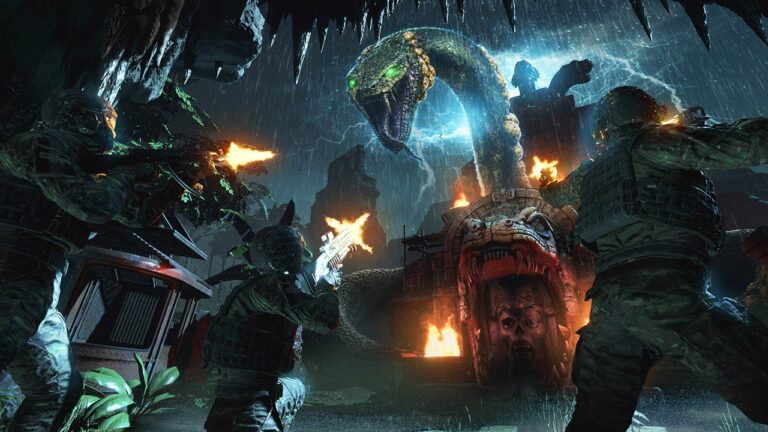
Miners Landing Built a $25 Mixed Reality Dark Ride Into Unused Space on Pier 57

Miners Landing has run Sasquatch Mountain on Seattle's Pier 57 since 3 April 2026. The Bigfoot hunt uses VR headsets…
Read more...
Hero Zone: Where Social VR Meets Real-World Revenue -

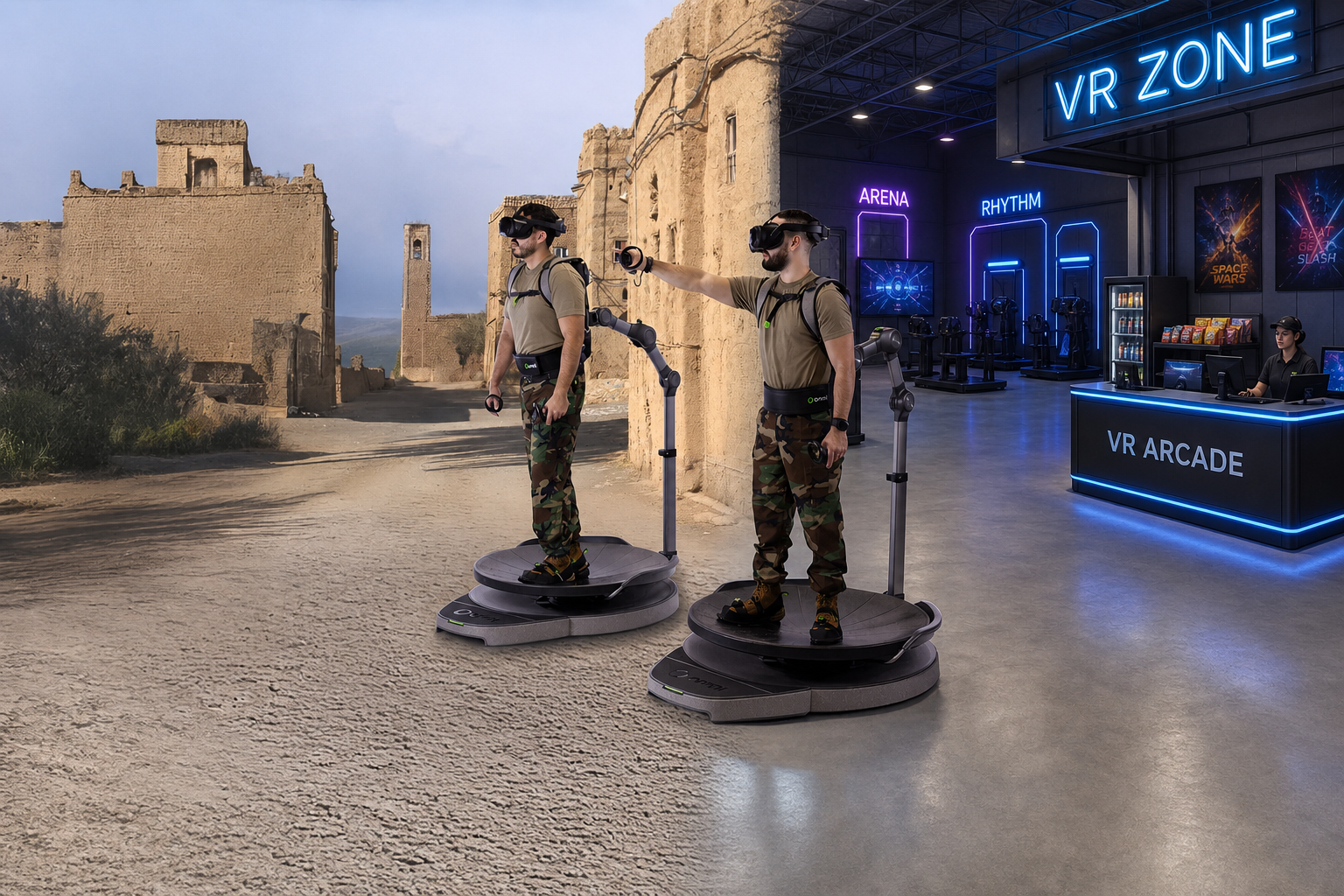
Bob Cooney’s Take – Virtuix going public at a $100M valuation was a moment worth marking, even if the path to get here looked nothing like the original pitch deck. This is a company that pivoted from consumer Kickstarter to arcade hardware to FEC esports attraction to “Peloton for gamers” and now to military training, all in roughly a decade. That’s what a hardware company has to do when the market they thought they were building for doesn’t show up on schedule. Operators running Omni Arena should care less about the ticker symbol and more about what a public balance sheet means for the people they call when something breaks.
Virtuix Holdings (NASDAQ: VTIX), the omnidirectional treadmill maker, announced it has been selected by the U.S. Air Force for Phase I funding under the AFWERX SBIR program to develop its Virtual Terrain Walk platform for military mission planning.
The Virtual Terrain Walk platform combines Virtuix’s omni-directional treadmill technology with immersive extended reality environments and AI-driven terrain reconstruction. The system allows military personnel to physically walk through virtual replicas of real-world locations. It uses AI to convert camera footage of actual terrain into three-dimensional virtual environments.
Founder and CEO Jan Goetgeluk will be taking place in a LEXRA Huddle talking about how they’re using Gaussian Splats to create real-time photorealistic VR environments.
Virtuix started as a consumer Kickstarter. The original Omni was going to put a treadmill in your living room so you could walk around in VR games. It raised millions, but the economics fell apart on fulfillment. Shipping a heavy, bulky piece of hardware to thousands of individual consumers around the world turned out to be a bad business model.

VR Arcade operators noticed the product, started buying the original treadmills, and Virtuix noticed back. That’s where Omni Arena came from. Launch it in 2019 as a turnkey four-player VR esports attraction for the out-of-home entertainment industry. Four Omni Pro treadmills, integrated content, a competitive leaderboard layer, and an operator-friendly form factor that fit into existing FEC floor plans.
Omni Arena worked. It’s in lots of venues. But the FEC hardware market is what it is, and “what it is” has always been niche. And American FEC owners just don’t love VR anymore. “It’s you, not me.” Europe on the other hand is exploding, both with VR and esports. See the recent $35 million euro raise from EVA.
Bob’s Take – Every hardware company in this industry eventually runs into the same wall: the LBE installed base is finite, the sales cycle is long, and the revenue per unit, while real, doesn’t compound the way SaaS revenue does. You either find a second market or you become a maintenance business. That’s the wall Virtuix hit, and it’s the wall every supplier in this category will hit eventually.
So Virtuix went hunting for the bigger market. The vision: become the Peloton of VR gaming. The product: Omni One, a consumer treadmill with an integrated headset and a content subscription. They raised a ton of capital on that thesis. It’s a respectable bet on paper. Peloton itself proved that connected fitness hardware plus a content subscription can build a multi-billion-dollar business when the timing is right. Especially when people were locked at home during a global pandemic.
But everything eventually ends.
Consumer VR adoption has plateaued. Meta has shipped tens of millions of Quest units, and that’s good for the platform overall, but the engagement numbers and the willingness to add expensive peripherals have not materialized at the scale a hardware company needs to ship a premium connected treadmill into the home. “Peloton for gamers” only works if there are enough gamers willing to clear floor space, spend four figures on hardware, and pay a monthly subscription. That cohort exists. Is it big enough to support a $100 million valuation?
Cooney’s Take – I changed my tune on consumer VR a few years back, and I’m comfortable with where I landed. The consumer market is real but slow. The out-of-home market is where the interesting work is getting done because operators can justify premium hardware with premium ticket prices in a way no consumer ever will. Virtuix’s original instinct, that arcades and FECs were where the Omni belonged, was the right one. The Peloton pivot sounded great during the pandemic, and I bought into it. But it’s going to be a slog.
One of the challenges of selling VR is that people need to try it. Maybe they can use arcades as demo centers for selling Omni One to consumers. They floated this idea to me in a conversation in the halls of AWE last year, and I thought it was brilliant. But so far, no word on whether they tried it.
Now Virtuix is pivoting again, this time toward military and tactical training. That’s a viable market. The defense and first-responder training market has real budgets, long procurement cycles, and a genuine use case for omnidirectional locomotion in simulated environments. It’s also a lane Hologate moved into successfully after pulling back from the LBE category. The playbook exists.
Here’s the question that matters for venue operators running Omni Arena right now: does a public listing make Virtuix a more reliable supplier or a more complicated one?
The honest answer is both, and it depends on how the company manages quarterly expectations against a business model that runs on long sales cycles.
The upside: public companies file. Operators evaluating a long-term hardware relationship can read the 10-K, see the cash position, understand the customer concentration, and make an informed bet on whether their supplier will still be around in five years. That’s a level of transparency you don’t get with most LBE hardware suppliers. For operators who’ve been burned by suppliers that quietly wound down support, this is a real benefit.
The complication: public markets want quarter-over-quarter growth. LBE hardware sales don’t work that way. An operator might evaluate an Omni Arena purchase for nine months before signing. A defense contract might take two years to close. If quarterly earnings pressure pushes a company toward decisions that prioritize short-term revenue recognition over long-term operator relationships, that’s a problem the people running venues feel directly.
Bob’s Take – This is the thing I’d watch if I had Omni Arena units in my venue. Not the stock price. The roadmap. Is the company still investing in the FEC product? Are content updates still shipping on a cadence? Is support still responsive? Public capital can fund all of that, or it can starve it if the attention moves to defense contracts where the dollar values per deal are larger. The pivot to military doesn’t have to come at the expense of the LBE business, but it can if the company lets it.
The military and tactical training move makes business sense. Hologate’s pivot in that direction has been one of the quieter success stories in the broader XR industry, and the playbook is increasingly well understood. Training simulators for soldiers, first responders, and tactical teams have real budgets attached, and omnidirectional treadmills are a genuinely useful piece of that puzzle. You can’t train room-scale movement in a room-scale headset without locomotion hardware. Virtuix has spent a decade refining that hardware.
The companies that have made this transition successfully tend to share a few traits. They keep their commercial entertainment business intact as a margin contributor and a brand presence while building the defense side. They invest in the certifications and procurement relationships that defense buyers require. And they’re patient. Defense procurement is not a fast business. But when you’re in, you’re in.
Whether Virtuix can run that playbook while also satisfying public-market growth expectations is the real question the S-1 raises. The capital is there. The product is there. The market is there. Execution is what’s left.
Three things make this listing worth paying attention to beyond Virtuix itself.
First, it’s a rare data point. There are not many publicly traded LBE-specialist hardware companies. Every time one of them files something, the entire industry gets a clearer picture of what the unit economics actually look like, what customer concentration looks like, and what investors are willing to value a hardware-plus-content business at. That information helps everyone, including private suppliers and investors evaluating other deals in the category.
Second, it tests a thesis. Can a company that started in LBE hardware build a business durable enough to support a public listing? The answer over the next several quarters will shape how private capital looks at the rest of the supplier category. If Virtuix performs, it opens the door for other hardware suppliers to consider the public route or to attract larger private rounds. If it struggles, it tightens the screws on everyone.
Third, the pivot pattern is instructive. Virtuix’s path, consumer to LBE to consumer-again to defense, mirrors what a lot of hardware companies in this space have considered or attempted. Watching how Virtuix executes the defense pivot while maintaining the FEC business is a live case study for any hardware company thinking about the same move.
Bob’s Take – The companies that survive long enough in this industry to matter are the ones that figure out which market they’re actually in, then double down. Virtuix has been three different companies in a decade. That’s not a knock on them at all. Hardware is hard. The interesting question is whether being public forces them to pick a lane and stay in it, or whether the freedom to discuss multiple markets with multiple investor audiences makes focus more challenging.
A few things worth tracking now that the filings are public:
Virtuix going public is genuinely interesting for the LBE industry, not because it changes anything about Omni Arena tomorrow, but because it gives the rest of us a window into what an LBE-adjacent hardware business looks like when the financials are on the record. The pivot to defense is sensible. The risk is the same risk every hardware pivot carries: that the new market gets the attention and the old market gets the leftovers.
Operators running Omni Arena units should read the 10-Ks when they release, watch the roadmap, and judge the company by what ships, not by what gets announced.
What is Virtuix’s NASDAQ listing? Virtuix Holdings filed an S-1 registration statement under the ticker VTIX to register 25.3 million Class A shares for resale, valuing the company at roughly $100 million. The filing makes Virtuix one of the few LBE-specialist hardware companies to pursue a public listing.
What is Omni Arena and how is it used in location-based entertainment? Omni Arena is a four-player VR esports attraction launched in 2019 for the out-of-home entertainment industry. It comprises four Omni Pro omnidirectional treadmills with integrated competitive content, designed as a turnkey installation for family entertainment centers and arcades.
Why is Virtuix pivoting to military and tactical training? The consumer VR market has plateaued, making Virtuix’s Omni One consumer treadmill thesis harder to execute at scale. Defense and tactical training represents a market with real budgets, long procurement cycles, and a genuine need for omnidirectional locomotion hardware. Hologate executed a similar pivot from LBE into training markets successfully.
What does Virtuix going public mean for venue operators running Omni Arena? It brings transparency through public filings, which helps operators evaluate the supplier’s long-term viability. It also introduces quarterly earnings pressure on a business with long LBE sales cycles, which could affect how the company prioritizes its FEC business against newer defense opportunities.
Are there other publicly traded location-based VR hardware suppliers? Very few. Most LBE hardware suppliers, including major players in free-roam systems, simulators, and platform technology, remain privately held. Virtuix’s listing makes its financials a rare public reference point for the entire LBE hardware category.