Miners Landing Built a $25 Mixed Reality Dark Ride Into Unused Space on Pier 57
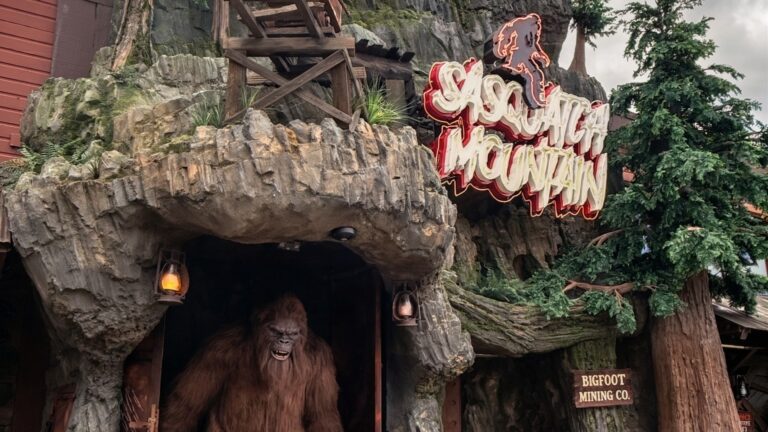
Miners Landing has run Sasquatch Mountain on Seattle's Pier 57 since 3 April 2026. The Bigfoot hunt uses VR headsets…
Read more...
Hero Zone: Where Social VR Meets Real-World Revenue -

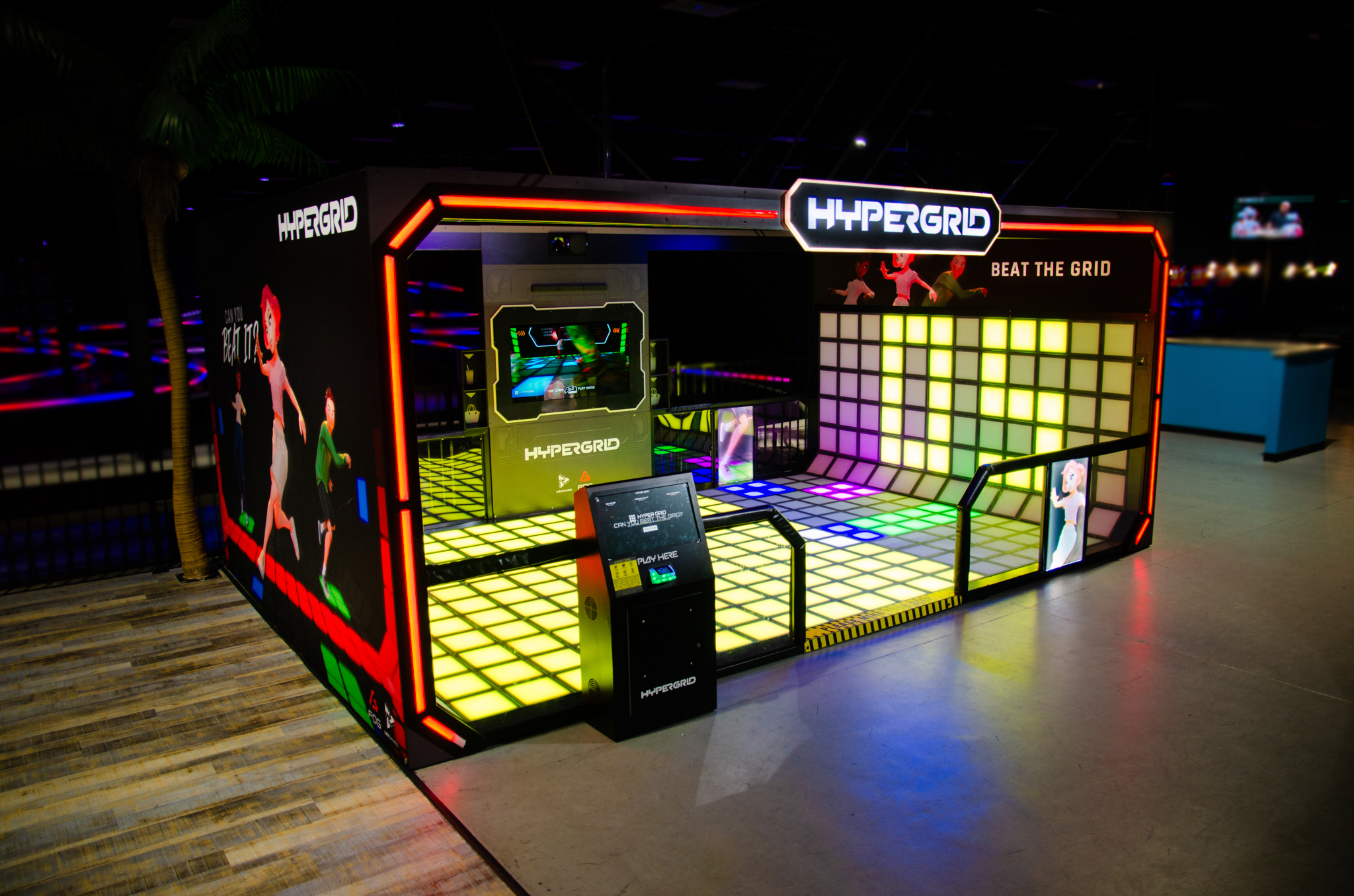
LAI Games has installed the first four North American units of HYPER GRID, an interactive LED floor attraction it manufactures for the region. The units went into Taroko Sports in San Antonio, Slick City in Geist, Indiana, Main Event in Woodbury, Minnesota, and Playdium in North York, Ontario, over a two-week period. LAI Games announced the installations on 10 August 2026. All four run unattended. The format sits in the category the site’s directory tracks as Immersive Rooms, which covers room-scale attractions guests walk into rather than gear up for.
LAI Games specifies HYPER GRID for one to six players, with sessions of three to six minutes and a lineup of four or more games. High-brightness LED tiles under non-slip tempered glass cover the play deck, and lit walls enclose it.
A big-screen display runs the game and cameras cover the deck. Floor sensing identifies individual players, which lets the system charge per player and admit a guest to a session already running.
Those cameras also feed Moments, a capture feature that records the round and produces an AI-edited highlight video carrying the venue’s branding. Guests download it.
“Many interactive floor products start and end with the tiles,” LAI Games says on its product page. HYPER GRID ships with the play deck, the surrounding structure, the display, the cameras, the lighting and the game system as one attraction.
Guests pick a game from a touch interface and follow an on-screen tutorial, so a round starts and finishes without anyone from the venue involved. A card reader or coin slot takes the payment, and the unit can run redemption. LAI Games publishes no dimensions for the North American build. FOG Technologies, which created the original, puts its own version at 270 square feet.

Neither company publishes a throughput figure. Off LAI Games’ published session length, a five-minute round with a minute to load and unload gives ten cycles an hour. At six players that is a ceiling of 60 guests an hour. Groups of three book the slot a group of six would, so the number an operator can plan on sits below that ceiling.
“For FEC operators, the critical KPIs for success in immersive attractions are revenue per square foot and labor cost as a percent of revenue. Plotting an attraction on that 2×2 grid when evaluating it will clearly identify the winners in the top-right quadrant,” said Bob Cooney, a VR consultant and executive director of LEXRA, the trade association for location-based XR, who began his career operating immersive location-based entertainment in 1989. Cooney publishes The VR Collective.
“Seeing the first Hyper Grid attractions going into venues across North America within such a short period is an exciting milestone,” said Jason Gould, LAI Games’ global vice president of sales and marketing. “Operator interest in the attraction has been extremely encouraging, and these first installations demonstrate the variety of entertainment environments that are a great fit for Hyper Grid.”
The four venues are different businesses. Main Event is a national eat-drink-and-bowl chain, Slick City is an indoor slide park, Playdium is a Canadian arcade and attractions venue, and Taroko Sports is a sports and entertainment operation.
LAI Games sells through authorised distributors in the amusement trade, and its product page routes buyers to one. None of the four launch venues is a VR venue.
Future of Gaming, an attractions developer based in Surat, India and known as FOG, created HYPER GRID. FOG says its interactive gaming systems run in more than 100 venues worldwide.
LAI Games then developed a version for North America. The company re-engineered the attraction to meet North American certification requirements and reworked it for manufacturing, installation, operation and support. It redesigned the exterior, and manufactures and supports the North American units in its own factory.
Operators get an attraction that carries no attendant on the payroll line. LAI Games quotes the capital price privately through its sales team and its distributors, and the per-round price is the operator’s to set, so the return follows the venue’s own pricing. The four launch sites are the only operating record the format has in the region.
What is HYPER GRID? An unattended interactive LED floor attraction for one to six players. LED tiles under tempered glass cover the play deck, lit walls enclose it, and a big-screen display runs a lineup of four or more short competitive and cooperative games.
How many players does HYPER GRID take? LAI Games specifies one to six. Floor sensing identifies individual players, so the system charges per player and can admit a guest to a session already under way.
Does an interactive LED floor attraction need staff? HYPER GRID is sold as fully unattended, with touch-screen game selection, on-screen tutorials and integrated payment. Venues still cover cleaning, maintenance and supervision of the wider floor.
How much does HYPER GRID cost, and what does a round cost the guest? LAI Games quotes the capital cost privately through its sales team or a regional distributor and publishes no figure. What a guest pays per round is set by each operator, so it varies venue to venue.
Who makes HYPER GRID for North America? LAI Games manufactures and supports the North American units in its own factory, on a design created by FOG Technologies of Surat, India and re-engineered by LAI Games for North American certification.
Correction, 26 August 2026. This article originally described HYPER GRID as built by FOG Technologies and LAI Games as its distributor. FOG Technologies created the original attraction; LAI Games re-engineered it to meet North American certification requirements, redesigned its exterior, and manufactures and supports the North American units in its own factory. The article has been rewritten with LAI Games’ published specification for the North American build, and the illustration has been replaced with a photograph supplied by LAI Games.