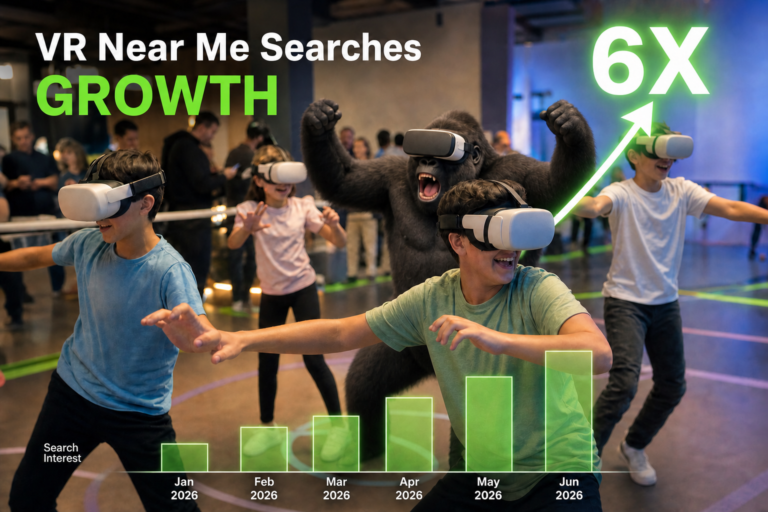
“VR Near Me” Searches Are Up 6X. The Signal Every FEC Should Be Watching.
I gave up on VR market forecasts about five years ago. The reports were wrong, the methodologies were sloppy, and…
Read more...
Hero Zone: Where Social VR Meets Real-World Revenue -

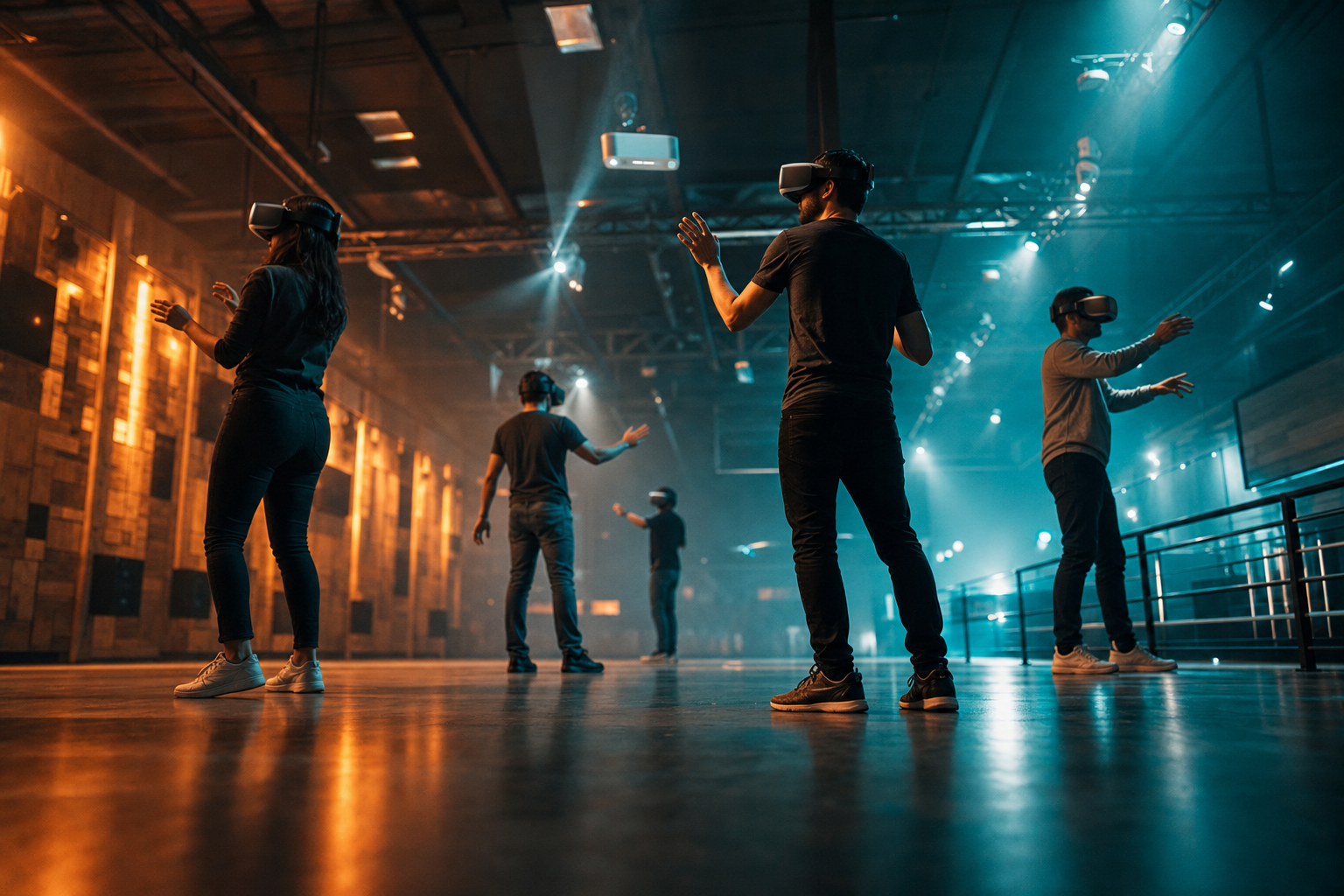
Bob Cooney’s Take – I wrote the original Strategic Guide back when most operators were still standing on the beach with their boards under their arms, trying to figure out if this third VR wave was the one to paddle into. A lot has changed. Some of the frameworks I built then still hold up. Some of the product categories I described have collapsed, consolidated, or transformed into something I didn’t see coming. Worth a fresh look for anyone making a buying decision today.
When I first published How to Select the Perfect Virtual Reality Attraction for Your Operation, the LBE VR market was a different animal. Hologate was a year into its run as the breakout multiplayer product. Zero Latency was the obvious leader in arena-scale. The VOID was still operating. Nomadic was in market. Dreamscape had just opened. Kevin Williams was counting over 60 VR products on the IAAPA show floor, and I was warning operators about paralysis of choice.
Reading the guide now, what strikes me is how much of the underlying framework still works, and how much of the specific product landscape has been rewritten.
The Spectator, the Follower, the Trialist, the Strategist. I’d write that section the same way today. Maybe more pointed.
The Spectators have been sitting on the beach for almost a decade now. Some of them are still there. The waves they were waiting to see break never stopped breaking. They watched Zero Latency open hundreds of locations. They watched Sandbox VR build a global chain. They watched DreamPark, The Park Playground, Andretti’s, MeetSpace VR, Funlab, and Eclipso Entertainment build real operating businesses on top of this category. The Spectators missed all of it.

The Followers are still buying what their neighbor bought. That used to mean Hologate. Now it might mean a motion simulator, a compact free roam installation, or a VR escape room. There’s still safety in numbers but no differentiation.
The Strategists are the ones who built the chains worth talking about. They studied the break.
Bob’s Take – The four mindsets framework was the part of the original guide that aged best. The categories of operators don’t change. The waves they’re trying to catch do.
This is where the original guide needs the biggest update. I broke the market into Arcade Single Player, Arcade Multiplayer, Arena Scale, Multisensory, and VR Escape Rooms. Those buckets still exist as ways of thinking, but the companies inside them look very different.
Arcade Single Player. Barely a category anymore. Sega, NAMCO, and Raw Thrills have all but abandoned it. VRsenal moved on to theme park rides, so has TrioTech. When Godzilla showed up at IAAPA 2025 without VR (after blowing everyone away with the VR version the year before), it marked the end for now.
Arcade Multiplayer. Hologate has stepped back from the LBE category and pivoted toward training markets, which I’ll come back to. The slot that Hologate used to occupy is now contested by a different set of players and different tech. Gone are the PCs and cables hanging from a truss. Standalone headsets are cheap, easy, and reliable. DIVR Labs has emerged from Prague with an unattended attempt. vrCAVE dominates compact escape rooms. Hero Zone VR the compact free-roam space with 600 locations.
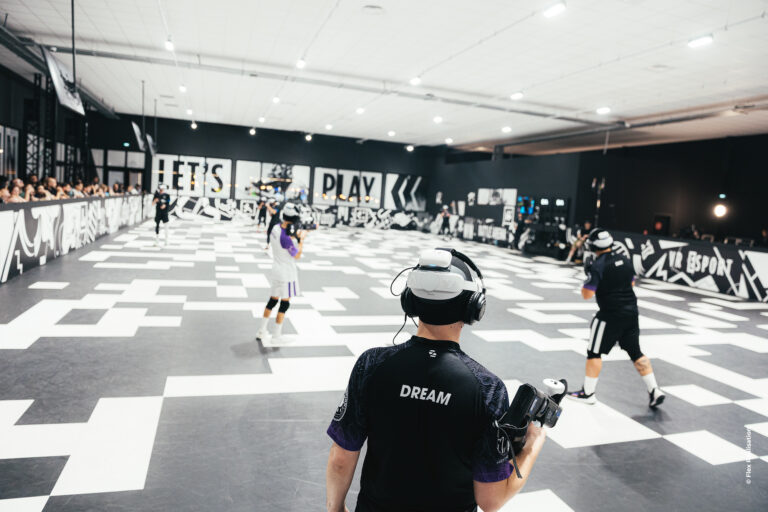
Arena Scale. This is where the rewrite is most dramatic. The original guide listed Zero Latency, VR Studios, True VR, Mass VR, and Neurogaming. Of those, Zero Latency is the only one operating at a meaningful scale today. VR Studios is gone. The arena-scale category got narrower and deeper. Zero Latency leads. Sandbox VR runs its own franchise model. The Park Playground are operator-suppliers running their own free-roam attractions. And new entrant Dream Park is scaling experiences up to city-park size.
Multisensory. The VOID is gone. Nomadic is gone. Dreamscape Immersive is done (to college). The multisensory category I described as “the big-wave surfing of VR” turned out to be exactly that. Most operators who tried to ride it ate it on the reef. Slow throughput, high labor, excessive capex.
VR Escape Rooms. The category is still real, but smaller than I thought it would be. Arvi is still there. vrCAVE too. The Ubisoft Blue Byte titles I mentioned mostly ran their course. The escape room operators who added VR found that a VR escape room and a physical escape room serve different purposes for the customer.
Bob’s Take – If you wanted a single data point about how much this market has changed, look at the company list. I named about 20 suppliers in the original guide. Maybe a third of them are still in business in any serious way. That’s not a failure of the original analysis. That’s hardware. Companies pivot, get acquired, run out of runway, or find a bigger market somewhere else. Virtuix just went public and signed a deal with the US Air Force. Hologate went into training. Many went away, but the companies that stayed in LBE got really good at it.
The duration argument is the one I’m most comfortable with. I wrote then that single-player arcade VR was casual and impulsive, and that arena-scale and multisensory were anchor attractions that customers would drive across town for. That has held up exactly as written. The 45-minute Zero Latency experience is something worth getting in the car for. It’s hard to get somebody to put on pants for 15 minutes. The hour-long Banijay Black Mirror Immersive at Infinity Experience in Montreal is worth the trip. A 10-minute arcade booth needs to live in a venue people are already at.
The labor argument also holds. I wrote that you can’t operate single-player VR profitably with a dedicated attendant, that the 4:1 ratio of players to attendants was the threshold, and that staffing was the make-or-break variable for multiplayer arcade systems. Every operator I’ve talked to in the years since has confirmed that. The staffing model is what separates the products that scale from the ones that struggle.
The “homogenisation of the industry” warning held up too. Not only with VR, but also with mini-golf, laser tag, bowling, axe-throwing, you name it. FECs adding the same attractions everyone else added have continued. The operators who differentiated, with deep IP, signature content, or a real brand position, are the ones with pricing power. Netflix House? Check. The vanilla boxes are competing on price.
I underestimated how quickly inside-out tracking would collapse the cost of arena-scale. I wrote that arena-scale required “sophisticated tracking technology” and “expensive camera systems.” Within two years of that being published, standalone headsets with inside-out tracking became the standard. Backpack PCs evaporated from the supply chain. The cost structure of arena-scale dropped drastically, which is why the category has more entrants now than it did then, even though most of the original names are gone.
The multisensory category didn’t mature; it condensed. Stryker VR guns and bHaptics vests are enough. Oh, and maybe an occasional fan.
The shopping center section was right about the rent problem and wrong about who would solve it. I wrote that real-estate developers were stuck in 1990s thinking. Most still are. The solution didn’t come from a new leasing model. It came from operators like Sandbox VR placing themselves in high-traffic retail with Tanger Outlets and similar partners, finding rent structures that work for both sides without the developer having to rewrite their entire playbook.
The casino section is the one I’d rewrite most aggressively. Casinos still haven’t figured this out. The criticism I wrote then, that casino general managers value floor space based on coin-drop revenue that isn’t actually coming in, applies just as much today. Area 15 is capitalizing on the consumer appetite for immersive experiences and the Casino addition to slot machines. And Sandbox just opened its third location in Vegas. And then there’s The Sphere. Whole other thing.
A few categories that didn’t exist in any meaningful form when I wrote the original.
Cultural content as a category. Excurio, Lighthouse Immersive, MediaPro Exhibitions, Fever, Eclipso, and others are running long-duration narrative experiences in repurposed retail and venue spaces. The audience is adults paying premium prices for cultural content. Horizon of Khufu, Eternal Notre-Dame, Titanic VR, all of these are doing real numbers in real venues.
These platforms put bonded groups of guests through narrative content in stream-through venues, closer to a haunted house than a cinema. Up to 100 guests can be in the space at once, moving through as small groups, staggered through the scheduling window.
IP-led group experiences from major studios. Netflix has been working with Sandbox VR for a couple of years. Banijay launched Black Mirror Immersive at Infinity Experience in Montreal earlier this year. Warner Bros. has programmed three catalog titles into Cosm. Studios are stepping into the LBE arena, and the path from IP licensing to venue is clearer than it has ever been.
Zoos and Aquariums One company stands out, having cracked that market wide open. Immotion builds seated simulator systems with nature-based short VR films. They place them on a revenue share and have grown to almost 200 locations. Zoos and Aquariums don’t have a budget for these projects. Immotion is a great way to increase per-capita spending.
Esports I spent 3 years chasing it and gave up. EVA in France spent 7 years building 80 venues and has just raised 35 million euros in private equity to expand internationally. Watch this one.
Platform consolidation and the interoperability question. When I wrote the original guide, content lived inside the system it shipped with. Today, Univrse, Excurio, Wevr, Small Creative, VIVERSE, and others are platforms that operators license to bring different content libraries into the same venue. That’s good for content variety. It’s a problem for operational complexity. If every studio’s IP runs on its own platform, operators end up running five different systems to host five different content libraries. The industry needs interoperability standards. None exist yet.
The defense and training pivot. Hologate’s pivot toward training was the first major signal. Virtuix’s selection by the US Air Force for AFWERX Phase I funding to develop its Virtual Terrain Walk platform is the latest. LBE hardware suppliers have figured out that defense and tactical training have real budgets, long procurement cycles, and a genuine need for the locomotion and tracking technology they’ve spent a decade refining. That’s an exit path for hardware companies that the original guide didn’t contemplate.
Cooney’s Take – The original guide treated VR as a single category with five product flavors. That framing is too narrow now. There are at least three different industries operating under the LBE VR label. There’s the FEC attraction business, which is still about throughput, staffing, and the 4:1 ratio. US operators are resistant, but international growth is stellar. There’s the destination free-roam business, which is about 60-minute experiences, premium pricing, and group bookings. And there’s the cultural and IP-driven group experience business, which is closer to a museum exhibit or a touring stage production than an arcade. Different operators, different real estate, different content, different economics. Anyone buying VR for their venue needs to know which of those three businesses they’re getting into before they look at the products.
If I were rewriting the Strategist section now, I’d add a few things to the homework list.
Know your audience, go narrow, be specific. This is the one I’ve said a hundred times, and it hasn’t gotten less true. The operators winning are the ones who picked a clear audience and built for them. The 30-something with disposable income for a premium narrative experience is a different customer than the 14-year-old at a birthday party. They want different content, different pricing, different food and beverage. Trying to serve both with one attraction is how you end up serving neither. If I hear one more operator answer my question, “Who is your target customer?” with “Everyone,” I am going to scream.
Peak the Peaks and Pack the Gaps Blaise Whitnish, Funlab CEO dropped this nugget on one of my podcasts. Treat VR like an airplane. Charge top dollar during peak times and deep discounts during off-peak times. And work those daypart gaps through focused group sales go-to-market strategies AND content programming for demographics coming out on weekdays. They exist.
Understand what drives repeat visitation. AI-driven branching narratives are starting to show up in prototypes. Bandersnatch proved that branched storytelling didn’t work for Netflix consumer streaming because production cost couldn’t be recouped against marginal-distribution economics. LBE is a different environment. Repeat visits directly monetize the branching investment. This is a thesis, not a proven outcome, but the opportunity is real. EVA built a retention loop into their VR esports system, and repeat rates are high.
Ask whether the content has legs. “Legs” is the amusement industry term for how long a piece of content keeps drawing audience before refresh is needed. Live sports has legs by definition. A two-month run of Ayahuasca: Kosmik Journey at VR World NYC had legs for that window. A single-IP attraction in a market has a saturation point. The right question for an operator licensing content isn’t whether it works on opening week. It’s how many weeks it runs before attendance drops and you need the next title.
Don’t get out over your skis with unproven content. Slow rollout from a single market is smart, not weak. Banijay opened Black Mirror Experience in Montreal first and is expanding the footprint based on what they learn. That’s the right way to launch unproven emerging media. And don’t get locked into one content provider. Nobody has a big enough library with a good enough track record yet.
Watch the platform fragmentation problem. Before you commit to a platform, ask which content libraries it gives you access to, what the interoperability picture looks like, and whether you’re going to end up running multiple operational stacks to host content from different studios. The platform layer is maturing. The question for operators evaluating platforms is now as much about ecosystem and content access as it is about hardware and tracking.
A few things worth tracking over the next twelve months.
The original guide held up better than I expected. The four mindsets, the duration argument, the staffing math, and the warning about homogenization all still apply. What changed is the cast of characters and the addition of categories I didn’t anticipate.
The Strategist’s job is harder now than it was then. There are more product categories, more content sources, more business models, and more platform decisions to make. The upside is that the market is no longer experimental. Real operators are running real businesses with real numbers. The playbook is starting to exist. The Spectators who are still on the beach are running out of reasons to be there.
If you’re in this market, join us at LEXRA where the playbook is being written. www.lexra.org
What categories of VR attractions should an LBE operator consider buying in 2026? The main categories are arcade single-player cabinets, arcade multiplayer systems, arena-scale free-roam, IP-driven and cultural group experiences delivered through platforms like Excurio, Univrse, Wevr, Small Creative, and VIVERSE, and VR escape rooms. The specific suppliers in each category have changed significantly since 2019.
How has the arena-scale VR market changed since 2019? Inside-out tracking on standalone headsets collapsed the cost of arena-scale deployment. Backpack PCs are no longer current practice. Zero Latency, Sandbox VR, vrCAVE, Hero Zone, and The Park Playground are among the active players in this category. Most of the original arena-scale suppliers from the 2019 market have exited or pivoted.
What drives repeat visitation in location-based VR? Playability with variable outcomes based on guest decisions, especially AI-driven branching narratives, is a developing driver. Word-of-mouth from alpha influencers is another. Operators evaluating content should ask how long a title runs in a market before audience saturation, which is the amusement industry concept of “legs.”
How are major TV and film studios entering location-based entertainment? Netflix has been working with Sandbox VR for several years. Banijay launched Black Mirror Experience at Infinity Experience in Montreal earlier this year and is expanding the footprint. Warner Bros. has programmed three catalog titles into Cosm. The path from major studio IP into LBE venues is becoming clearer.
What is the platform fragmentation problem for LBE operators? As more content platforms enter the market, operators face the prospect of running multiple operational stacks to host content libraries from different platforms. Univrse, Excurio, Wevr, Small Creative, VIVERSE, and others all have growing content catalogs. Interoperability standards do not yet exist, and the lack of them is becoming an operational concern for venues that want to host content from multiple sources.