Bob Cooney’s Take – Blade Runner is one of the most culturally significant science fiction properties in cinema history, and it’s coming to LBE in 2027 as a joint venture between Behaviour Interactive and Phi Studios. That’s a serious pairing. Phi has more immersive LBE experience than almost anyone in the space. And the audience for Blade Runner is the kind of audience operators have been asking for: older, cerebral, with disposable income and a willingness to pay for prestige.
Behaviour Interactive, the Montreal-based studio behind Dead by Daylight, has announced a Blade Runner XR experience launching in 2027. It’s a joint venture with Phi Studios, the operator behind Infinity Experience in Montreal, which is the same venue currently hosting Banijay’s Black Mirror Experience and Excurio’s Horizon of Khufu. The Polygon coverage framed this as a game studio venturing into a new medium. The real story is a JV with one of the most experienced immersive LBE operators on the planet.
Behaviour Plus Phi Is the Headline
The Polygon piece missed the partnership angle entirely. Phi Studios isn’t a footnote here. Phi has been operating immersive cultural experiences in Montreal for years and has hosted some of the most ambitious narrative LBE content the industry has produced. Pairing them with a game studio of Behaviour’s scale is a model worth watching: a studio that knows how to build interactive systems and characters, partnered with an operator who knows how to actually run a venue and move groups through an experience.
Bob’s Take – When a game studio announces an LBE project, the first question is always “do they know what they’re getting into?” In this case, yes. Phi Studios is the partner. That changes everything. Phi has run Horizon of Khufu. They’ve launched the Black Mirror Experience. They understand the difference between making a game and operating a venue. Behaviour brings the IP relationship and the interactive design chops. Phi brings the operating expertise. That’s a real JV, not a game studio fumbling into a new format.
Not VR, Not MR. So What Is It?
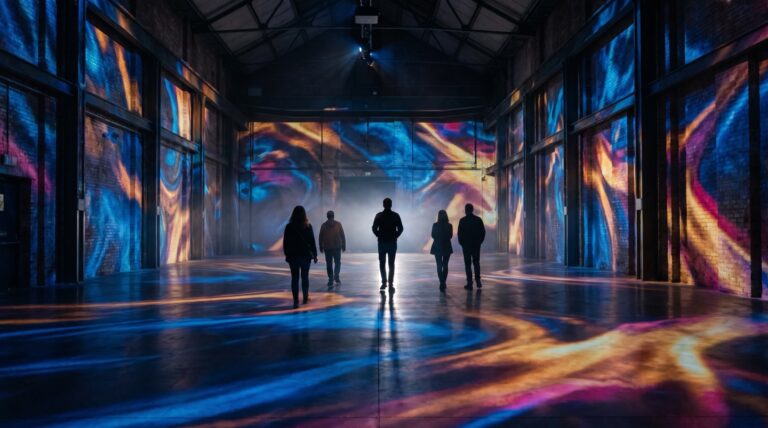
In interviews, the team has been explicit that this is not VR and not mixed reality. They used the term XR in their description, which leaves a lot of room. It could be projection-based immersive, it could be a hybrid physical-digital build with screens and set pieces, it could be something we haven’t seen before. The fact that they’re avoiding headsets entirely is interesting. It suggests they want the visual fidelity of physical scenography and large-format projection rather than the constraints of current headset optics.
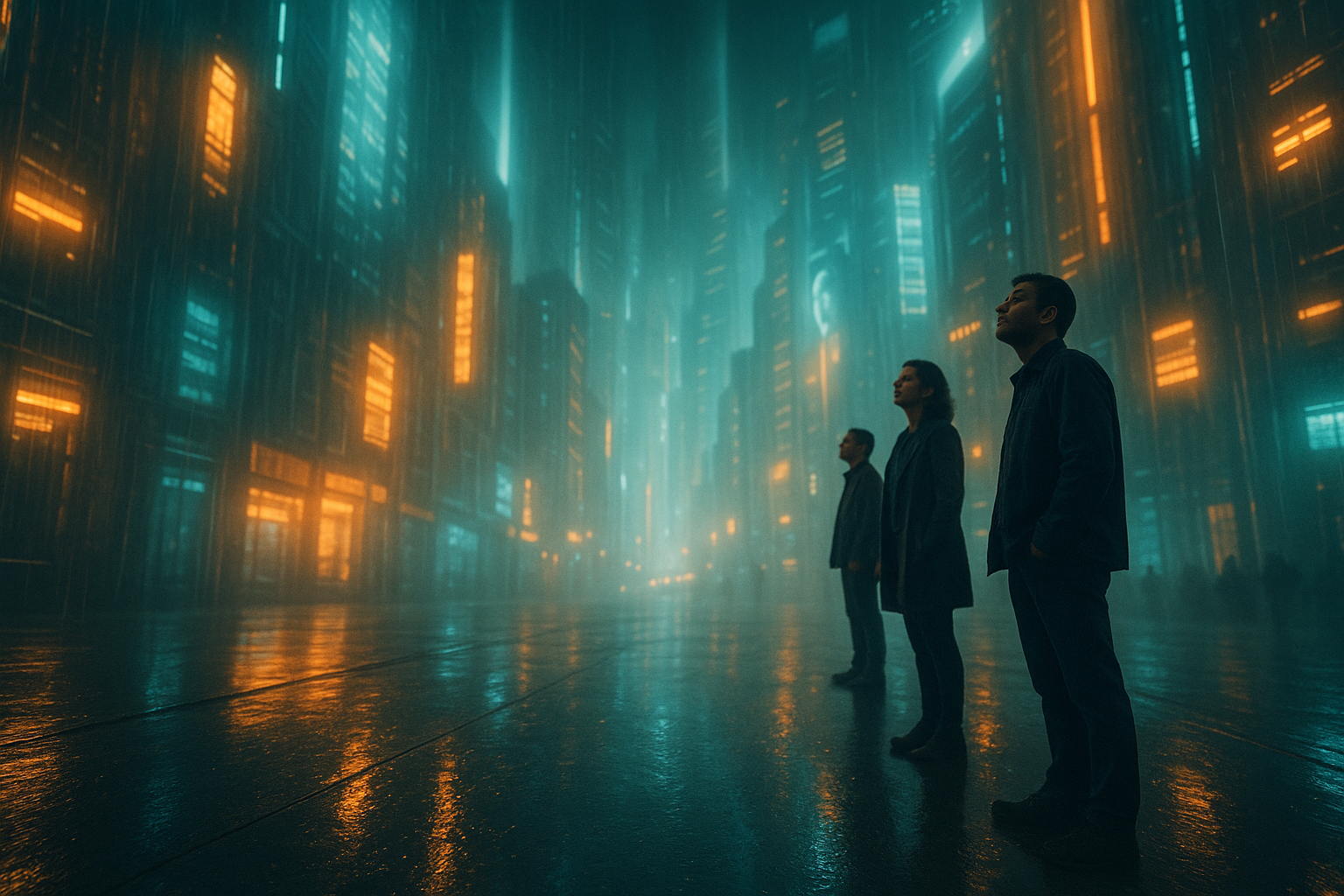
That choice fits the IP. Blade Runner is a film whose visual identity lives in scale: the towering Tyrell pyramid, the rain-soaked street level, the neon haze. A headset experience would compress all of that to a 100-degree field of view. A physical environment with projection and scenography can deliver the actual cinematic scale that fans of the property expect.
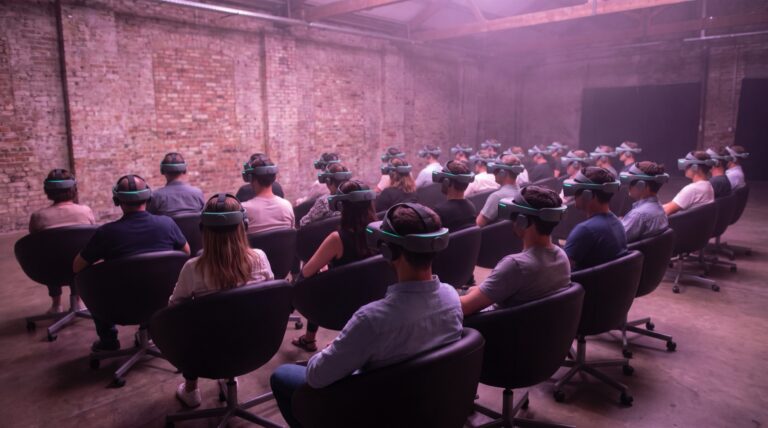
It also fits the operating model. A no-headset experience opens up the addressable audience considerably. The friction of fitting, sanitizing, and operating headsets goes away. Throughput math changes. Whatever Phi and Behaviour are building, they’re building it for a wider audience than headset VR alone supports.
The Audience Is the Story
Blade Runner is not a kids-and-families IP. It is not a thrill-seeker IP. The audience for Blade Runner skews older, predominantly male, deeply nostalgic, and cinephile-adjacent. These are people who can quote the “tears in rain” monologue. They’ve watched the 1982 original, the various cuts, Blade Runner 2049, and the anime. Some of them have read Philip K. Dick. This is a niche, and it’s a niche with money.
This is exactly the demographic argument the industry has been making for years. Know your audience, go narrow, be specific. The 35-to-60 cinephile-and-sci-fi-fan demographic is underserved in LBE. They’re not going to a zombie shooter. They might pay a premium ticket price for a chance to walk through the Blade Runner world.
Cooney’s Take – Operators have spent a decade chasing the 16-to-34 thrill-seeker. There’s an entire other audience that has never been properly courted in LBE: adults who want cerebral, beautiful, slow-paced narrative experiences. Black Mirror is targeting them. Blade Runner is targeting them. Horizon of Khufu has been targeting them for years. This is a category, not a one-off.
Premium Pricing and the 60-Minute Threshold
If this follows the model Phi is already running with Black Mirror and Horizon of Khufu, expect a 60-minute-plus experience at premium pricing. That’s the right format for this IP. It’s hard to get somebody to put on pants for 20 minutes. A 60-minute walk through a Blade Runner environment, with narrative depth and interactive moments, is something worth getting in your car for. Movies are 90 minutes. Dining is 90 minutes. Escape rooms are 60. The commitment threshold for leaving the couch is real, and Blade Runner has the IP gravity to clear it.
The Black Mirror Experience is the precedent worth watching here. Same venue, same operator, similar prestige-IP positioning. If Black Mirror lands well with critics and audiences, the path is clearer for Blade Runner to follow with confidence. If Black Mirror struggles, Phi has data to adjust before Blade Runner opens in 2027.
Catalog Implications
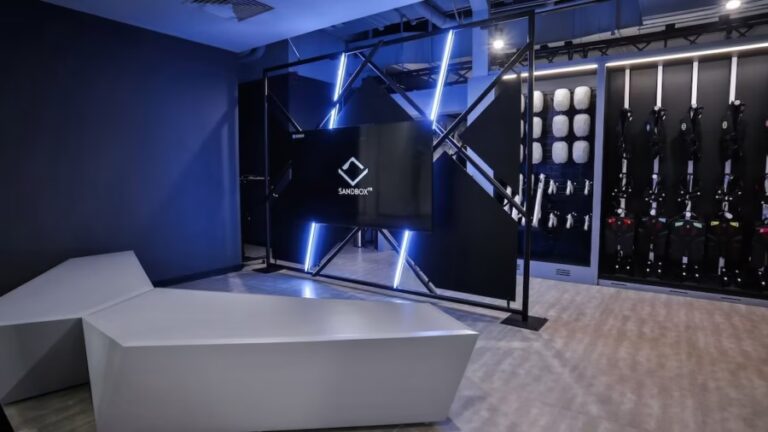
Netflix opened the door with Sandbox VR a couple of years ago. Banijay walked through it with Black Mirror. Now Behaviour is bringing Blade Runner, which means the Warner Bros / Alcon rights holders have agreed to license one of the most protected sci-fi properties in Hollywood to an LBE venture. That’s significant. It’s good to see more IP owners stepping into the LBE arena.
If Blade Runner performs in 2027, the catalog conversation gets a lot more interesting. Studios and IP owners watch each other. Critic response and operator economics on the first prestige-IP wave will determine how much more catalog opens up for the second wave.
What to Watch
- The technology choice. XR with no headsets is a meaningful design decision. The reveal of what Phi and Behaviour are actually building will tell us a lot about where the immersive medium is heading.
- Single-city or multi-city launch. Banijay opened Black Mirror in Montreal first. Will Blade Runner follow the same slow-rollout model, or does Behaviour’s scale push toward a wider opening? Slow makes sense for unproven content. Going out over your skis with a property this expensive is the bigger risk.
- Does it have legs. The amusement-industry question. How long can a Blade Runner experience run in a single market before attendance softens and the market needs a refresh title? That answer shapes how much premium IP content the industry needs to produce each year.
- Fan expectations. Blade Runner has one of the most devoted fan bases in science fiction. The risk of bringing a passionate-fanbase IP into a new format is that expectations can be overinflated. Phi and Behaviour will be judged against what fans imagine, not just what they build.
Why This Matters
Three prestige IPs are now confirmed for Phi Studios’ venue or its peers: Black Mirror, Horizon of Khufu, and Blade Runner. That’s a content lineup that any cinema or theater would be proud of. It also suggests that the cultural-content category in LBE is consolidating around a small group of operators who know how to host this kind of experience. Phi is one. Excurio is producing content for the category. Univrse, Wevr, Small Creative, and others are bringing platforms to market to make it easier for content developers to land their work in operator hands.
For venue operators outside this small circle, the question is how to get access to content of this caliber. For investors, the question is whether the cultural-content category in LBE is becoming a durable business or a series of one-off prestige projects. For studios sitting on prestige IP libraries, the Blade Runner JV is another data point that the model works and the catalog is opening up.
FAQ
When does the Blade Runner XR experience launch?
The experience is targeted for 2027, announced as a joint venture between Behaviour Interactive and Phi Studios.
Is the Blade Runner experience a VR or MR experience?
The team has stated in interviews that the experience will not use VR or mixed reality. They described it as XR, which suggests a physical-environment immersive format, possibly involving projection and scenography rather than headsets.
Where will the Blade Runner location-based experience open?
Specific venue details have not been confirmed publicly. Phi Studios operates Infinity Experience in Montreal, which currently hosts the Black Mirror Experience and Horizon of Khufu.
Who is producing the Blade Runner LBE experience?
It’s a joint venture between Behaviour Interactive, the Montreal-based game studio behind Dead by Daylight, and Phi Studios, an experienced immersive LBE operator.
What other prestige IP experiences are in location-based entertainment?
Recent examples include Banijay’s Black Mirror Experience, Netflix titles licensed to Sandbox VR, and Excurio’s Horizon of Khufu. The category of culturally serious, adult-skewing LBE content is growing.