Sandbox VR Counts Its Times Square VR Venue as Location 100
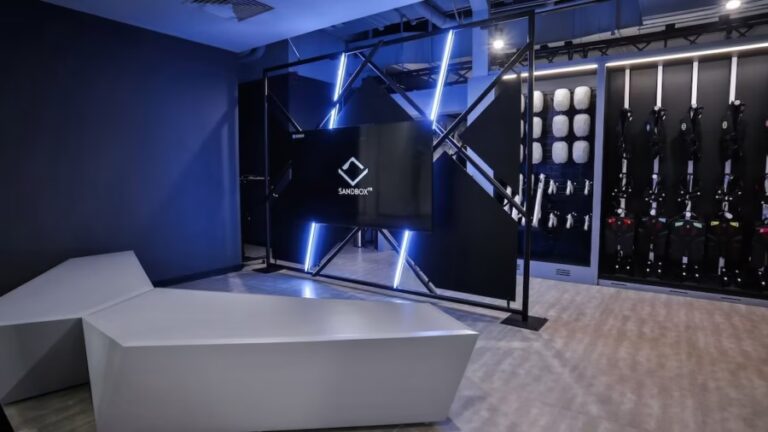
Sandbox VR opens its first New York City venue at 777 Seventh Avenue in Times Square in late October 2026.…
Read more...
Hero Zone: Where Social VR Meets Real-World Revenue -

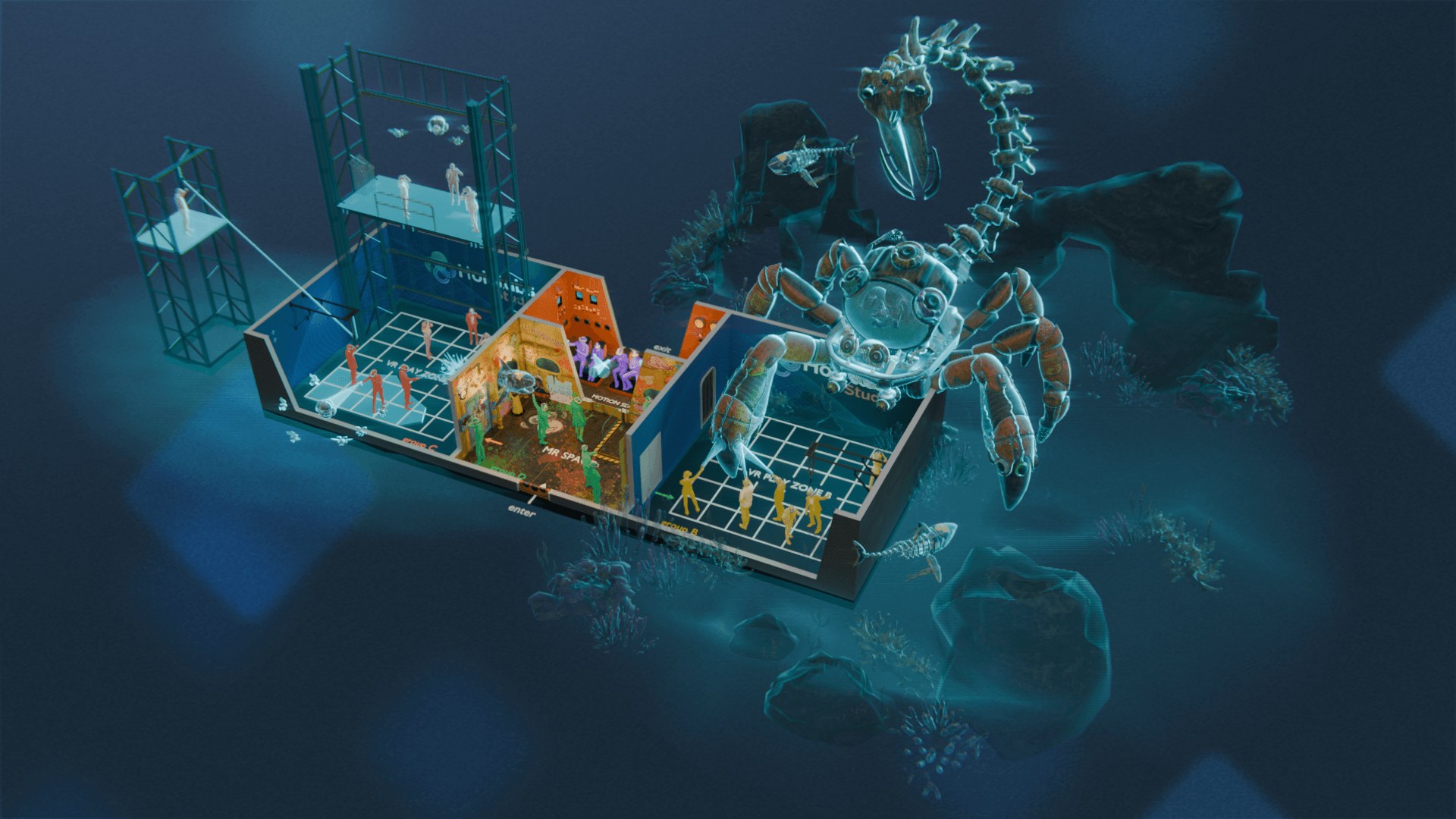
Hololabs Studio showed the first room of a three-room attraction format at IAAPA Expo Europe in London from 22 to 24 September 2026. The demonstration, Abyss MR, is built on the studio’s cooperative free-roam VR game Abyss: Vault.
The format moves groups from a mixed reality room to a free-roam VR room, then to a seated motion-base finale. The studio said the format’s guest flow accommodates a high throughput in a compact footprint.
Mike Wozniewski, president of Hololabs Studio, told blooloop the studio wants partners who “either have the venue or have the IP.”
Guests start in a themed physical set, a submarine interior in the demonstration, where they can touch props and controls. One item in the set is a VR headset, “themed to belong in the world,” Wozniewski said. Guests are told to put it on before moving through the rest of the attraction.
The headset’s pass-through cameras show the set. The headset adds the submarine’s exterior, steam rising from the physical vents and an ocean outside the window.
The pass-through switches off when guests cross into the second room, which is free-roam VR. There, guests see full-body avatars of themselves and each other, climb ladders and slide down zip lines.
The third room is a seated finale on a motion base, with vibration and synchronised media. blooloop compared the third room to a 4D cinema. Guests take off their headsets and exit into a themed retail or food and beverage space.

Each group enters the first room before the group ahead has finished, a flow Hololabs calls stacking.
Hololabs’ rendering shows one mixed reality room feeding two free-roam VR rooms and motion seats. Each group still passes through three rooms.
Successive groups alternate between the two free-roam VR rooms “to optimise for throughput,” said Brett Gaylor, the studio’s vice president of creative. In the rendering, four groups are inside at once.
The studio built the format around what it calls a three-cornered problem: immersion, capacity and footprint. In the studio’s IAAPA announcement, Gaylor said the format is “engineered to deliver higher revenue per square metre and a higher return on investment.” He said it can deliver “almost theme park-sized throughflow in a retail-sized space.”
Hololabs said it designed the standard layout for retail sites, entertainment centres or as the anchor of a larger park. At IAAPA, the studio also showed floor plans and financial models.
The format can be tailored to different brands, IPs or local markets. The studio has other concepts in development.
Hololabs said it developed the format with PICO for Space Pro, a standalone headset. At the IAAPA booth, visitors stepped into part of the submarine set and put on a PICO headset.
“All the processing is happening on the device rather than being streamed,” Gaylor said. “That allows the guests to be able to have that free-roaming experience.”
“We knew they were the right creators to take an unreleased product and build a novel spatial experience,” said Sean Robinson. Robinson is director of enterprise sales and channel for North America at PICO XR.
Hololabs is based in Victoria, British Columbia. It has worked across games, software engineering and location-based entertainment for 15 years.
As a contractor, it developed gameplay and interactive media for Mario Kart: Koopa’s Challenge, the studio’s portfolio says. The attraction opened at Universal Studios Japan in spring 2021.
blooloop and Amusements & Attractions also credit Hololabs with Mario Kart: Bowser’s Challenge at Universal’s parks in Hollywood and Orlando.
Hololabs’ website lists Abyss: Vault as a 30-minute science-fiction game for two to six players in a 6 m by 6 m play area. One arena holds at most six players at a time. The site also lists 25 venues in 11 countries running the game.
Hololabs Studio and PICO are LEXRA members.
For FEC operators, Hololabs’ rendering of the three-room layout shows four groups inside at once, against one group in a single Abyss: Vault arena. For IP owners, Hololabs presented the format as a framework for other brands, shown so far with its own Abyss IP.
Update, 10 October 2026: Hololabs Studio has since named this format Atrium and published the numbers behind it — a four-room plan in an 8 by 22 metre footprint, a group start every 10 minutes, and about 40 minutes per group.
What is Hololabs Studio’s multi-room VR attraction? A ticketed, guided format that moves groups through three rooms: a mixed reality room, a free-roam VR room and a seated motion-base finale. Groups are staggered, with a new group entering before the group ahead finishes.
What did Hololabs show at IAAPA Expo Europe 2026? The first room of Abyss MR, a submarine set where visitors put on a PICO headset. Hololabs also brought plans and financial models for the full three-room format to ExCeL London, 22 to 24 September 2026.
Which headset does the three-room format run on? The PICO Space Pro. Hololabs said it developed the format with PICO for that standalone headset. Gaylor said all the processing happens on the device, with nothing streamed.
What is Abyss MR based on? Abyss: Vault, Hololabs’ 30-minute cooperative free-roam VR game. Each 6 m by 6 m arena holds one group of two to six players at a time.