Time Pavilion, a VR Heritage Museum in Baku’s Old City, Recreates the Streets of 1919
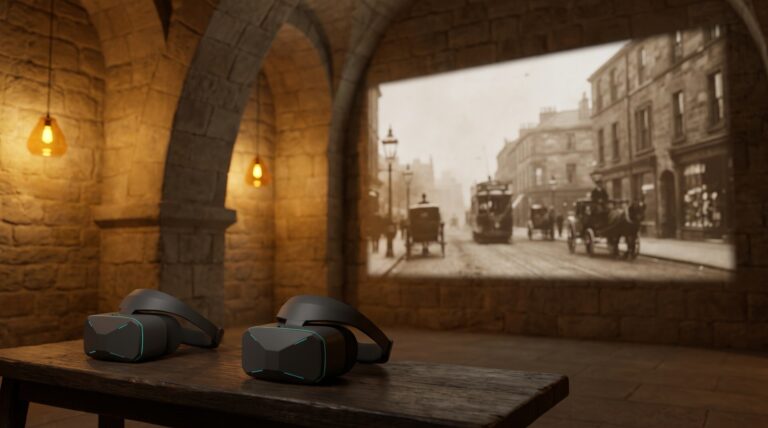
Time Pavilion opened on 19 October 2026 in Icherisheher, Baku's walled old city. Its 40-minute virtual reality visit recreates the…
Read more...
Hero Zone: Where Social VR Meets Real-World Revenue -

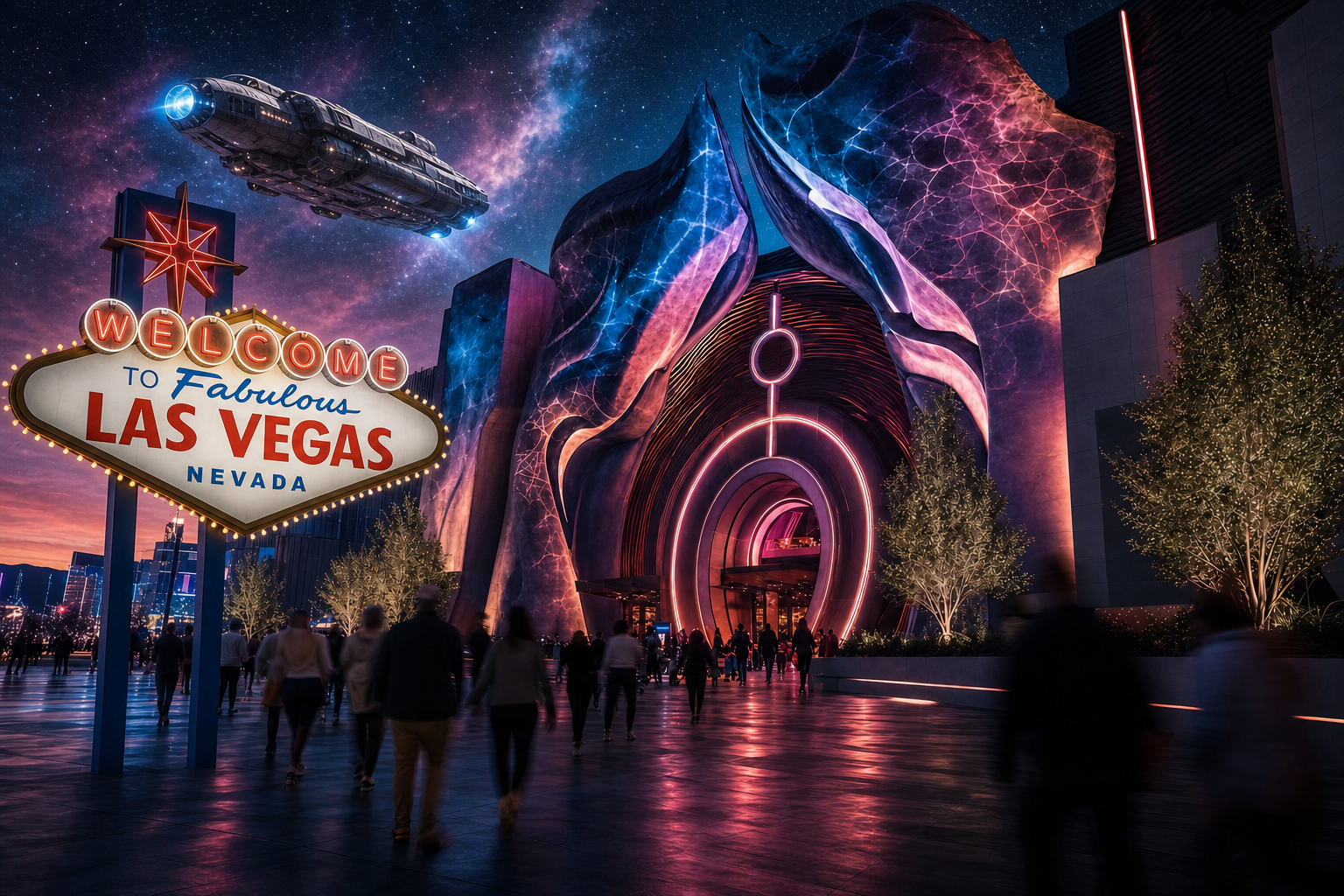
Interstellar Arc just took home Best Location-Based Entertainment at the 2026 Auggie Awards. For anyone who hasn’t been tracking it, the Auggies are the AWE-run awards that the XR industry hands out to itself every year. Peers and judges from across the augmented and virtual reality world vote. Winning Best LBE in that room means the people building the rest of the XR stack think Interstellar Arc is the best example of what LBE immersive XR looks like right now.
I sat down with Paul Raphael, co-founder of Felix & Paul Studios, earlier this year for a long-form interview about how Interstellar Arc got built, what the production pipeline looked like, and why they chose AREA15 as the launch venue. That conversation is worth a watch if you want the full story behind the experience that just won this award. The short version below covers what the award means for the rest of the industry. The long version, where Paul walks through the creative and operational decisions in detail, is in the video.
Interstellar Arc is a large-format immersive experience running at AREA15 in Las Vegas. It’s a 60-minute group journey through a sci-fi narrative that uses a combination of cinematic VR, physical sets, and motion-platform staging to move guests through the story. Felix & Paul Studios produced it. They’ve been making high-end immersive cinematic content for over a decade, with credits including the Space Explorers series with NASA and a long catalog of award-winning VR documentaries.

AREA15 is the right kind of venue for it. It’s an experiential retail and entertainment district built specifically to host destination-driven immersive attractions, and it’s where Meow Wolf’s Omega Mart lives, alongside a growing collection of capital-intensive immersive experiences. AREA15 has spent years building an audience that shows up for exactly this kind of content. Interstellar Arc fits the venue’s thesis perfectly.
Interstellar Arc is expensive content. Felix & Paul builds at the high end of the production spectrum, and the experience itself is staged in a way that requires real venue infrastructure to host. This is the opposite end of the LBE market from a six-headset standalone setup in a 1,500-square-foot retail unit. Though that was represented at AWE as well.
Both ends of the market are real businesses. Both have customers. The Auggie going to the high-end, capital-intensive, destination-venue version of LBE says the industry’s peers see that end of the market as a legitimate creative category, not just a high-budget experiment. The destination-venue model has been the harder business case to make for a long time. It requires a venue partner with the right footprint, the right audience, and the operational capacity to host a 60-minute cinematic group experience at scale. AREA15 has built that. And even so, many venues there have failed, including most recently Illuminarium.
The other operators who could host this kind of work are watching. And Felix and Paul are looking for additional locations for the Ark. An award like this is part of how those conversations get easier. The next high-end immersive cinematic experience pitched to a destination venue has Interstellar Arc as the reference point.
The more interesting question for the industry is whether Felix & Paul’s production model is repeatable at a cadence that supports a category, or whether Interstellar Arc is a singular high-water mark. The Sphere just Rocky Horror Picture Show is coming in 2027, so even they know content rotation is critical to long term success.
Felix & Paul has the rare combination of cinematic VR expertise, an existing IP catalog with NASA and others, and the production discipline to build at this scale. There aren’t many studios with all three. The cultural-experience platform companies (Excurio, Wevr, Univrse, Small Creative, and others) are building production pipelines for adjacent categories, but the high-end cinematic narrative end of the spectrum is a small club.
If Felix & Paul releases a second title at this scale in the next 18 months (rumors of a major IP are in the wind), the category has a real cadence. If it takes longer, the destination-venue model stays bottlenecked on the supply of titles, even with the demand and the award validation in place. Paul and I got into the production economics in the interview. That’s the part of the conversation worth listening to if you’re thinking about whether this format can scale.
For venue operators outside the destination-venue tier, the takeaway isn’t that everyone needs to go build something at the Interstellar Arc scale. Most operators don’t have the footprint or the capital for it. The takeaway is that the bar for “best LBE” now includes content of this ambition, and that affects how guests, IP owners, and investors evaluate the rest of the category.
When a guest who has been to Interstellar Arc walks into another LBE venue, they bring that reference point with them. That’s not a bad thing for the industry. But it raises the bar on what guests expect from any LBE experience, which pushes the whole category to keep improving. Operators who treat their venues like proper hospitality businesses (consistent guest experience, real F&B, the operational polish that bars and restaurants take for granted) are the ones who benefit when the category’s reputation moves up. Those that don’t are doomed.
For IP owners and studios looking at the format, the Auggie win is a signal that LBE is now a place where ambitious creative work gets recognized on its own terms. That should pull more interesting content into the conversation.
The Auggie Awards are an industry-insider event, and most awards stay inside their industries. This one is worth paying attention to because of who voted and what they voted for. The XR industry’s peers picked a high-end cinematic immersive experience at a destination venue as the best example of LBE in 2026. That tells IP owners, investors, and operators that the category’s center of gravity is moving toward more ambitious creative work, and that the venues and studios capable of producing it are now the reference points.
Congratulations to the Felix & Paul team and to AREA15. For the rest of the conversation about how Interstellar Arc actually got built, the full Paul Raphael interview is where I’d send you next.
What is Interstellar Arc? Interstellar Arc is a 60-minute large-format immersive cinematic experience produced by Felix & Paul Studios and running at AREA15 in Las Vegas. It combines cinematic VR, physical sets, and motion-platform staging to move groups of guests through a sci-fi narrative journey.
What are the Auggie Awards? The Auggie Awards are the annual industry awards presented at Augmented World Expo (AWE), recognizing achievement across the augmented reality and virtual reality industry. Categories cover hardware, software, content, and location-based entertainment, with winners chosen by industry peers and judges.
Why does an Auggie Award for Best Location-Based Entertainment matter? The award is a signal from the XR industry’s peers that a specific experience represents the current best in class. For IP owners, investors, and operators evaluating LBE as a category, it’s the kind of credibility data point that affects what they think the format is capable of and what kind of content makes sense for it.
Where can I learn more about how Interstellar Arc was made? The VR Collective published a long-form interview with Paul Raphael of Felix & Paul Studios covering the production pipeline, creative decisions, and venue partnership behind Interstellar Arc. The full conversation is available on The VR Collective.
Is AREA15 the only venue running Interstellar Arc? Interstellar Arc currently runs at AREA15 in Las Vegas. No additional venues have been publicly announced.