Time Pavilion, a VR Heritage Museum in Baku’s Old City, Recreates the Streets of 1919
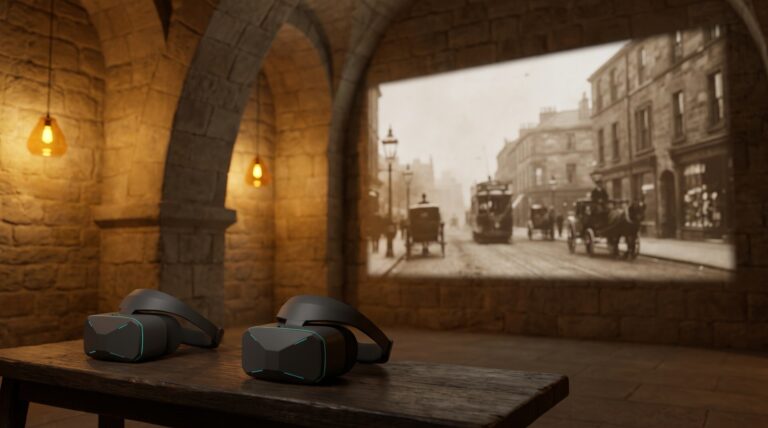
Time Pavilion opened on 19 October 2026 in Icherisheher, Baku's walled old city. Its 40-minute virtual reality visit recreates the…
Read more...
Hero Zone: Where Social VR Meets Real-World Revenue -

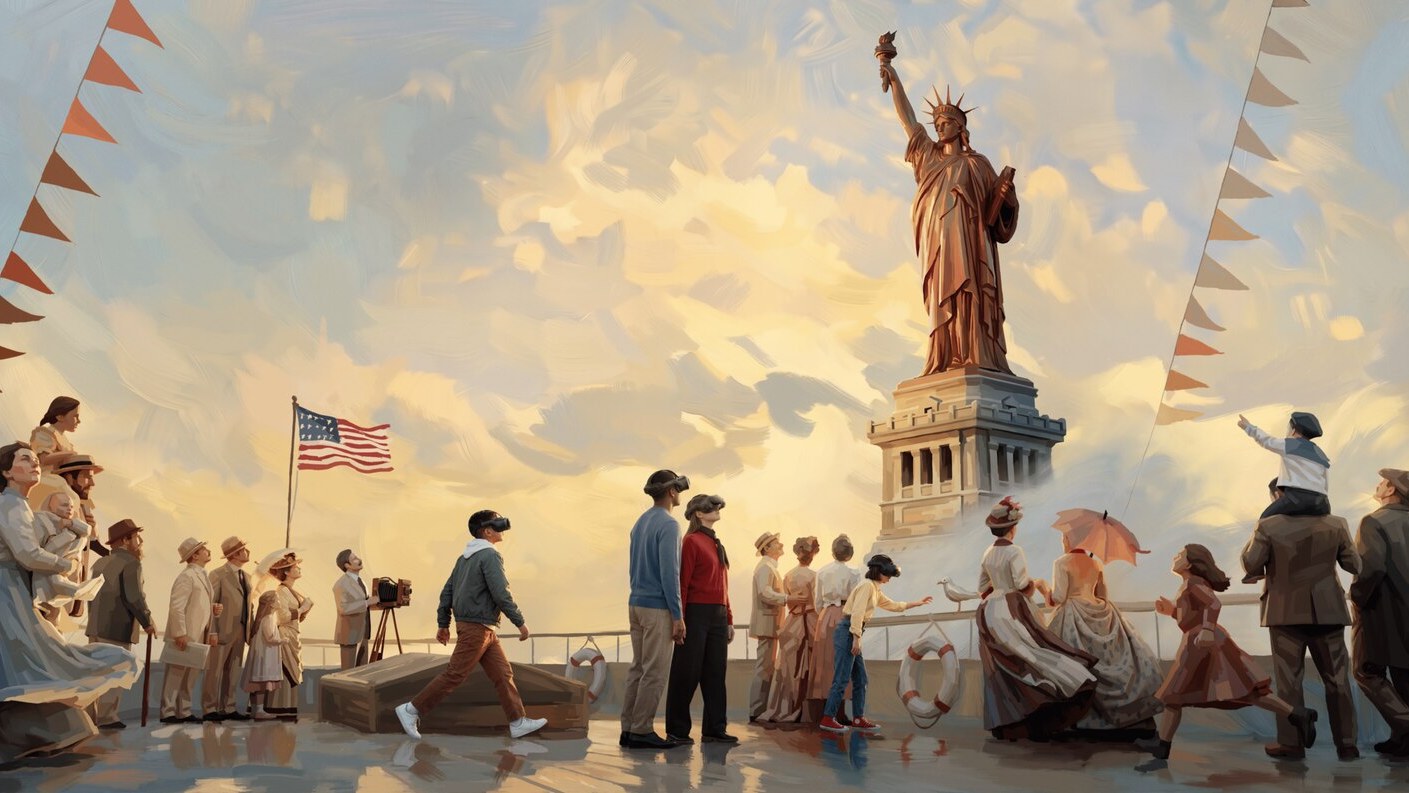
The Musée d’Orsay in Paris opened A Statue for Liberty, a 35-minute museum VR experience, on 15 September 2026. It follows Auguste Bartholdi’s statue from an idea in 1865 to its inauguration in New York Harbor in 1886.
A Statue for Liberty is the second VR experience the museum has made with the Paris-based studio GEDEON Experiences. The first was Tonight with the Impressionists, Paris 1874. It had drawn more than 245,000 visitors in France and abroad by February 2026, according to the museum.
The new experience runs until 31 January 2027 in the museum’s Amont Gallery, which covers almost 700 square metres. It accompanies the exhibition “Auguste Bartholdi, Liberty Enlightening the World”.
The experience splits visitors into eight zones of up to ten people each, all wearing HTC VIVE Focus Vision headsets. About 80 people are in headsets at any one time, and about 160 pass through each hour. Club Innovation & Culture, a French network of cultural institutions and companies, published those figures on 17 September 2026.
The visit lasts 50 minutes. A pre-show of period photographs, engravings and archive documents comes first, then 35 minutes in headsets across ten chapters. A post-show covers the statue after 1886, including its replicas around the world and the political uses of its image.
The museum sells timed tickets at €32. The price includes the permanent collections and exhibitions. Visitors who already have admission pay €16, and members pay €14.

The experience plays in French, English, Spanish and Chinese. The museum recommends it from age 13 and admits children from eight.
The first chapter is set in Versailles in 1865. There the politician Édouard Laboulaye gave Bartholdi the idea of a monument to Franco-American friendship. The experience then passes through the Philadelphia world’s fair, where the statue’s torch went on show.
In Paris, visitors enter the workshop of Gaget, Gauthier & Cie. Almost 600 workers built the copper statue there, around Gustave Eiffel’s framework. GEDEON and its partner Aristeas rebuilt the vanished workshop from plans, photographs and archives. The final chapters follow the public subscription in Joseph Pulitzer’s New York World that paid for the pedestal.
GEDEON’s artists painted the sets in Quill, a virtual reality painting program. GEDEON said the painted sets give the experience an expressive look, deliberately distant from photorealism.
GEDEON Experiences produced A Statue for Liberty. The French studio BackLight, the Musée d’Orsay and VIVE Arts, the arts programme of HTC, co-produced it. HTC is a LEXRA member.
Stéphane Landowski wrote the script and co-directed it with Jonathan Astruc. The Musée Bartholdi in Colmar took part in the production. Its director, Juliette Chevée, advised on the history with François Blanchetière, chief curator of sculpture at the Orsay.
Tonight with the Impressionists drew 80,000 visitors at the Orsay from March to August 2024. It went into distribution in September 2024, including the venues of Eclipso in Paris, Bordeaux and Lyon. Eclipso is also a LEXRA member.
Abroad, Tonight with the Impressionists has played in Shanghai, Chengdu, Wuhan, Shenzhen, Hong Kong, Taiwan, São Paulo, Montreal, New York and Atlanta.
A second installation of A Statue for Liberty will open at New York’s Museum of Jewish Heritage on 25 October 2026. There it runs until 19 March 2027 as A Statue for Liberty: Inventing an Icon. The New York museum is marking the 250th anniversary of American independence and the statue’s 140th.
For museum programmers, the Orsay’s eight-zone layout moves about 160 visitors an hour through almost 700 square metres. For VR venue operators, GEDEON’s previous Orsay title went into distribution in September 2024, including Eclipso’s venues. Tonight with the Impressionists had passed 245,000 visitors by February 2026.
What is the museum VR experience at the Musée d’Orsay? It is A Statue for Liberty, a 35-minute VR experience on the making of the Statue of Liberty. The visit, with a pre-show and a post-show, lasts 50 minutes. It runs in the Amont Gallery from 15 September 2026 to 31 January 2027.
How many visitors can the Orsay’s VR experience take at once? Eight zones hold groups of up to ten, so about 80 people wear HTC VIVE Focus Vision headsets at a time. About 160 pass through each hour.
How much does the Statue of Liberty VR experience cost? Timed tickets cost €32, including the museum’s collections and exhibitions. Visitors who already have admission pay €16, and members pay €14.
Who made A Statue for Liberty? GEDEON Experiences produced it with BackLight, the Musée d’Orsay and VIVE Arts. The Musée Bartholdi in Colmar took part. Stéphane Landowski and Jonathan Astruc directed it.
Where will A Statue for Liberty go after Paris? The Museum of Jewish Heritage in New York will show it from 25 October 2026 to 19 March 2027. There it is titled A Statue for Liberty: Inventing an Icon.