Miners Landing Built a $25 Mixed Reality Dark Ride Into Unused Space on Pier 57
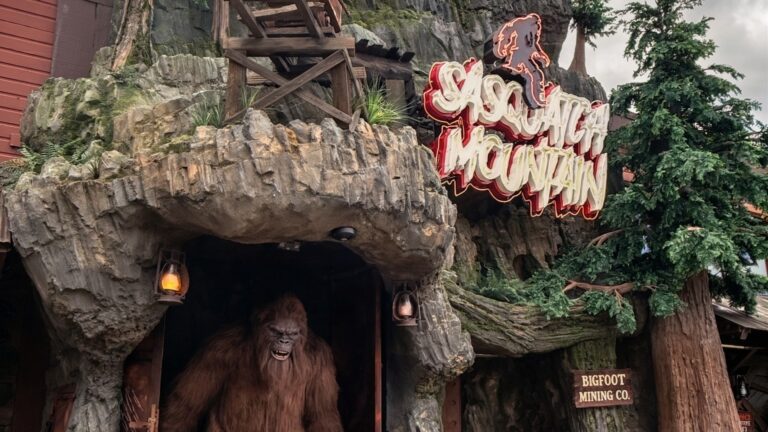
Miners Landing has run Sasquatch Mountain on Seattle's Pier 57 since 3 April 2026. The Bigfoot hunt uses VR headsets…
Read more...
Hero Zone: Where Social VR Meets Real-World Revenue -

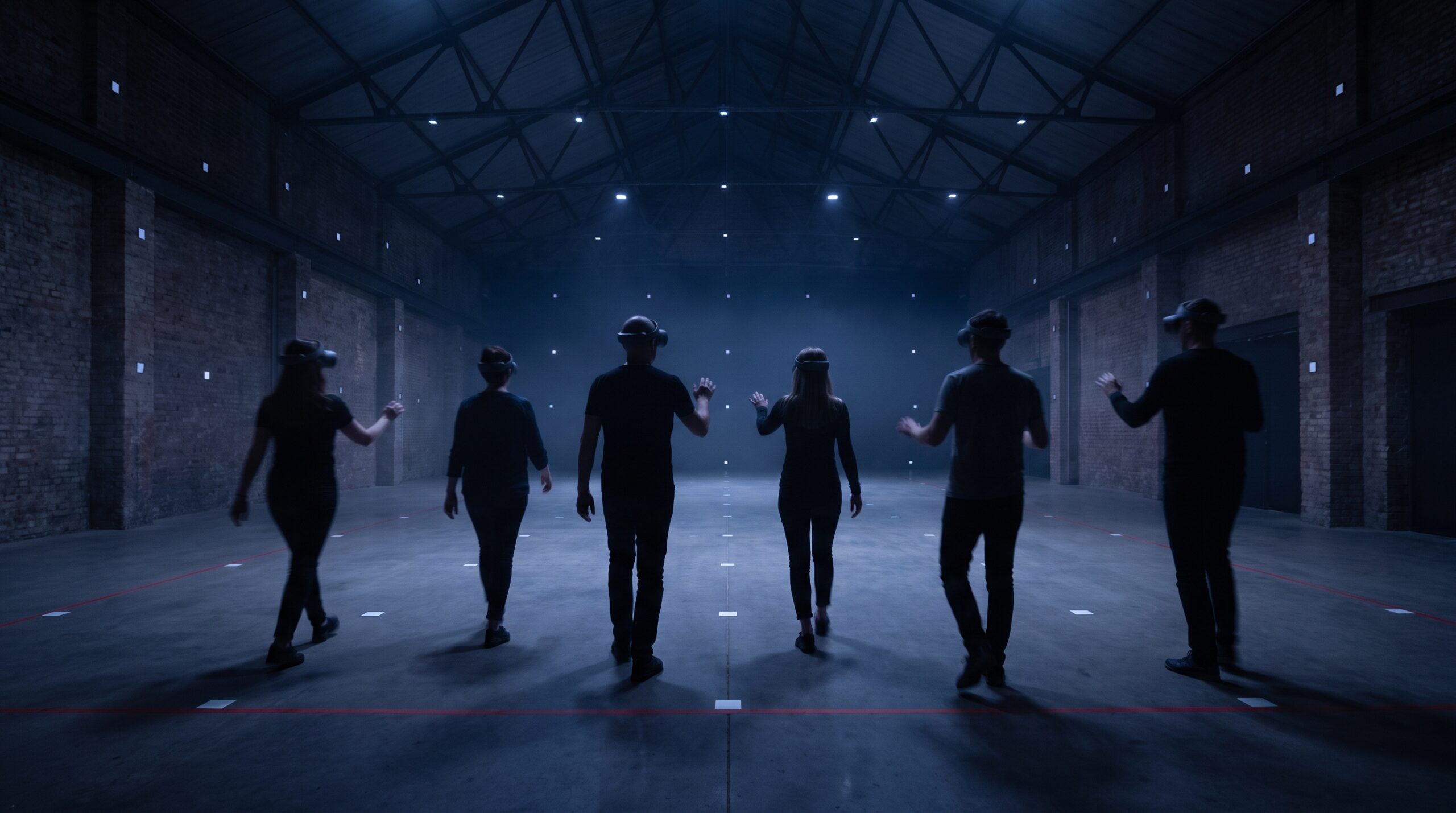
Smithsonian Starstruck: An Immersive Experience opened on August 6 at Transmission House on Tib Street in Manchester’s Northern Quarter. It closes September 27. It is a free-roam VR piece for groups of up to six. It runs 40 minutes in the headset and about an hour on site. Tickets cost £20 for an adult, £15 reduced, and £16 a head for parties of four or more. The operator is Fever, the events and ticketing platform behind candlelight concerts and drone shows. Fever runs this tracked free-roam attraction the way it runs a touring show. The venue is hired, the run is fixed, and tickets sell through Fever’s own platform.
Fever developed the piece over about two years with the Smithsonian Astrophysical Observatory. The creative studio Virtual Worlds handled production. The piece is presented in association with the Smithsonian Institution. It premiered in Washington DC and opened at the Science Museum in London on June 26. Manchester is its second UK stop.
Six guests go in together. Fever’s ticketing terms say parties larger than six are split and staggered three minutes apart.
A 40-minute experience launches a fresh group every three minutes. That puts roughly thirteen groups inside the space at once, up to about eighty people. The theoretical ceiling is near 120 guests an hour. That is a haunted-house model rather than a batch one: nobody waits for the space to clear.
Those numbers come from the published cadence rather than from Fever. The operator has not published a floor area or a simultaneous-group figure. Prolific North covered the experience during opening week. It describes “a vast room filled with white square tracking markers” with each group kept inside its own red boundary.

The headsets are wireless; Immersive Rumours, reviewing the London run, identified them as HTC Vive units. Alex Winterbotham, Global Director of Production for VR at Fever, described the design decision to Prolific North: “The headsets don’t have cables attached to them, and it’s not that long ago when they all did. That meant you couldn’t walk around really. The lightbulb moment was us saying: ‘let’s get people to walk around in space, quite literally!'”
He also put a number on the build: “It has been about two years worth of work. On the Smithsonian side, we’ve worked with scientists and astrophysicists, alongside our own teams and partners who have done everything from coding and artworking to some of the game design.” The company worked with twelve accessibility consultants on the build. The venue lists closed captions, visual descriptions, wheelchair-optimised viewing modes and assistive listening devices.
Immersive Rumours gave the London run three and a half stars out of five. It called the experience “fairly restrictive,” with visitors “confined to pretty small play areas during each stop.”
Zero Latency and Sandbox VR sites are fitted arenas on multi-year leases, amortising a build across years of a rotating catalogue. Starstruck is one title, in a hired venue, on a run measured in weeks, sold through Fever’s own ticketing channels.
The site covered its Machu Picchu VR rollout across ten cities and the Fever Hub at the Florida Mall built around Titanic VR. The site has tracked it from the content side too, in Netflix’s LBE content platform and in Excurio’s touring expedition exhibitions.
Asked whether Starstruck could lead to more in Manchester, Winterbotham told Prolific North: “We’re watching this one really closely, I’m really excited to see what audiences say, what the feedback’s like on the door.” He added that Fever has more in the works involving “big brands” and “amazing IPs” without naming any.
“Fever’s touring model is a sensible go-to-market for immersive LBE until there’s a sufficient pipeline of content to support permanent venues. Fever also has the unique advantage of owning the largest database of immersive entertainment fans, enabling it to control customer acquisition cost, which is proving to be the biggest variable factor determining a venue’s success or failure,” said Bob Cooney, a VR consultant and executive director of LEXRA, the trade association for location-based XR, who has led go-to-market for 16 startups. Cooney publishes The VR Collective.
Fever has now run a tracked free-roam attraction in Washington DC, London and Manchester. Each used the same hired-venue, fixed-run, platform-ticketed model. A single-title run has nothing to sell a guest who wants to come back next month. LEXRA members compare touring and permanent venue models through the association at lexra.org.
What is Smithsonian Starstruck? A 40-minute free-roam VR experience produced by Fever in association with the Smithsonian Institution and developed with the Smithsonian Astrophysical Observatory. Groups of up to six walk through the universe together, visiting observatories, galaxies, exoplanets and a black hole.
Where is Smithsonian Starstruck in Manchester and when does it run? Transmission House, 11 Tib Street, Manchester M4 1AF, in the Northern Quarter. It opened on August 6, 2026, and the ticketing page shows the run closing on September 27, 2026. One trade report has given the end date as September 30.
How much are tickets? £20 for adults, £15 reduced for ages 10 to 17, students and over-60s, and £16 a head on a group bundle of four or more, per the Fever booking page. The recommended age is 10 and up.
Who operates it and what headset does it use? Fever operates it, with the creative studio Virtual Worlds on production. The headsets are wireless; Immersive Rumours identified them as HTC Vive units at the London run.
How many people can be in the free-roam VR space at once? Fever has not published a figure. Groups of up to six enter together, and parties over six are staggered three minutes apart. At a 40-minute runtime, that implies roughly thirteen groups in the space concurrently. That is arithmetic off the published entry cadence, not an operator figure.
Where else has Starstruck run? It premiered in Washington DC, and opened at the Science Museum in South Kensington, London, on June 26, 2026.