Factory International Stages Ian McKellen in Mixed Reality Theatre Play An Ark at £31.50 and £36.50

Factory International will stage An Ark, the mixed reality play starring Ian McKellen, at Aviva Studios in Manchester from 27…
Read more...
Hero Zone: Where Social VR Meets Real-World Revenue -

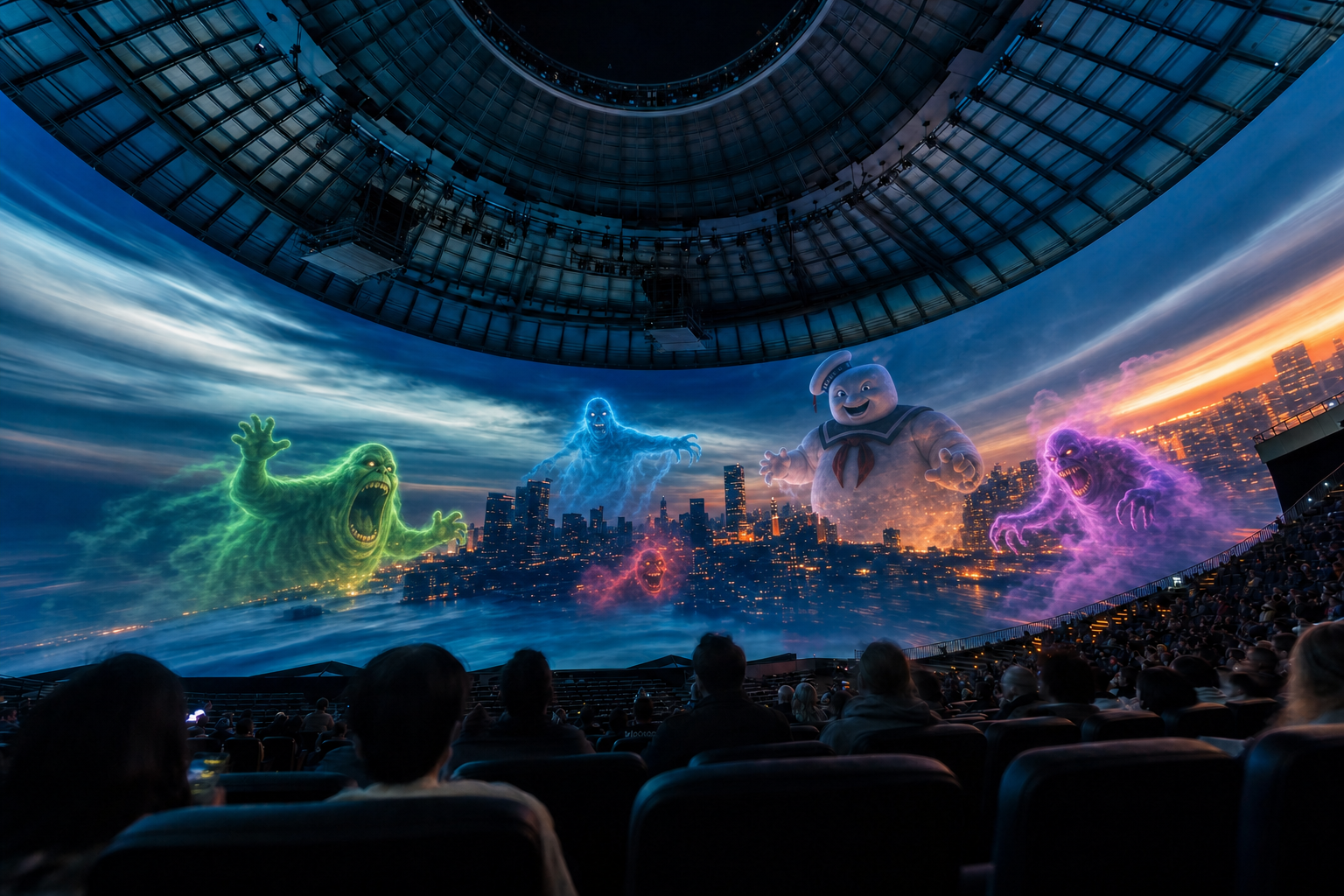
Sony Pictures Entertainment is leading a $100 million Series C investment in Cosm, the shared-reality venue operator with sites in Inglewood, Atlanta, and Dallas, plus Cleveland and Detroit on the way. The deal makes Sony a minority shareholder and puts SPE CEO Ravi Ahuja on Cosm’s board. Goldman Sachs and Allen & Co. ran the process for Cosm.
A hundred million dollars from a major studio with a minority stake and a board seat is not a passive bet. This is Sony putting its hand on the wheel of a venue category it didn’t build, and doing it at the same time it’s digesting the Alamo Drafthouse acquisition. Two physical-venue plays in one studio’s portfolio inside 18 months is a pattern, not a coincidence.
Here’s what operators and industry watchers should be tracking. Until today, the film catalog running on Cosm’s 60-foot domed screens has been a Warner Bros. story. The Matrix. Harry Potter. Specially retrofitted versions of WB library titles built for the dome.
That was the whole film slate.
Sony just changed that.
When a major studio takes a board seat and writes a nine-figure check, it doesn’t do so without expecting its IP to show up in the venues. Sony’s catalog includes Spider-Man, Ghostbusters, Jumanji, Men in Black, the Bond library through its co-financing arrangements, the Sony Animation slate, and a back catalog that goes deep. Expect Ghostbusters in the dome. Expect Spider-Man. Expect a Sony-branded slate of dome-retrofitted titles inside the next 24 months.

That’s the operator-relevant story. Cosm now has two studios feeding it content instead of one, and the second one has a strategic reason to keep feeding it.
The studios are compressing their theatrical windows while their streaming economics tighten. Experiential entertainment is the channel where ticket prices have actually been moving up, where audiences are paying $50 to $100 a head for a single event, and where the IP owner can capture more of the value than they do in a traditional theatrical release. Wizard of Oz generated $400 million in ticket sales – an 87-year-old movie. That makes it only second to Warren Buffet in the really old hundred million dollar income bracket.
Cosm’s dynamic pricing model on live sports is hitting $100 per person for marquee events. That’s premium-ticket economics in a venue category that didn’t exist five years ago. The numbers are working in a way that justifies a studio writing this size of a check.
Sony has been telegraphing this strategy. The Alamo Drafthouse deal earlier this cycle was the first move, getting Sony into the theatrical exhibition layer directly. The Cosm investment is the second move, getting Sony into the shared-reality venue layer. Both are bets that the studio that owns its distribution footprint captures more of the experiential dollar than the one that licenses everything out.
Disney has been running this playbook for decades through its parks. Universal runs it through its parks. Netflix is running a version of it with Netflix House and the ongoing Sandbox VR partnership that’s been bringing Netflix IP into LBE for a couple of years now. Sony is the latest major studio to decide that owning physical-venue distribution is worth a meaningful capital commitment.
But parks and FECs are expensive and hard. Sony tried with Wonderverse in Chicago and failed. Investing into operators makes more sense for a company of their scale.
Cosm is not in the same competitive lane as Sandbox VR, Zero Latency, Dreamscape Immersive, The VOID’s various successors, or the free-roam group VR category that dominates the LBE conversation. The dome format is its own category, closer to a premium-large-format cinema with live sports integration than to a free-roam VR experience.
That distinction matters for operators evaluating where they fit. Cosm’s competitive set is Sphere Entertainment, IMAX (which has been drawing acquisition interest of its own), ScreenX, 4DX, and the premium-large-format exhibition category. The shared-reality positioning is a way of marking out that the format is doing something a traditional cinema can’t, which is true. The wraparound dome with high-resolution live sports is a different product than a screening of the same content in a Dolby Atmos auditorium.
What Sony’s investment does for the broader LBE category is something different. It validates the thesis that major studios will write meaningful checks to get into venue-based distribution. That thesis has been forming for a while. Netflix’s Sandbox partnership was the first-mover. Banijay launching its own live entertainment arm with Black Mirror was a signal. Sony putting $100 million into Cosm is the moment the pattern becomes impossible to ignore.
For operators, platforms, and content studios across the LBE category, the implication is that studio money is now actively shopping for venue partnerships. If you run a venue chain with proven economics and a credible content pipeline, you are a more interesting conversation today than you were yesterday. If you’re a platform company sitting between studios and venues, the pipeline of IP that wants to find a home in physical experiences is getting deeper.
Cosm’s content model has been Warner Bros. library titles retrofitted for the dome, plus live sports as the volume driver. The Warner Bros. titles are the catalog that proves the format works for film exhibition. Live sports is the operating-revenue engine.
Adding Sony’s catalog to the mix changes the programming calendar. Cosm now has the option to alternate Warner Bros. and Sony tentpoles through its venues, sequence them around live sports windows, and build a release calendar that looks more like a year-round programming schedule than a one-studio output deal. That’s a different business than what Cosm has been running.
The interesting question is what happens with the studios that aren’t in yet. Universal, Paramount, Disney, and the smaller players are all watching this. If Sony’s Cosm bet pays off, the next round of studio capital into venue companies is probably already being modeled inside those buildings. If it doesn’t, the industry learns something useful about what shared-reality economics actually support.
A few things worth tracking as the Sony-Cosm relationship develops:
The LBE category has spent the last decade waiting for major studios to treat venue-based entertainment as a real channel rather than a licensing afterthought. Netflix did it with Sandbox. Banijay did it with Black Mirror. Sony just did it with Cosm.
Each of these deals is a different shape, in a different format, at a different scale. What they share is the recognition that the IP owner who participates directly in the venue layer captures more of the value, builds a deeper relationship with the fan, and learns things about audience behavior that a theatrical or streaming release doesn’t teach.
Cosm now has a second studio in the catalog and a strategic shareholder on the board. The film slate at the dome is about to get a lot more interesting. Operators across the LBE category should be watching what gets programmed, what gets priced, and what the audience response tells the next studio thinking about writing the same kind of check.
The catalog conversation just got bigger. Again.
What is Cosm and how does the shared reality format work? Cosm operates venues built around a 60-foot-tall wraparound ultra-high-resolution dome screen, with smaller surrounding rooms for food, beverages, and ancillary content. The format is used for live sports year-round and for specially retrofitted versions of library films. Cosm’s first location opened in Inglewood, California in 2023, and the company has since expanded to Atlanta and Dallas, with Cleveland and Detroit opening in the coming months.
Why did Sony Pictures invest $100 million in Cosm? The investment makes Sony Pictures Entertainment the lead investor in Cosm’s Series C round and gives SPE a minority ownership stake plus a board seat for CEO Ravi Ahuja. The strategic logic is Sony’s broader push into experiential entertainment, which also includes its recent acquisition of the Alamo Drafthouse theater chain. Sony’s stated reason is to extend its IP through tech-forward experiences and capture more of the experiential entertainment dollar directly.
What Sony IP could end up in Cosm venues? Sony’s catalog includes Spider-Man, Ghostbusters, Jumanji, Men in Black, the Sony Animation slate, and a deep film library. Sony has not announced specific titles for Cosm, but a strategic investment of this size from a studio with this catalog typically signals that IP from the studio will show up in the venues. Until this deal, Cosm’s film slate has been exclusively Warner Bros. library titles.
Who else has invested in Cosm? Cosm raised $250 million in 2024 from investors including Steve Wynn, former Milwaukee Bucks co-owner Marc Lasry, Cleveland Cavaliers owner Dan Gilbert, and Bolt Ventures, co-run by Blackstone partner David Blitzer. The Sony Pictures Series C investment makes SPE the lead investor in the current round.
How does the Sony-Cosm deal compare to other studio bets on location-based entertainment? Netflix has been working with Sandbox VR on location-based content for a couple of years. Banijay launched its own live entertainment arm and produced the Black Mirror Experience for Phi Studio’s Infinity Experience venue in Montreal. Sony’s Cosm investment is the largest direct capital commitment from a major studio to a shared-reality venue operator to date, and combined with the Alamo Drafthouse acquisition, signals Sony is treating physical-venue distribution as a strategic priority rather than a side bet.