Miners Landing Built a $25 Mixed Reality Dark Ride Into Unused Space on Pier 57
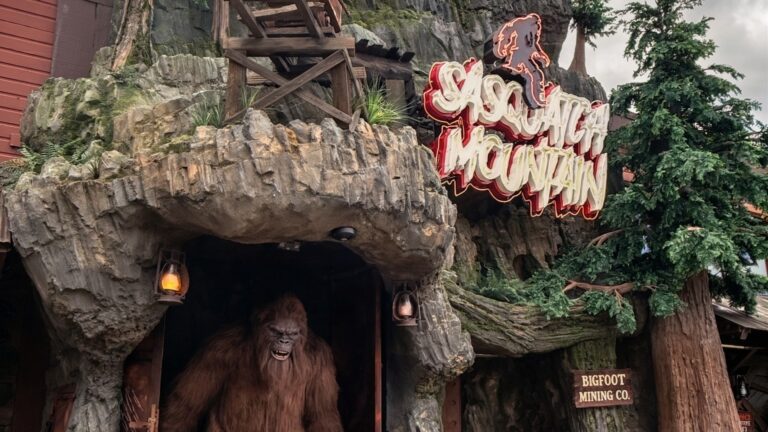
Miners Landing has run Sasquatch Mountain on Seattle's Pier 57 since 3 April 2026. The Bigfoot hunt uses VR headsets…
Read more...
Hero Zone: Where Social VR Meets Real-World Revenue -

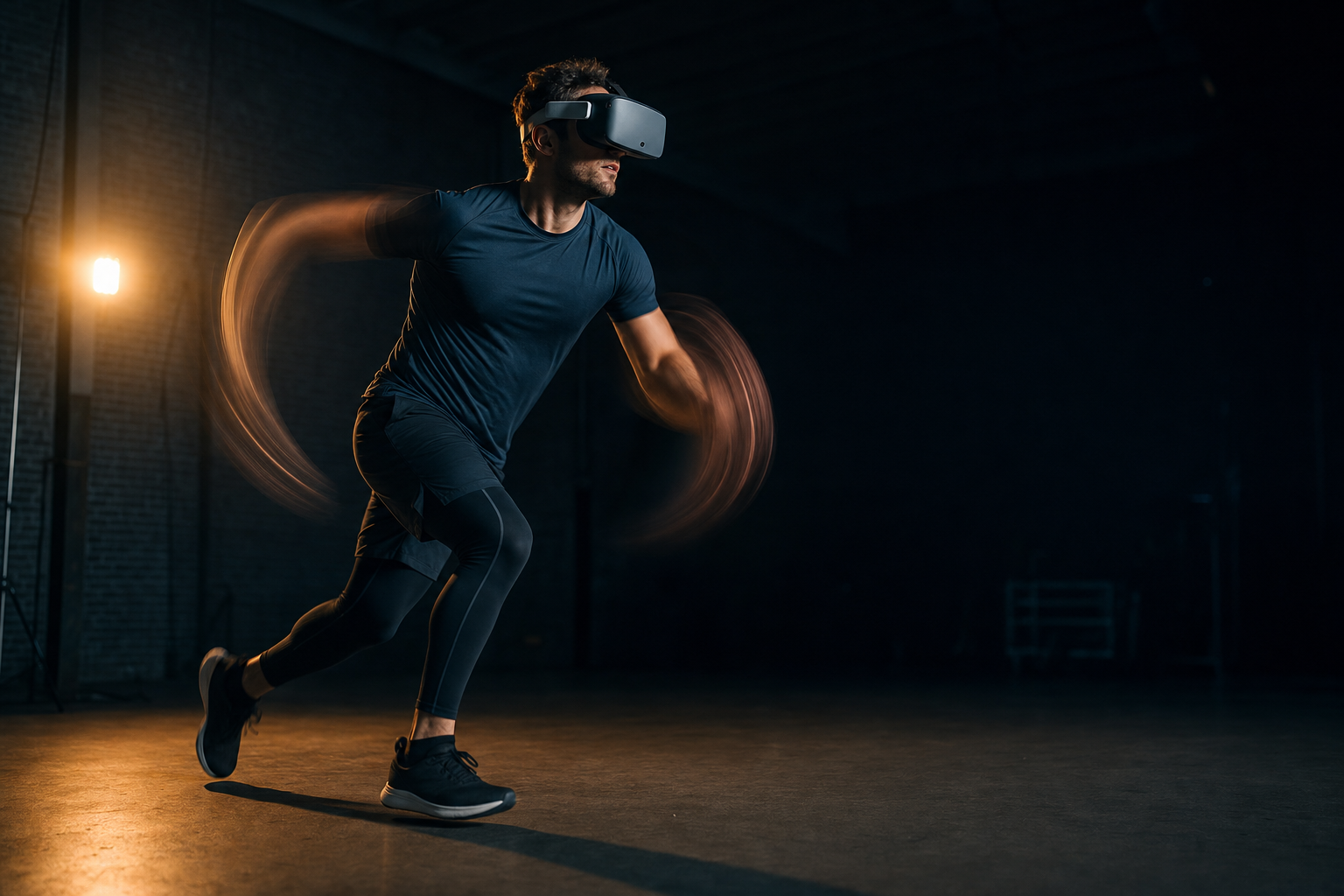
DreamVR announced its first consumer VR title, The Rifted Skies, at the Summer 2026 VR Games Showcase. Early Access on Meta Quest and SteamVR is set for fall 2026, with a PICO version in development. The game ditches thumbstick locomotion entirely and bets the whole design on arm-swing movement, with combat designed to run in parallel with locomotion rather than interrupting it. Tech Times has the reveal coverage.
The game itself is a roguelite parkour-combat title. Interesting on its own merits, I’m sure. That’s not the reason I’m writing about it.
The reason I’m writing about it is that DreamVR is an LBE studio crossing over into consumer VR, and the specific design choice they’re making (arm-swing locomotion, reportedly derived directly from years of LBE observation and not from the success of Gorilla Tag) is a rare instance of knowledge flowing from the arcade side of the industry to the home side. That’s worth naming, because the traffic has mostly run the other direction for the last decade.
Studios moving between LBE and consumer VR is not common. The economics are different. The hardware constraints are different. The content cadence is different. A 60-minute group experience designed for a free-roam arena has almost nothing in common operationally with a single-player roguelite that ships through the Meta Store.
Most of the traffic between the two markets has been consumer studios trying to port a hit into LBE. Beat Saber showing up in arcades. The Walking Dead: Saints & Sinners getting a venue cut. Owlchemy’s catalog finding its way into arcade collections through Synthesis VR and similar platform layers. That direction makes sense: consumer hits have proven gameplay, recognizable brands, and content developers who would like more revenue lanes.

DreamVR is going the other way. Years of building LBE content, then taking what they learned about how real people respond to physical movement in virtual space and applying it to a home title. Denis Mazur, DreamVR’s CEO, said it directly: their earliest projects were in location-based VR, where they could observe firsthand how players interact with virtual worlds. That’s the asset they’re carrying into the consumer market.
Anyone who’s spent time on a free-roam arena floor knows things about human movement in VR that you cannot learn from a usability lab.
You know how people compensate when they get nervous. You know which gestures feel natural after 30 seconds of onboarding and which ones never stop feeling weird. You know how a group of six moves differently than a solo player. You know what happens when somebody who has never put on a headset before tries to run, and you know what happens when an experienced player wants to push the speed limit of whatever movement system you’ve given them.
You learn this by watching thousands of guests over years, not by recruiting 20 testers for a paid study. The sample size and the variation of body types, fitness levels, and prior VR exposure that comes through a real arcade is data that home VR developers do not accumulate.
Gorilla Tag is the obvious counterpoint. Another Axiom built a $100 million phenomenon on arm-swing locomotion without an LBE background. Fair. The arm-swing mechanic is not proprietary knowledge. What LBE studios have is the operational understanding of how to tune it for people who are not already VR enthusiasts, which matters when the player base expands beyond the early-adopter crowd.
Gorilla Tag matters here because it answered the question of whether arm-swing locomotion could carry a commercial home VR title. The answer was yes, and the financial scale was significant. $100 million in lifetime sales for a single mechanic-driven game changes how the industry thinks about non-thumbstick locomotion.
That precedent is part of why DreamVR’s bet looks rational from a business standpoint. The market has already shown it will pay for arm-swing movement at scale. What DreamVR is adding is a roguelite structure, a narrative setting, and combat integrated into the movement system, which addresses one of the standing critiques of Gorilla Tag: that the gameplay surface is narrow once you get past the core mechanic. A roguelite with branching upgrades and biome variety could hold attention longer, and that holds the opportunity to drive the kind of repeat playability that makes a title profitable across its lifecycle.
Whether that lands will depend on execution. Branched progression systems sound good on paper. The question is always whether the runs feel different enough that guests, or in this case home players, come back. The same content-longevity question I’d ask about an LBE title applies here. Does it have legs?
The design claim that probably matters most for what DreamVR is attempting is that combat and locomotion run as a unified system rather than two modes a player switches between.
In most VR action games, engaging an enemy means slowing down. You need to target. You need to position. You need to time the strike. That breaks the momentum of whatever movement system the game is built around. The Rifted Skies is designed to let players deflect attacks and cut through enemies while in full sprint, maintaining parkour flow across navigation and combat at the same time.
This is the kind of thing LBE designers think about constantly because in a free-roam arena, slowing down to fight feels different than slowing down to fight in a living room. The guest is physically moving. Asking them to stop, target, and resume is a worse experience than letting them keep moving and integrating the combat into the locomotion gesture. The studio’s LBE background shows up most clearly in that design choice, not in the arm-swing mechanic itself.
Game Director Victor Tsai described the dual test every mechanic has to pass: is it VR-native enough, and is it comfortable enough. That second question carries real weight. Fast arm-swing in a physically demanding game can absolutely make people sick if the speed curve and sensitivity calibration are wrong. The studio is taking on a comfort engineering challenge that most consumer VR developers underestimate because they have not watched a thousand first-time players try to run in a headset.
For LBE operators reading this, the story is not really about whether to buy a copy of The Rifted Skies when it ships. It’s about what it means when an LBE studio decides the consumer market is a viable place to apply what they have learned.
The traffic between the two markets is finally going both directions. That’s a sign the LBE industry has accumulated real design knowledge that is commercially valuable outside the arcade context. It’s also a sign that the line between LBE content development and consumer VR content development is getting more permeable, which has implications for hiring, for IP portability, and for the kinds of studios that show up at the next IAAPA or AWE.
For content developers building for LBE, the question is what other knowledge from the arena floor could be packaged for consumer release. Group dynamics and social mechanics are obvious candidates. The bonded-group social experience that drives free-roam at venues like Zero Latency or Sandbox VR is structurally different from anything most consumer VR titles deliver, and the home market has been asking for better social VR for years. Somebody is going to figure out how to translate that next.
For hardware manufacturers, particularly PICO, this is a useful data point. DreamVR confirmed a PICO headset version is in development. A consumer title with LBE design DNA shipping across Meta, SteamVR, and PICO platforms is a multi-platform story that gives the entire standalone category another reason to support physical-movement-first design. PICO competing with Meta on home VR needs differentiated content. LBE-origin content that requires the kind of room space PICO Connect and similar enterprise rigs already support could be a wedge.
A few things worth tracking as The Rifted Skies moves toward Early Access:
How the comfort tuning lands with mainstream Quest players. The arm-swing-at-speed problem is genuinely hard to solve, and the studio’s claim that they have invested significant work in the speed curve will be tested by reviews from players who do not have years of VR experience.
Whether the integrated combat-and-movement design holds up as a gameplay loop. The argument that you can deflect and strike while sprinting at full speed is the kind of thing that sounds great in a trailer and either feels great in your hands or feels like a coordination problem you cannot solve. Reviews will tell.
Whether other LBE studios start announcing consumer projects. DreamVR being a one-off is one story. DreamVR being the first of several is a different story entirely, and it would meaningfully change how the industry thinks about content portfolio strategy.
How the platform fragmentation plays out for the studio. Meta Quest, SteamVR, and PICO is three separate platform relationships, three separate certification processes, and three separate revenue splits to manage. That’s a real operational lift for a studio whose prior experience was distributing through LBE platform partners. Watching how DreamVR handles that scaling problem will be instructive for other LBE studios considering the same move.
The LBE industry has spent a decade learning things about how humans move in virtual space that the consumer VR market does not have direct access to. DreamVR is the first studio I’m aware of that is making an explicit commercial bet on transferring that knowledge into a home title with the design integrity intact.
If The Rifted Skies works commercially, it opens a door. Other LBE studios will look at the model and ask whether their own accumulated knowledge could support a similar move. Investors who have been skeptical of LBE-origin content as a portable asset will need to update their priors. Platform companies in the LBE space (Univrse, Excurio, Wevr, Small Creative, Synthesis VR, and others) might find their content development pipelines have more optionality than the all-LBE-all-the-time model suggests.
If it doesn’t work, the lesson is more nuanced. The LBE skill set may turn out to be specifically valuable inside the LBE context and harder to transfer than it looks, which is also useful information for operators and platform companies betting on content portability.
Either way, this is the kind of crossover that the industry should pay attention to. The arrows have been pointing from consumer VR into LBE for a long time. Watching one start to point the other direction is new.
What is The Rifted Skies and when does it launch? The Rifted Skies is a VR parkour roguelite from DreamVR, the studio’s first consumer VR title. It launches in Early Access on Meta Quest and SteamVR in fall 2026, with a PICO version in development. The game uses arm-swing locomotion instead of thumbstick movement and integrates combat into the movement system so players can fight without stopping their parkour flow.
Why is an LBE studio releasing a consumer VR game significant? LBE studios accumulate observational data about how real players respond to physical movement in virtual space that consumer VR developers, who typically test in smaller lab settings, rarely have access to. DreamVR transferring that LBE-derived knowledge into a home VR title is a rare instance of design knowledge flowing from the arcade side of the industry to the consumer side, when the traffic has mostly run the other direction for a decade.
How does arm-swing locomotion compare to thumbstick movement in VR? Arm-swing locomotion maps the physical motion of swinging your arms to in-game movement velocity. Research consistently finds it produces lower cybersickness than thumbstick input because the physical gesture provides a proprioceptive signal that partially bridges the sensory gap between what the eyes see and what the body feels. Thumbstick locomotion is the home VR default because it works in small physical spaces, but it consistently scores higher on discomfort.
What does Gorilla Tag’s success prove about arm-swing locomotion? Gorilla Tag generated more than $100 million in lifetime sales using arm-swing locomotion, which demonstrated that the mechanic could carry a commercially successful home VR title at scale. That precedent makes DreamVR’s bet on arm-swing locomotion for The Rifted Skies look rational from a market standpoint. What DreamVR is adding to the formula is a roguelite structure, a narrative setting, and combat integrated into the movement system.
What does this mean for LBE operators and platform companies? The story is less about the specific title and more about what it signals. LBE-derived design knowledge has commercial value outside the arcade context, and the line between LBE and consumer VR content development is getting more permeable. That has implications for hiring, IP portability, and the kinds of content developers operators and platform partners might work with in the next few years.