Miners Landing Built a $25 Mixed Reality Dark Ride Into Unused Space on Pier 57
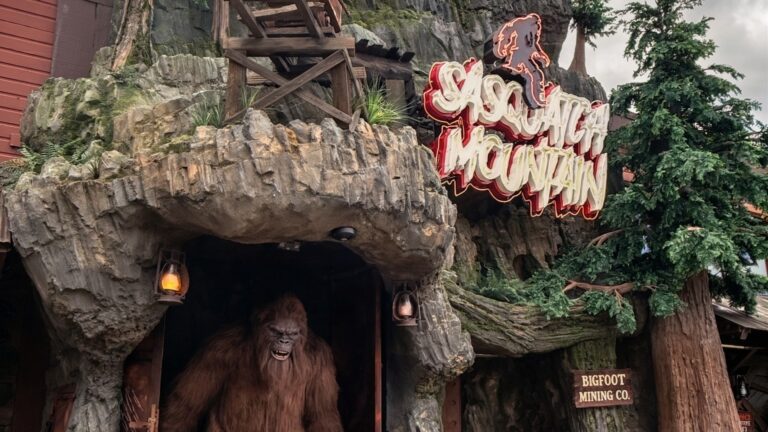
Miners Landing has run Sasquatch Mountain on Seattle's Pier 57 since 3 April 2026. The Bigfoot hunt uses VR headsets…
Read more...
Hero Zone: Where Social VR Meets Real-World Revenue -

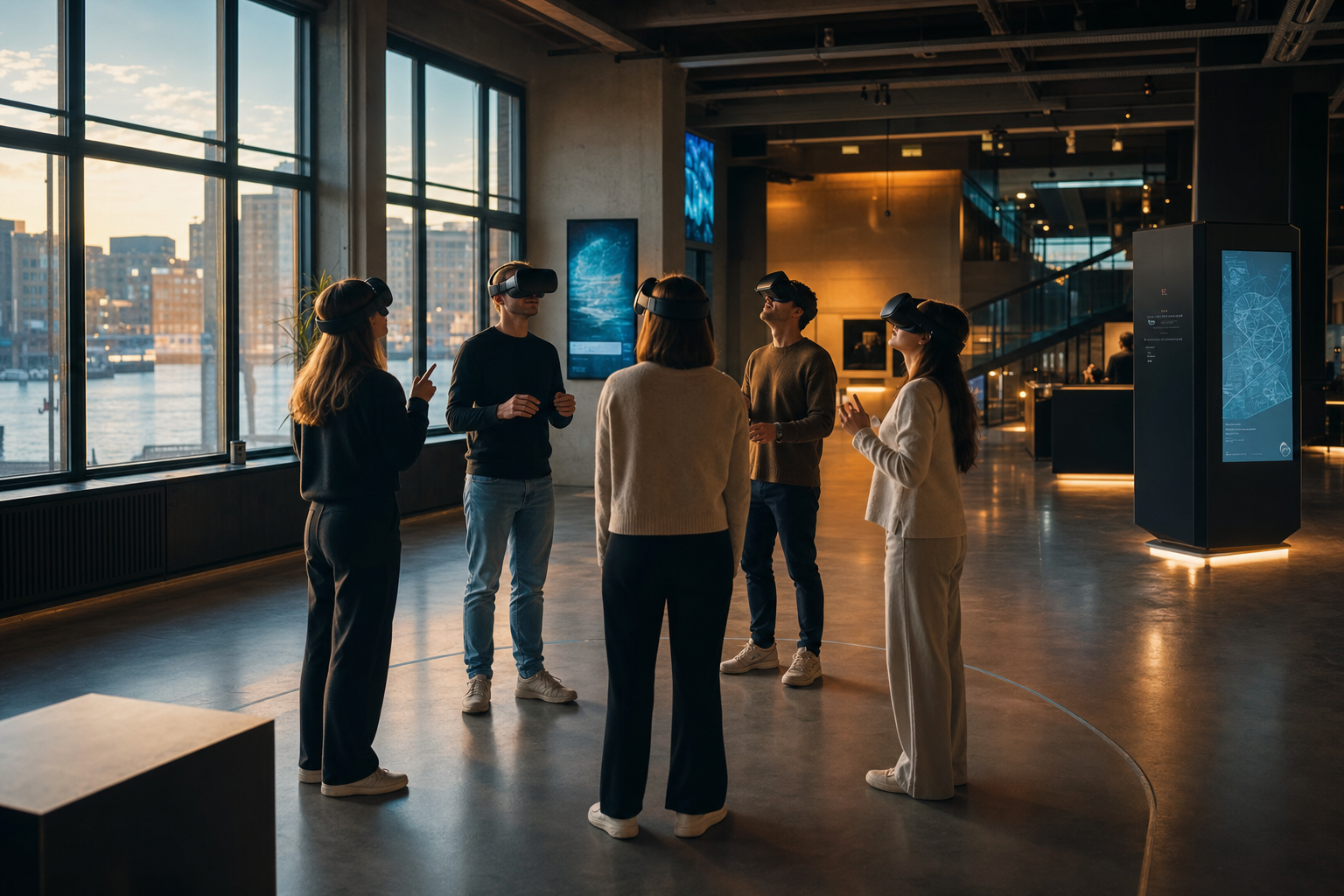
ENTR opened its doors in Amsterdam on Thursday. It’s the city’s first dedicated VR museum, and it may be the largest-throughput PCVR experience ever built. That second point: a standalone venue, purpose-built around a single VR experience, running at scale in a major European city, and charging €18 a ticket for a 45-minute journey through 17th-century Amsterdam.
That’s a different animal from a VR corner tucked into an existing museum. It’s a new venue category showing up in a market that has been waiting for exactly this kind of proof point.
The experience drops guests into Amsterdam in 1652. Guests put on VR headsets and follow one of three characters through the city: a craftswoman, a whaler, or a printer. The route takes them to Dam Square, past the old Waag, down to the ship docks at the IJ, and into the printing presses. Built in collaboration with historians. The city of Amsterdam is publicly backing the launch and describing it as “not an exhibition you look at, but a world you enter together.”
ENTR sits on Oosterdokskade. Open daily 10:00 to 18:00. Tickets from €18. Runtime 45 minutes.
A few things worth pulling out of those details.
Forty-five minutes clears the commitment threshold. It’s hard to get somebody to put on pants for 20 minutes. A 45-minute experience is on the same order as an escape room and worth building a trip around. Add travel to Oosterdokskade, a coffee before, a canal walk after, and you have a proper afternoon. That’s the framing that makes the €18 ticket a bargain for a high end VR experience (but a bit expensive for a museum, which might be a ceiling on what they can charge.)

Three character paths is a smart structural choice. It gives guests three reasons to come back without three times the production cost. One environment, three narrative through-lines, and word of mouth that spreads across friend groups who compare notes on whose path was better. That’s a repeat-visitation lever built into the content design, not bolted on after launch.
Here’s where ENTR gets genuinely interesting for operators watching the category.
PCVR has historically been the constraint on throughput at scale: cables, backpacks, higher hardware complexity, more staff intervention per run. Recent developments like WiFi 6e and 7 enable wireless streaming to headsets, but the limited bandwidth per channel makes practical use possible for only 12 people at a time.
Standalone headsets solved a lot of that but at the cost of graphical fidelity. A cultural experience like ENTR, where the visual reconstruction of 1652 Amsterdam is the whole point, is the kind of content that benefits from PCVR-grade visuals.
ENTR running PCVR at the throughput scale of a proper museum venue reframes what PCVR can do in a location-based context. Operators evaluating hardware for cultural or narrative content have a live reference point in the middle of a major European city that isn’t a pilot or a demo. It’s a venue that moves guests through the door at a museum-daily-visitor scale.
That matters for the whole cultural-experience segment. Excurio, Univrse, Wevr, Small Creative, and others are all building for this end of the market. ENTR shows what the venue side of that equation looks like when it’s built purpose-first around a single, historically anchored, PCVR experience rather than retrofitted into an existing institution.
ENTR isn’t chasing everyone. It’s Ideal Customer Profile (ICP) is people who show up to Amsterdam interested in Amsterdam. Tourists, school groups, locals with a genuine curiosity about the city’s history. That audience is enormous, well-defined, easy to market to, and already physically present within walking distance of Oosterdokskade.
The Rijksmuseum draws 2.7 million visitors a year. The Anne Frank House draws over a million. The Van Gogh Museum sits in the same tier. ENTR is stepping into that arena with a completely different format and a specific product for the specific visitor who wants an immersive, embodied version of the city’s story rather than a gallery walk. That’s a targetable audience with a well-established willingness to pay for cultural content in Amsterdam.
Know your audience, go narrow, be specific. ENTR’s built the venue around that principle.
This is the piece cultural-institution partners and venue investors should consider.
Every major city has a period of history that would sell at €18 a ticket in an immersive format. London in 1666. Rome in 100 AD. Istanbul as Constantinople. New York in 1863. The template ENTR is running (standalone venue, historically credible reconstruction, three character paths through a defined era and place, 45-minute runtime, museum-district location) is portable. What isn’t portable is the production investment and the historian collaboration required to make it credible.
The question for the category is whether ENTR proves the model works well enough that other cities greenlight equivalent projects, and whether the production cadence exists to build them. Building historically accurate reconstructions of specific cities in specific years is expensive, slow work. It’s not something you spin up in six months.
If ENTR runs well through its first year, the venue thesis (dedicated VR museums in major cities as cultural-tourism attractions) gets validated. That opens the door for a category of venues that has been theoretical for a decade.
Attendance. ENTR’s daily throughput is the number that matters. If a purpose-built PCVR venue in a major European city hits sustained museum-scale attendance at €18 per ticket, that unit economic model becomes a template other operators can pitch to landlords and investors.
Reviews from cultural media, not tech media. The Auggie Awards and the immersive-industry press will cover this. The more important read is whether Dutch cultural press, national tourism outlets, and the family and school-trip audience embrace it as a legitimate way to experience Amsterdam history. That’s the audience that determines whether the venue category scales.
Whether other cities move. ENTR is the first dedicated VR museum in Amsterdam. It won’t be the last venue in this format globally. Which cities greenlight equivalents in the next 18 months is the signal for whether this becomes a category or stays a Dutch one-off.
The PCVR throughput question. If ENTR is indeed running the largest-throughput PCVR experience ever, that reopens a conversation the standalone-headset era mostly closed. There are cultural and narrative use cases where PCVR-grade visuals genuinely matter. ENTR is the venue that will either prove that model works at scale or show where its ceiling is.
The cultural-VR segment has had proof points scattered across the last few years. Horizon of Khufu traveling as a touring exhibit. Illuminarium as a venue category. Cosm bringing sports and live events into a dome format. What’s been missing is the purpose-built, standalone VR museum in a major cultural-tourism city, running as its own institution rather than an add-on.
ENTR is that venue. It’s in the right city, at the right runtime, at the right price, targeting the right audience, backed by the city itself. If the numbers hold, the template opens up.
Congratulations to the ENTR team on the opening. This is the kind of launch that expands the definition of what LBE VR can be.
What is ENTR? ENTR is Amsterdam’s first dedicated virtual reality museum, located on Oosterdokskade. It opened in May 2026 and runs a 45-minute VR experience that takes visitors into Amsterdam as it existed in 1652.
What is the ENTR VR museum experience about? Guests follow one of three 17th-century Amsterdam residents (a craftswoman, a whaler, or a printer) through key locations in the city, including Dam Square, the Waag, the IJ ship docks, and the printing presses. The experience was developed in collaboration with historians.
How much does the ENTR VR museum cost? Tickets start at €18 per person. The experience runs about 45 minutes. ENTR is open daily from 10:00 to 18:00.
How is ENTR different from other VR experiences in museums? Most museum VR is an exhibit added to an existing institution. ENTR is a purpose-built standalone venue with a single VR experience as its core product, positioned as a cultural-tourism destination in its own right rather than a supplement to a traditional museum collection.
What does ENTR’s opening signal for the location-based VR industry? It’s a proof point for the dedicated-VR-museum venue category in a major European cultural-tourism city. If ENTR sustains museum-scale attendance at €18 per ticket, it validates a venue model that other cities and content producers can build against for historically anchored immersive experiences.