Miners Landing Built a $25 Mixed Reality Dark Ride Into Unused Space on Pier 57
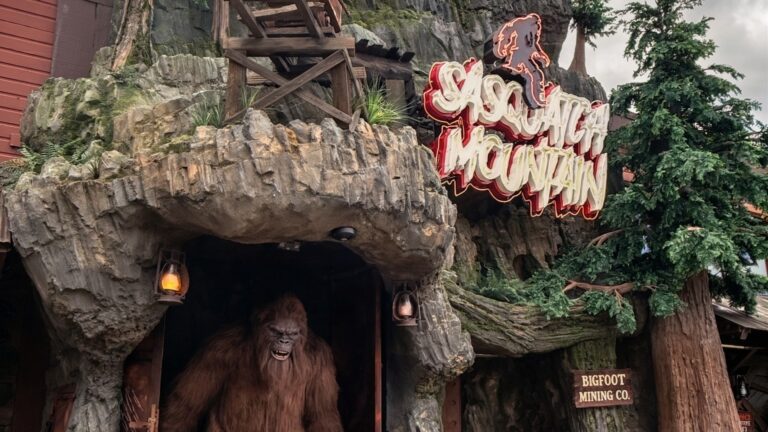
Miners Landing has run Sasquatch Mountain on Seattle's Pier 57 since 3 April 2026. The Bigfoot hunt uses VR headsets…
Read more...
Hero Zone: Where Social VR Meets Real-World Revenue -


The DOJ unsealed an indictment this week charging Joseph Charles Lewis Wilson, a 41-year-old North Carolina man, with wire fraud, securities fraud, and money laundering tied to an alleged scheme to fraudulently obtain hundreds of millions of dollars worth of shares in Infinite Reality, the metaverse company that bought Napster last year for $207 million and was telling the press it was worth $15.5 billion at its peak.
Per the US Attorney’s Office for the Southern District of New York, Wilson is accused of posing as the representative of a wealthy anonymous investor who never existed and using fabricated wire transfer records to make Infinite Reality believe hundreds of millions of dollars had actually been sent. None of it had. Infinite Reality issued shares against the phantom money. That’s how a company that was supposedly worth $3 billion got to that number, and then kept climbing.
Music Business Worldwide has the full breakdown of the indictment and what it means for Napster’s ownership chain. Forbes started pulling on this thread last year, publishing an investigation in August questioning how Infinite Reality’s valuation kept ratcheting up without any visible product, customer base, or revenue to justify it.
Now we know. The money was fake.
This shouldn’t be a surprise to anybody in the XR industry. It’s a warning sign to everybody.
I’ve been raising money for startup companies for more than 30 years. I have never, in three decades, heard of a deal of that size where the lead investor was “anonymous.” That’s not how venture capital works. That’s not how strategic investment works. That’s not how private equity works. Real money comes with a name attached, with governance rights, board seats, reporting requirements, and the kind of due diligence that doesn’t happen via fabricated wire confirmation PDFs.(Although the fake banking website was genius and is something to look out for – anyone can do it now with Lovable or another AI program.)

An anonymous nine-figure check is the red flag. Or maybe it’s the second red flag. The first was the question every company in the actual XR market was whispering for the last two years out of fear for undermining what, in the most remote sense, could have been an amazing success story the XR industry was desperate for: how does a “metaverse” with no visible product traction, become worth a billion dollars when the rest of the category is grinding out payroll a month at a time?
The LBE XR market knows what real revenue looks like. Zero Latency, Sandbox VR, Cosm (yeah, I am claiming them), the platform companies like Synthesis, Univrse, Excurio, Wevr, and Small Creative building distribution layers. These are companies with footprints, ticket sales, fleet counts, and investor with names. They grow at the speed real XR businesses grow – at what feels like a glacial pace. None of them woke up one morning worth $15 billion.
That valuation makes SpaceX look like a utility stock.
Forbes did great work last year. Real investigative reporting by Iain Martin laid out the questions: who are these investors, where did the money come from, what does this company actually do, and how is the valuation tracking against any version of operating reality. They called me. I had no idea, just lots of skepticism. The article didn’t allege fraud – probably could have. It asked the questions any serious industry observer would ask. The answers, then, were not forthcoming.
The fact that those questions got asked in a major business publication and the valuation continued to climb is itself instructive. In a more serious market, that piece would have triggered an industry conversation.It’s indicative of the desperation in the XR market. Nobody wants to tell the Emporer he’s buck naked.
That tells you something about the information environment around XR and the metaverse. There was so much hand-waving about what the category was going to become that a company could rack up a $15 billion valuation on phantom money and the broader business press largely went along with it until the DOJ (and the SEC) showed up.
The damage is reputational, and it lands on the companies actually doing real work.
When an investor outside the XR category reads the headline “Virtual Reality company’s $3 billion fundraise was a fraud,” if they don’t make a careful distinction, they’ll take a step back from the whole category. Capital that might have gone to a real LBE platform, a real content studio, a real hardware company, gets harder to raise because the asset class just took a public credibility hit.
Hopefully the companies in this industry building real businesses on real revenue have to spend the next several quarters explaining to investors that they are not Infinite Reality, that their revenue is real, that their investors are real, and that the LBE XR market has actual unit economics that have nothing to do with whatever was going on at a company that bought Napster with apparently fictional money.
For companies in the space, this shows the risk is of fraudulent investors. Founders can become attached to empty promises and fail to see the warning signs. I’ve been in that seat, on the verge of being scammed a few times myself. Trust your gut, if it’s at all fishy, just walk away.
The current investment cycle exists in an environment where companies raise on narrative rather than numbers (see that SpaceX IPO.) That can always attract bad actors, because narrative-based valuation is exactly the kind of thing that fraud thrives on. Theranos, WeWork, FTX, even Infinite Reality’s prior acquisition of a company that brokered virtual real estate (really?), all share a common structural feature: a story that was too big to fail because too many people had a reason to keep it inflated.
The LBE XR market mostly avoided this because the unit economics are unforgiving. You sell tickets, you fill capacity, you measure revenue per square foot, and the numbers either work or they don’t. That discipline is why the operators and platforms still standing in 2026 are the ones that built businesses instead of stories. It’s why EVA raised 35 Million Euros from Private Equity last month.
A few things worth tracking as this plays out:
What did the DOJ charge in the Infinite Reality case? The US Attorney’s Office for the Southern District of New York charged Joseph Charles Lewis Wilson with wire fraud, securities fraud, and money laundering tied to an alleged scheme to fraudulently obtain hundreds of millions of dollars worth of Infinite Reality shares by posing as the representative of a wealthy anonymous investor and submitting fabricated wire transfer records.
How does this affect Napster’s ownership? Infinite Reality bought Napster in 2024 for $207 million. With the company’s valuation now revealed to be built partly on fraudulent share issuance, Napster’s ownership chain and the financing of that acquisition are likely to come under scrutiny in the receivership and asset disposition process.
Did Forbes investigate Infinite Reality before the indictment? Yes. Forbes journalist Iain Martin published an investigation in August 2024 questioning how Infinite Reality’s valuation kept climbing without visible product traction or customer base. The piece raised the questions the rest of the XR industry had been asking privately.
What does this mean for legitimate LBE XR companies? The reputational impact on the category is real but limited to the fundraising environment in the short term. Real LBE XR businesses operate on ticket revenue, fleet economics, and named investors, none of which apply to the Infinite Reality situation. Operators and platforms will need to be clearer about their unit economics for the next several quarters.
Were any LBE operators or platforms doing business with Infinite Reality? Infinite Reality talked publicly about location-based experiences as part of its business mix. Any operators or platform companies that signed agreements with the company should re-evaluate those arrangements in light of the indictment. Public exposure here is the next thing to watch.