Miners Landing Built a $25 Mixed Reality Dark Ride Into Unused Space on Pier 57

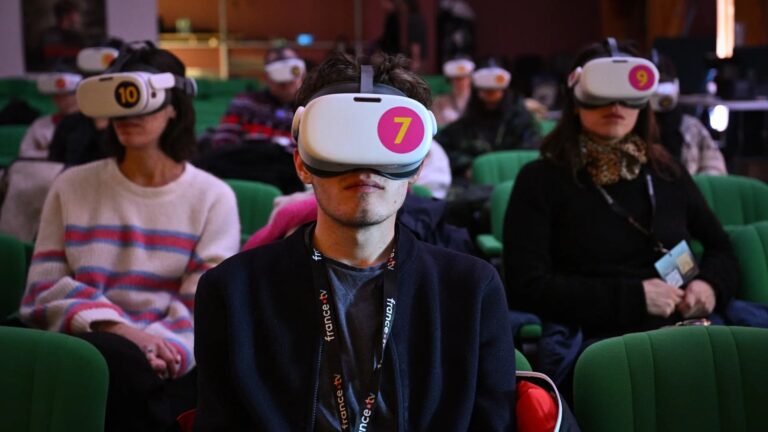
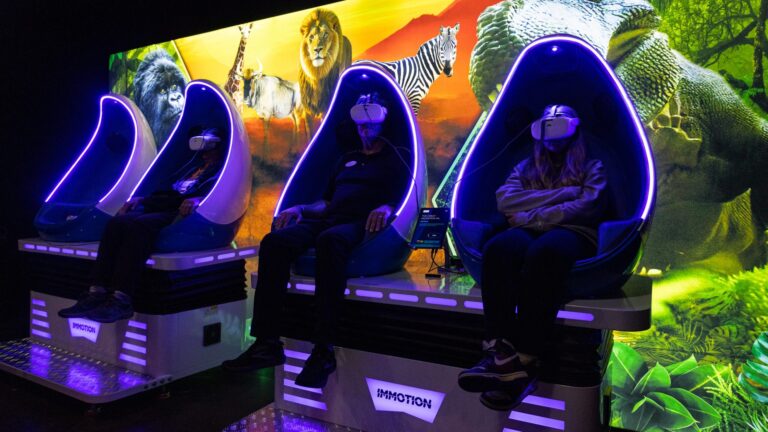
Miners Landing has run Sasquatch Mountain on Seattle's Pier 57 since 3 April 2026. The Bigfoot hunt uses VR headsets…
Read more...
Hero Zone: Where Social VR Meets Real-World Revenue -

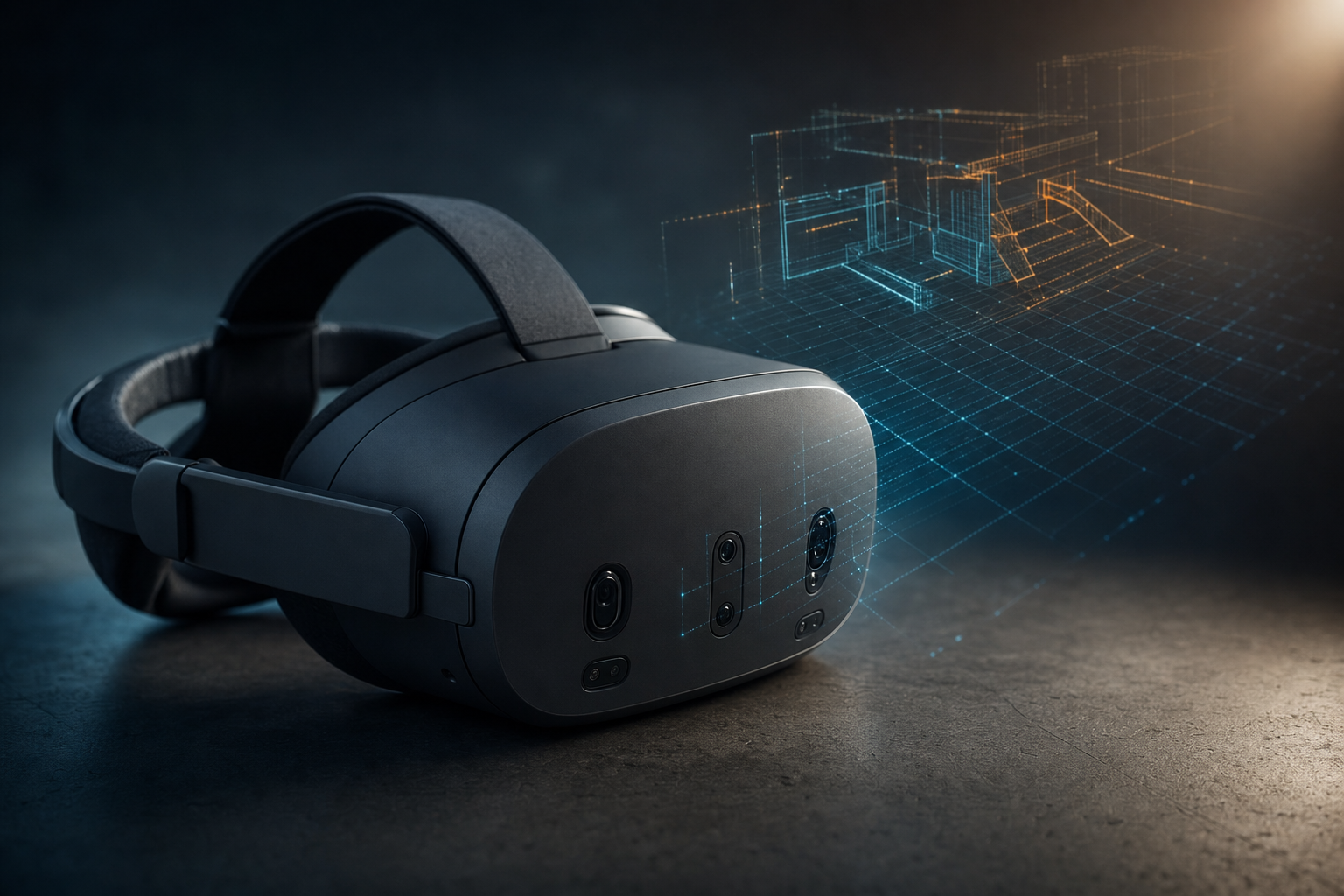
Bob Cooney’s Take – Qualcomm announced the next flagship XR chipset, while the GPU cooling and the RAM headroom is nice, the thing operators the thing that caught my attention is a 160% jump in neural processing performance and a significantly expanded visual analytics unit. That’s the combination that opens the door to real-time scene meshing. Drop a fleet of these into an existing laser tag arena and the headsets could potentially build the physical environment on the fly to mesh with the virtual one. No pre-scan, no pre-build, no dedicated CPU/GPU budget that breaks the experience. Forever hopeful.
Qualcomm has announced its next flagship XR chipset, the successor to the Snapdragon XR2+ Gen 2 that currently powers most of the standalone headsets on the LBE floor. UploadVR has the full technical breakdown. Headline improvements include better GPU thermals, expanded RAM support, and the usual generational bumps to CPU clock and display pipeline.
Those are welcome. They were also expected. Every chipset generation in the XR category has delivered roughly that envelope of improvements since the XR2 first shipped. If that were the whole story, this would be a hardware refresh note, not an editorial.
The story is what’s happening on the AI side of the chip.
Qualcomm is reporting a 160% increase in neural processing performance for machine learning tasks. The visual analytics unit, which handles machine vision and optical processing, is significantly larger than the equivalent block on the XR2+ Gen 2.

Put those two together and you get a headset with the on-device horsepower to do real-time scene understanding without taxing the CPU or GPU. That’s a different capability than what the current generation of standalone hardware can deliver at venue scale.
The Quest 3, running the XR2 Gen 2, can do room-scale scene meshing. Everyone who’s used a Quest 3 has seen it. The limitation is that the scene mesh eats into the same compute budget the experience itself needs. Run a graphically demanding title and the meshing has to back off, or the frame rate does. That’s why most production LBE content on current hardware uses pre-built environments instead of real-time scene meshing.
A 160% jump in NPU performance combined with a bigger visual analytics block changes that math. The scene understanding work moves off the CPU and GPU and onto the dedicated silicon that’s built for it. The compute budget for the actual experience stays intact.
This is where it gets interesting for anyone running a venue.
Right now, if you want to layer VR or mixed reality content into an existing physical space (a laser tag arena, a paintball facility, a warehouse you’re converting into an LBE venue) you have a couple of options. You can pre-scan the space, build a digital twin, and design the content around the fixed layout. That works, but it’s expensive and brittle. Move a wall, add a prop, change the lighting, and you’re rescanning. You can also lay down trackers and use them as anchors. Same problem with brittleness, plus the operational overhead of maintaining the tracking infrastructure.
A headset that can read the physical environment in real time, with enough compute headroom left over to actually run the experience, opens up a different model. You drop the headsets into the venue and the space becomes the level. Move a barrier, the geometry updates. Reconfigure the floor between groups, the next group’s experience adapts. Same arena, infinite variations.
That maps directly onto categories that have been hard to refresh with VR content. Laser tag operators have been looking at VR overlays for years and running into the same wall: the cost of digitally mapping the arena and rebuilding it every time the physical layout changes. Take that constraint off the table and the conversation shifts.
Bob’s Take – This is the kind of capability that could let an existing laser tag operator add a mixed reality mode without rebuilding the venue. The physical arena stays exactly what it is. The headsets read it on the fly. The virtual layer meshes with the real geometry in real time, and the operator runs both modes out of the same footprint. That could be a boon to the revenue-per-square-foot and open up entirely new demographic audiences.
This chipset news lands in the same week the industry has been talking about Into the Dead: Crimson Heights, the PIKPOK Quest title that reads room geometry and builds horror around it. The consumer-side proof point and the silicon-side capability are arriving in parallel.
PIKPOK’s title demonstrates the technique works at the consumer level on current hardware. The next-generation Qualcomm chipset is what makes it work at venue scale on operator-grade hardware. The platform companies serving LBE (Univrse, Excurio, Wevr, Small Creative, Synthesis VR, and others) now have a hardware roadmap that supports the kind of spatial-adaptive content layer they would need to build.
The content side and the silicon side are converging. Operators planning fleet refresh cycles in the next 18 to 24 months should be thinking about what this capability enables, not just what current titles need.
Qualcomm’s reference design timing typically runs about 12 to 18 months ahead of the consumer products that ship the chipset. The XR2+ Gen 2 was announced in early 2024 and showed up in shipping hardware later that year. A similar cadence would put the first headsets running this new chipset on shelves and in venues sometime in 2026.
PICO and HTC VIVE are both Qualcomm customers on the operator-grade side. Meta runs its own customized variants of Qualcomm silicon in the Quest line. All three are likely candidates for early adoption. None have announced anything specific.
Cooney’s Take – HTC VIVE Focus Vision is a chipset generation behind and its cost them the bulk of the LBE market. Expect them to bring their next gen LBE headset to market and start clawing back market share. Pico has already announced their next headset, Project Swan, with a rumored custom chipset housed on a tethered puck priced close to or more than $2K. This leaves LBE market share susceptible to shifting again if HTC can deliver in that sweetspot.
The standalone headset has been the operator-grade form factor for the last few years. PICO and HTC VIVE have both committed to the category with enterprise-focused product lines, and the underlying Qualcomm silicon has been the foundation everyone else builds on.
What changes with this chipset is what the stack can actually do. Persistent real-time scene understanding, on-device AI for things like dynamic NPC behavior and adaptive scare placement, machine-vision-driven guest tracking that doesn’t need external cameras. The silicon roadmap is enabling capabilities that haven’t been operator-viable before.
That cascades into content. If platform companies know the next generation of headsets can handle spatial-adaptive content without compromising graphics, they can start building toolkits for it now. If content developers know operator-grade hardware will support it within the next refresh cycle, they can start designing for it now. The capability roadmap pulls the content pipeline forward.
The XR chipset announcement cycle has been pretty predictable for the last few generations. Incremental GPU improvements, more RAM, better thermals, modest gains on display pipeline and battery efficiency. This one is different in one specific way: the AI compute budget on the chip is jumping by more than half again, and the visual analytics block is getting meaningfully larger.
That’s the foundation for the next category of LBE content. Spatial-adaptive horror. Real-time scene-meshed mixed reality. Mixed reality overlays on existing physical attractions like laser tag arenas, escape rooms, and paintball venues, without the cost of rebuilding the venue digitally first.
The hardware is approaching the capability. The platform companies and content developers will need 12 to 18 months to build for it. Operators planning their next fleet refresh should be thinking about what comes after the XR2+ Gen 2 generation, not just about what’s on the floor today.
What is the Snapdragon XR2+ Gen 2 successor and when will it ship? Qualcomm has announced the next flagship XR chipset that will succeed the Snapdragon XR2+ Gen 2 currently powering most operator-grade standalone headsets. Based on past Qualcomm cadence, headsets running the new chipset are likely to start shipping in 2026, with operator-grade variants from PICO, HTC VIVE, and Meta following the consumer launches.
What is real-time scene meshing and why does it matter for LBE? Real-time scene meshing is the headset reading and digitally modeling the physical environment around it on the fly, without a pre-scan or pre-built digital twin. For LBE operators, it means a fleet of headsets could be deployed into an existing venue like a laser tag arena and the content would mesh with the physical geometry in real time, even if the layout changes between groups.
Why is the AI compute jump on the new chipset significant? Qualcomm is reporting a 160% increase in neural processing performance for machine learning tasks and a significantly expanded visual analytics unit. Together, those move the scene understanding workload off the CPU and GPU and onto dedicated silicon, which means experiences can use real-time spatial awareness without sacrificing graphics performance.
Which operator-grade headsets are likely to use the new chipset? PICO and HTC VIVE are both Qualcomm customers on the operator-grade side, and both have used Qualcomm silicon in their enterprise headsets. Meta uses customized variants of Qualcomm chips in the Quest line. All three are likely candidates for the next chipset generation, though none have announced specific products yet.
How does this connect to spatial-adaptive content like Into the Dead: Crimson Heights? PIKPOK’s Crimson Heights demonstrates the spatial-adaptive technique working at the consumer level on current hardware. The next generation of Qualcomm silicon is what would let that same technique work at venue scale on operator-grade headsets, with enough compute headroom for graphically demanding LBE content. The content-side proof point and the silicon-side capability are arriving in parallel.