Miners Landing Built a $25 Mixed Reality Dark Ride Into Unused Space on Pier 57
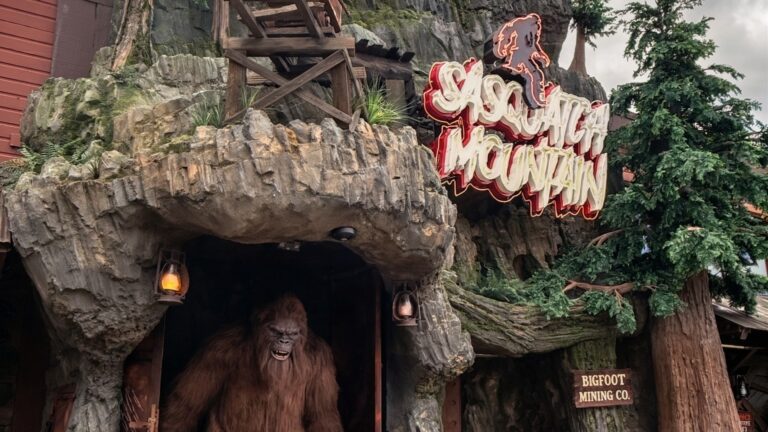
Miners Landing has run Sasquatch Mountain on Seattle's Pier 57 since 3 April 2026. The Bigfoot hunt uses VR headsets…
Read more...
Hero Zone: Where Social VR Meets Real-World Revenue -

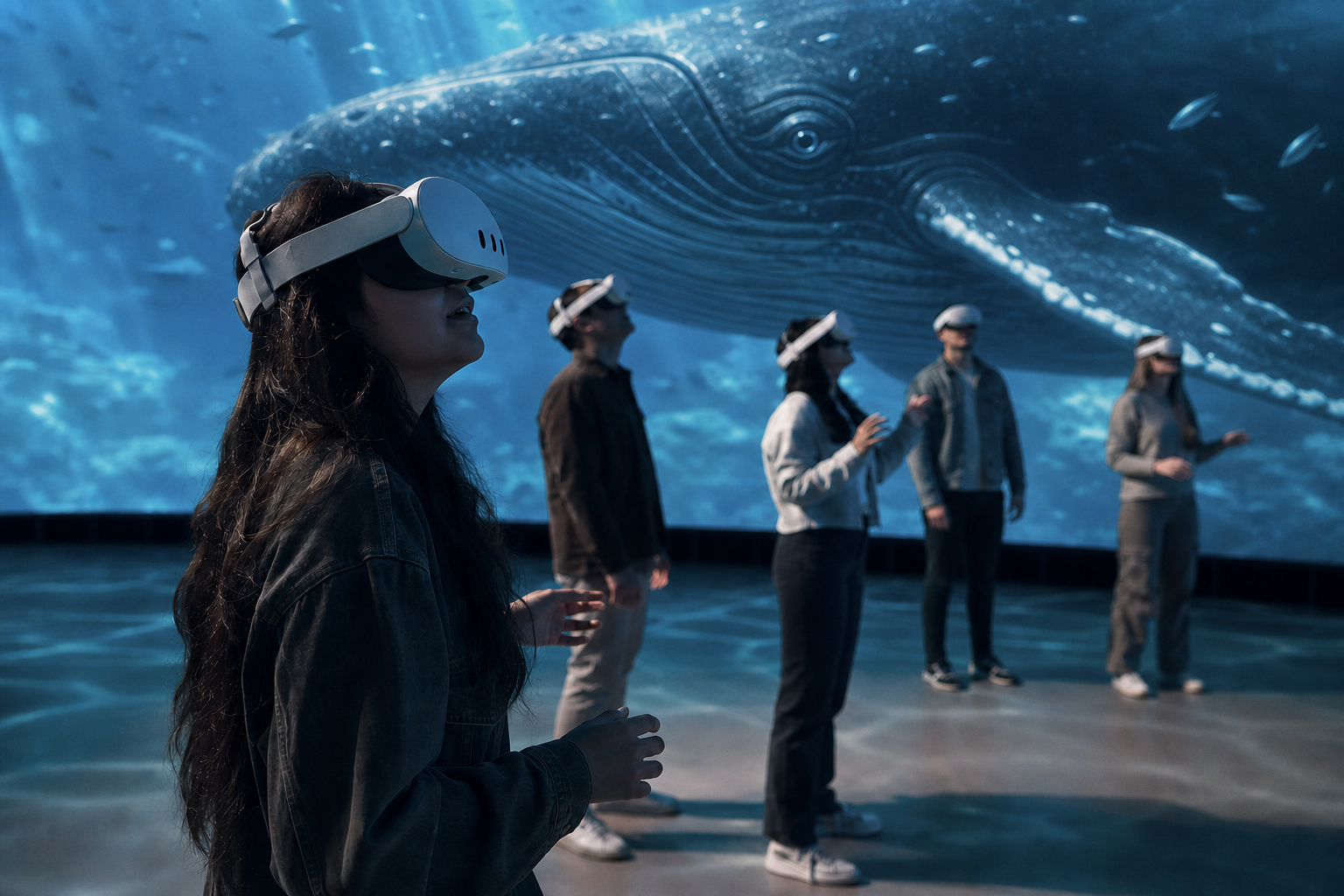
Wevr and HTC VIVERSE just launched The Blu: Expedition Taiwan, a large-scale free-roam version of one of the most beloved underwater VR experiences ever made. The project is backed by the Taiwan Ministry of Culture, which is worth noting on its own. A national culture ministry putting money behind a location-based VR title is the kind of institutional stamp that used to go to museum exhibitions and film festivals. Now it’s going to free-roam immersive experiences.
For anyone new to the title, The Blu started life more than a decade ago as a seated VR experience that put you on the deck of a sunken ship watching a blue whale swim past. It became one of the most-cited “first VR experience” moments in the industry. Wevr has been iterating on it ever since, including a version they built for Dreamscape Immersive that ran in the company’s dome-format venues. Expedition Taiwan is the next chapter, and it’s the biggest one yet.
The Blu has lived in a lot of formats. Seated on a headset at home. Curated as a demo piece for VR press tours. The Dreamscape Immersive version staged it as a small-group walking experience with haptics and physical staging. Each version was built for the technology and the venue economics of its moment.
Expedition Taiwan is the large-scale free-roam version. Instead of a seated cinematic moment or a small-group walk-through, this is a large-scale free-roam operating model where groups move through a physical space concurrently, the way an LBE venue actually needs content to work. The model is stream-through, closer to a haunted house than a cinema: multiple groups flow through the space in parallel, staggered through the scheduling window, which is what makes the venue math work on revenue per square foot rather than per-session player count.

That matters because it means one of the industry’s most recognizable VR titles is now available in a format that a proper free-roam venue can actually operate. For a decade, The Blu has been the reference point people cite when they want to explain what makes VR emotionally different from a screen. Now operators have a version of it that fits their business model.
The Taiwan Ministry of Culture backing this project is the part of the story that should get more attention than it will.
Cultural ministries around the world have been funding immersive content for years, mostly through museum partnerships and traveling exhibition circuits. Excurio’s Horizon of Khufu is the obvious reference point: a cultural-heritage immersive experience that has moved between institutional venues globally with government and museum backing. The Louvre has done VR. The Smithsonian has done VR. Various European culture ministries have funded VR heritage projects going back to the mid-2010s.
What’s newer is a national culture ministry putting institutional money behind a free-roam VR experience that operates on LBE economics rather than museum economics. Museum-format immersive experiences run in timed cohorts. Free-roam LBE runs stream-through. Those are different business models with different revenue structures, and different assumptions about who the audience is and how they buy tickets. A culture ministry backing the free-roam version signals that governments are increasingly comfortable with LBE as a legitimate cultural distribution channel, not just as a technology-showcase project.
That expands the pool of capital available to content producers building for this format. Excurio, Wevr, Univrse, Small Creative, Felix & Paul Studios, and the other studios producing high-end cultural and narrative content for LBE now have a growing list of examples they can point to when they walk into a ministry, a museum, or a cultural foundation looking for co-production funding. That’s a real shift in how this category gets financed.
The Blu is one of a small handful of VR experiences that people who have never touched a headset have still heard of. Over a decade of press, festival runs, and industry demos have made it culturally recognizable in a way most VR content isn’t. When Wevr and HTC picked a title to bring back at large-format free-roam scale, going with The Blu instead of a new original was a smart call.
Operators reading this know the difference between a title with existing awareness and a title without one. The Blu shows up with earned recognition. The nature and cultural-content lane it lives in also gives it an audience that doesn’t overlap with the zombie-shooter and horror-IP audience most operators have leaned on. That’s what makes it interesting as a programming choice. It’s not competing with the Warhammer and Far Cry deals at Zero Latency or the Netflix content at Sandbox. It’s programming for a different guest, at a different price point, for a different occasion.
Cultural and nature-themed content has been a growing segment of the LBE catalog for a couple of years now. Excurio has built a business on it. Wevr has been building toward it. Small Creative and Univrse are producing in adjacent lanes. The Blu returning at free-roam scale, with government cultural funding behind it, is another data point that this category has real gravity and real economics behind it.
A few things worth thinking about.
The catalog for free-roam VR keeps deepening. A year ago, the honest answer to “what content can I run in a free-roam venue?” was a shorter list than it is today. The Blu joining that catalog at proper scale, alongside the Black Mirror Experience from Univrse, Excurio’s ongoing catalog, and the growing list of narrative and cultural titles, means operators programming free-roam spaces have real choices now. That was the missing piece for a long time.
Cultural and nature content programs differently from action and horror. Different audience, different ticket price, different occasion, different marketing channels. Operators who have leaned entirely on action IP should be looking at whether adding a cultural-content title to their programming mix opens up a demographic they aren’t currently reaching. The 30-to-55 date-night and small-group audience is a real market, and it’s not the audience buying tickets to a zombie shooter.
Government cultural funding is a channel worth understanding. If you’re a content producer, cultural ministries, arts councils, and museum foundations are increasingly willing to co-fund LBE projects that fit their heritage or education mandates. The economics of a co-produced project are different from a purely commercial one. Worth exploring.
The platform question keeps mattering. Wevr and HTC VIVERSE co-presenting this project is another example of how content studios and platform companies are teaming up to expand distribution. Wevr, HTC VIVERSE, Univrse, Excurio, Small Creative, and others are all building versions of this. For operators, the question that keeps coming up is compatibility. As more platform companies bring more content to market, running five different platforms to show content from five different studios becomes an operational nightmare. The industry needs to move toward standards around interoperability, and the sooner that conversation gets serious, the sooner operators can program from the full catalog instead of picking one platform’s slice of it.
The Blu returning at large-scale free-roam is a good story on its own. A beloved VR title getting a modern operational model, backed by a national culture ministry, is a straightforward win for the industry.
The bigger story is what it says about where LBE content is heading. Governments funding it. Platform companies partnering to distribute it. Studios building for the format instead of adapting existing content into it. Free-roam becoming a real programming environment with a deepening catalog across action, cultural, narrative, and nature content.
Every one of those is a separate gatekeeper saying yes to LBE. The Taiwan Ministry of Culture is the newest name on the list. It won’t be the last.
What is The Blu: Expedition Taiwan? The Blu: Expedition Taiwan is a large-scale free-roam VR experience produced by Wevr and presented in partnership with HTC VIVERSE and the Taiwan Ministry of Culture. It’s the latest version of The Blu, one of the most recognizable underwater VR experiences ever made, reimagined for a free-roam location-based operating model.
Who made The Blu: Expedition Taiwan? Wevr is the content producer. HTC VIVERSE is the platform partner co-presenting the experience. The Taiwan Ministry of Culture provided institutional cultural backing for the project.
How is this different from previous versions of The Blu? Earlier versions of The Blu were designed for seated home VR or for small-group experiences like the Dreamscape Immersive version. Expedition Taiwan is built for large-scale free-roam venues, where multiple groups move through the physical space concurrently on a stream-through operating model.
Why does government cultural funding for LBE matter? A national culture ministry backing a free-roam VR experience signals that governments are treating LBE as a legitimate cultural distribution channel, not just as a technology showcase. That expands the pool of capital available to content producers building cultural and heritage content for the format.
How does The Blu fit into the broader free-roam VR catalog? The Blu joins a growing catalog of cultural, narrative, and nature-themed free-roam VR content from studios like Excurio, Univrse, Wevr, Small Creative, and others. It programs to a different audience than the action and horror IP that has dominated free-roam catalogs, giving operators more range in how they schedule and market their venues.