Miners Landing Built a $25 Mixed Reality Dark Ride Into Unused Space on Pier 57
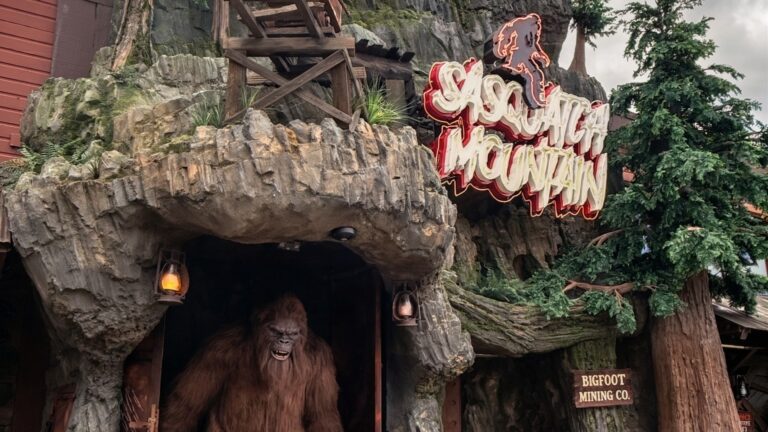
Miners Landing has run Sasquatch Mountain on Seattle's Pier 57 since 3 April 2026. The Bigfoot hunt uses VR headsets…
Read more...
Hero Zone: Where Social VR Meets Real-World Revenue -

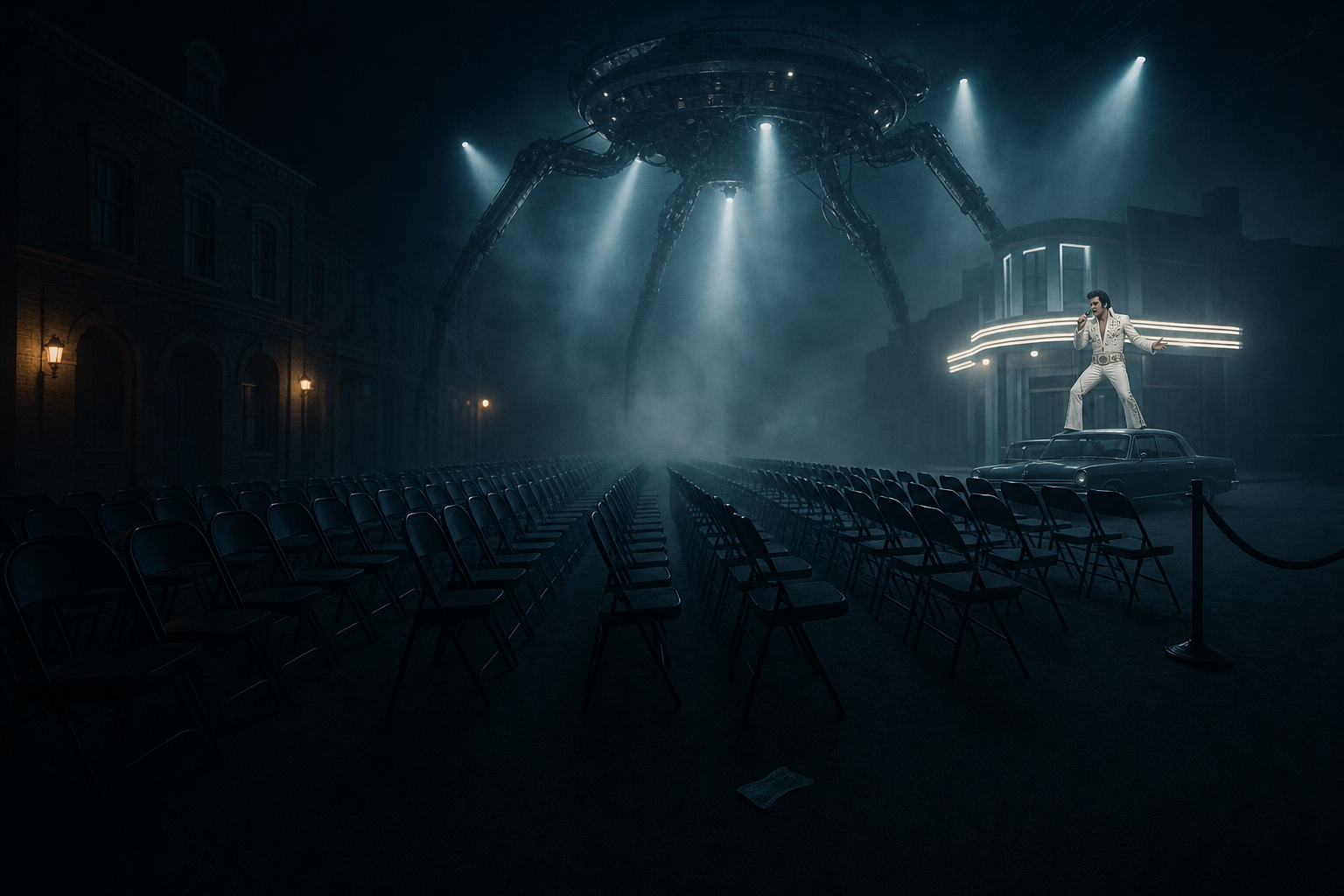
Two of London’s higher-profile immersive productions, Jeff Wayne’s The War of the Worlds: The Immersive Experience and Elvis Evolution, closed last month without warning after Ellipsis Entertainment, the parent of the operating company Layered Reality, collapsed. Guests with tickets in hand turned up to find the doors shut. Cast and crew found out the same way too many others learn their employer is gone: suddenly.
London is one of the strongest immersive entertainment markets in the world. The closures don’t say anything about that. Ellipses has been silent publicly on what caused the sudden shutdown. It’s weird because War of the Worlds had just undergone a £400,000 upgrade to its VR tech. Certainly, this was sudden to the people writing that check, too. Or was that a last gasp effort to rescue a fading property?
Jeff Wayne’s The War of the Worlds is a property with a long track record of generating revenue across formats. The musical album has done over $300 million in lifetime sales. There have been arena tours, a long-running concert production, and the immersive show that just closed. And Elvis is The King. These are not obscure properties looking for an audience.
Both shows received favorable press coverage (well, at least Elvis had a lot of press coverage – IYKYK) and operated in a city where immersive entertainment has been drawing tourists and locals for years. Punchdrunk, Secret Cinema, Mamma Mia! The Party, ABBA Voyage. The WXO was born here. London supports this category. The category is not the issue.

But that’ won’t stop the speculation.
For LBE operators thinking about adding immersive theatrical content to their venues, or for venue owners considering hosting third-party immersive productions in their space, the same diligence applies in reverse. The operator running the show inside your venue can fail and leave you holding the bag on a half-finished build-out, a hole in your programming calendar, and a confused customer base.
Cooney’s Take – Slow and careful beats fast and overextended. Every time. I keep saying this when we talk about content rollout, but it applies just as much to the operating side. If you’re launching an immersive show, prove the model in one location with conservative capitalization before you take on the burn rate of multiple productions. Did War of the Worlds and Elvis Evolution running concurrently under one operator meant one operator’s cash flow problem became two shows’ problem at once. Maybe. Maybe now. Hopefully we find out some day.
The most immediate cost of an operator collapse falls on the people who had tickets and the people who had jobs. Refund processes after a company fails are usually slow, partial, or non-existent, depending on jurisdiction and payment method. Cast and crew lose wages owed, contracts in place, and the rehearsal time they invested. Jeff Wayne, creator of War of the Worlds Immersive, paid the staff from his own pockets when he heard of the shutdown. He even tried to rescue the production, but legal and insurance complexities made that impractical.
What does the administrator’s filing tell us about where the money went? Cost overruns on production, marketing spend that didn’t convert, lease obligations, and licensing payments to the IP owners are all candidates. The breakdown matters because it tells the next operator entering the category which line items to model more conservatively.
Will the IP owners relicense the properties to another operator to continue the shows? War of the Worlds, in particular, has enough track record that another producer could pick up the format. Whether that happens, and on what terms, will tell us how the IP owners read the collapse.
How does this affect insurance, surety bonds, and IP licensor diligence requirements across the broader immersive sector? Closures of this profile usually tighten the terms on the next round of deals. Operators raising capital or signing licenses in the next 12 months will likely face harder questions and tougher terms because of what just happened in London.
Immersive entertainment is one of the categories that proves LBE can do more than thrill rides and arcade games. War of the Worlds and Elvis Evolution were the kind of productions that bring cultural credibility to the sector. Losing them, especially in the way they were lost, is bad for the broader narrative the industry is trying to build with IP owners, investors, and the press.
The fix is operational discipline. Better capitalization, more conservative ramp assumptions, secondary revenue models that aren’t optional, content refresh plans that exist before they’re needed, and IP licensor diligence that goes beyond the production deck. None of this is new. All of it is harder than it looks when launch buzz is in the air, and the IP is hot.
What caused the War of the Worlds and Elvis Evolution immersive shows to close? The company running both productions collapsed financially, leading to sudden closures of both shows. The IP, production quality, and ticket demand were not the underlying problem. The operating company’s financial position was.
What should IP owners check before licensing a property to an immersive entertainment operator? Capitalization runway of at least 18 to 24 months, realistic occupancy assumptions for break-even, secondary revenue stack beyond ticket sales, content refresh planning for extended runs, and operational track record on prior productions. Production capability alone is not enough.
Does this signal a problem with the London immersive market or the immersive entertainment category overall? London remains one of the strongest immersive entertainment markets globally, with multiple successful long-running productions. The closures point to operator-specific financial issues, not category weakness. Operators like Secret Cinema, Punchdrunk, Layered Reality, and others continue to run productions in the same market.
What’s the difference between immersive theatrical economics and typical LBE attraction economics? Immersive theatrical productions usually carry higher cast counts, longer run times, and higher per-show cost structures, which makes the model closer to live theater than to a typical LBE attraction. The breakeven occupancy rates and the importance of secondary revenue per guest are both higher than operators coming from a traditional LBE background may expect.
How does an operator collapse affect IP licensors and venue partners going forward? High-profile closures usually tighten the next round of licensing terms, surety requirements, and investor diligence across the sector. Operators raising capital or pursuing new IP deals in the months following a collapse of this profile should expect harder questions and stricter conditions.